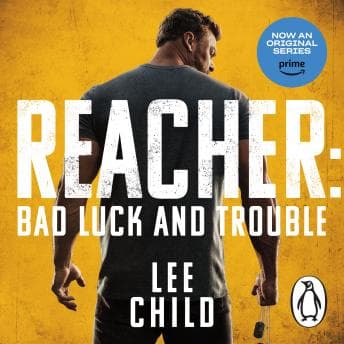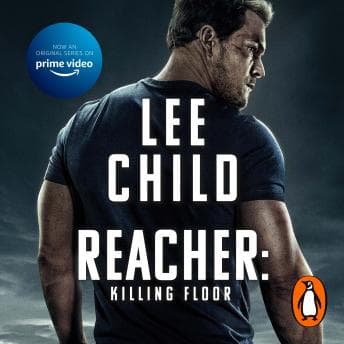

Look, I know what you're thinking. Jordan, you're a horror person. Why are you reviewing a Jack Reacher novel?
Here's the thing - Lee Child understands dread. Not supernatural dread, sure, but that slow-building tension of being in the wrong place at the wrong time with everyone looking at you like you're already guilty? That's horror adjacent. And honestly, after sixteen hours with Jeff Harding's voice in my ears, I'm convinced this book belongs in the thriller-horror conversation more than people give it credit for.
The Setup That Actually Works
Reacher walks fourteen miles in the rain to a nothing town in Georgia looking for a dead blues guitarist. Within hours, he's arrested for murder. The only stranger in town when the first homicide in thirty years drops? Yeah, he's the obvious fall guy.
Child does something smart here that I wish more thriller writers understood: he makes you feel the walls closing in. Margrave isn't just a setting - it's a trap. Every friendly face could be complicit. Every cop could be dirty. That paranoia? That's the good stuff. I got a similar creeping unease from Camp of the Dog, where isolation and suspicion do most of the heavy lifting. I was listening to this while shelving returns at the library (yes, during work hours, don't @ me), and I kept looking over my shoulder at patrons like they were about to frame me for something.
The first-person narration is interesting too. Reacher's voice is clipped, observational, almost clinical. He notices exits, counts threats, calculates odds. It reads like a predator pretending to be prey. Child commits to this perspective fully, and it creates this weird tension where you're inside the head of someone who's simultaneously vulnerable and extremely dangerous.
Jeff Harding Gets It
Harding's narration is... look, it's not flashy. He's not doing vocal gymnastics or giving every character a wildly different accent. But he understands something crucial: Reacher's voice needs to feel like a weapon being held in reserve. Controlled. Patient.
The pacing is solid - maybe a touch fast in places, which some listeners have mentioned. I didn't mind it. Felt like Reacher's brain working, always three steps ahead. Where Harding really shines is in the interrogation scenes. There's this quiet menace he brings to Reacher's dialogue that made Shirley (my cat, not the author) actually look up from her spot on the couch. That's rare. She's usually unimpressed by audiobooks unless there's actual screaming.
One thing I couldn't find much about online: how Harding handles the Southern characters. Based on my listen, he keeps the accents present but not cartoonish. Smart choice. Nothing pulls you out of a thriller faster than a narrator doing dinner theater accents.
The Philip Pullman foreword is a nice bonus - brief, thoughtful, and it contextualizes why this book hit different when it came out in '97. Pullman reading his own introduction adds a layer of literary credibility that feels appropriate for a series that's become as culturally significant as this one.
When Reacher Hits, He Hits
Okay, so. This book gets brutal. Not horror-brutal, but action-brutal in a way that's methodical and almost clinical. Reacher doesn't fight like a movie hero. He fights like someone who learned combat as a job and approaches it with the same energy I bring to cataloging new acquisitions. Professional. Efficient. A little disturbing if you think about it too long.
Child writes violence the way good horror writers write fear - as an inevitable consequence rather than a spectacle. You feel it coming. You know it's going to be bad. And when it lands, it lands.
At sixteen-plus hours, this is a commitment. There are stretches in the middle where the investigation drags slightly - Reacher gathering information, connecting dots, interviewing people who may or may not be lying. But honestly? The audiobook format helps here. Harding keeps the momentum even when the plot is catching its breath.
The Alan Ritchson of It All
I'll say this: having seen the Prime series, going back to the source material is interesting. The show gets Reacher's physicality right in a way the Tom Cruise movies never did. But the audiobook gives you something the screen can't - that internal monologue, that constant tactical assessment. It's a different experience. Complementary, not redundant.
If you've watched the show and want more, this is the way to go. If you haven't watched the show, honestly? Start here. The book is leaner, meaner, and Harding's narration adds a layer of cold competence that the visual medium can't quite capture.
Your Queue or Your Skip Pile?
If you want a thriller that respects your intelligence, this delivers. Need supernatural elements to feel scared? Skip it. But if you understand that horror can live in the mundane - in corrupt small towns, in systemic rot, in being alone against a machine designed to crush you - then yeah. This gets that.
My podcast listeners who've been asking for thriller recommendations outside the horror lane? This is your entry point. Same goes for Midnight Line if you end up wanting more Reacher after this one. It's not what I usually cover, but it scratches a similar itch. The dread is just... human-shaped.