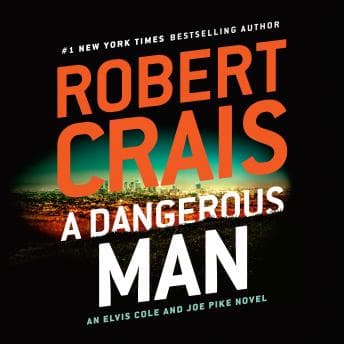

Let me cut to the chase: I've got a bone to pick with Robert Crais. The man writes Joe Pike books that are too short. Seven and a half hours? I burned through this during a single round-trip to Houston for a client meeting, and now I'm irritated there isn't more.
Ranger and I were barely past Bastrop when the bank scene kicked off. Pike's at a bank—just standing in line like a normal human being, which already feels wrong for the character—and watches a young teller get snatched in broad daylight. Two guys, professional grab, should've been clean. Should've been. Pike's Jeep is in the parking lot. You can probably guess how that goes for the kidnappers.
When the Rescue Is Just the Beginning
Here's what Crais does better than most thriller writers: he understands that the obvious solution rarely solves anything. Pike saves the girl. Cops arrest the bad guys. Case closed, right? Except the two kidnappers get murdered after posting bail, and Izzy—the teller—vanishes. That's when you realize the bank grab was the tip of something much uglier.
Elvis Cole gets pulled in to work the investigative angle, and this is where Crais's TV writing background shines. The guy wrote for Hill Street Blues and Miami Vice, and you can feel that pacing. Every scene earns its place. No filler. The corporate whistleblowing angle, the Witness Protection complications, the family secrets—it all layers together without ever getting confusing. Total Control attempts similar corporate conspiracy layering, though it doesn't quite nail the pacing. I've seen real investigations get tangled in less.
Luke Daniels and the Pike Problem
Luke Daniels gives Pike this deep, raspy snarl—like gravel filtered through a diesel engine. And I'll be honest: it works for me. Pike's supposed to be intimidating. The voice makes you believe this is a man who could end you without raising his heart rate.
But I get why some listeners hate it. If you've been reading these books for years and Pike sounds different in your head, Daniels' interpretation might grate. It's a committed choice. No middle ground. His timing on the rapid-fire dialogue between Cole and Pike is excellent though—catches that dry humor that makes their partnership work. When Pike does speak (which isn't often—the man's practically allergic to sentences), Daniels makes each word count. Character differentiation is solid across the board. You always know who's talking without checking.
The Tactical Details Actually Hold Up
This is where Crais earns my respect. The action sequences feel right. Pike moves like someone who's actually been trained—economy of motion, violence applied precisely where needed. No Hollywood nonsense where the hero takes fifteen punches and keeps fighting. When Pike engages, it's quick and brutal and over. The way he processes threats, the way he clears rooms—Crais has either done his homework or talked to people who've lived it.
(Side note: if you call a magazine a "clip" in your thriller, I'm throwing my phone out the window. Crais doesn't make that mistake.)
The Witness Protection elements are handled realistically too. The bureaucratic friction, the layers of lies that accumulate when someone's been relocated—it all rings true. Izzy's situation gets complicated in ways that feel earned rather than manufactured.
Who's This For?
New to the series? You can jump in here without being lost. Crais gives you enough context on Pike and Cole's history without drowning you in backstory. Fair warning though—you'll probably want to go back and read the earlier books after this.
If you need your protagonists chatty and emotionally available, Pike's not your guy. He's a force of nature with a moral code, not a conversational partner. Some readers find that cold. I find it refreshing. Skip this one if you want cozy—there's violence, kidnapping, some rough language. Nothing gratuitous, but this isn't gentle territory.
Mission Debrief
Worth your time? Absolutely. Crais delivers a tight, propulsive thriller that respects your intelligence. The plot twists make sense in retrospect. The action hits hard. Pike remains one of the best-drawn operators in crime fiction—a dangerous man who's dangerous for the right reasons.
Daniels' narration will work for most listeners, though the Pike voice is polarizing. I'd suggest sampling before committing if you're particular about narrator choices.
Ranger approved this one. He didn't even twitch when I hit the brakes hard outside Schulenburg—too locked into the final confrontation. That's the sign of a good audiobook right there.