
Tuesday morning on the 405, staring at the taillights of a Tesla that probably cost more than my first apartment. I'd just spent three weeks listening to "futurists" talk about the metaverse and Web3, and frankly, my brain was turning to mush. I needed the business equivalent of black coffee and a slap in the face.
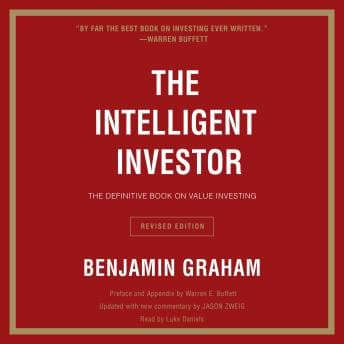
Benjamin Graham delivered the slap. All 17 hours and 49 minutes of it.
The "Eat Your Vegetables" of Finance
Look, Warren Buffett calls this the best book on investing ever written. He's right. But Buffett also drinks Cherry Coke for breakfast, so take his taste with a grain of salt. This book is dense. It's the anti-crypto, anti-hype, anti-fun manifesto. And that's exactly why you need it.
Graham isn't trying to make you rich by next Tuesday. He's trying to stop you from being an idiot. The whole concept of "Margin of Safety"? That's basically what my parents practiced in the dry cleaning shop for thirty years without knowing the term. Don't bet the farm. Don't lose money. Simple, right? But Graham backs it up with enough historical data to crush a small sedan.
The real MVP of this audiobook isn't Graham—it's Jason Zweig. This is the "Revised Edition," which means every chapter of Graham's 1949 wisdom is followed by Zweig's commentary connecting it to the modern world (well, the early 2000s, but it holds up). Without Zweig, this would be a history lesson. With him, it's a manual. Seriously, don't skip the commentary tracks. That's where the ROI is.
Can a Human Voice Save a Spreadsheet?
Here's the challenge with business audiobooks: How do you read a balance sheet without sounding like a text-to-speech bot from 1999?
Luke Daniels manages to pull it off. I've heard Daniels narrate sci-fi before (yes, I have a nerdy side, sue me), and he brings that same narrative energy here. He doesn't try to spice up the math—he just delivers it with this lucid, professional clarity that commands attention. There's this specific cadence—firm, slightly authoritative, but not condescending. It's the voice of that one board member who actually read the briefing materials. When Graham is tearing apart a bad stock valuation, Daniels adds just a hint of dryness to the delivery that made me chuckle.
However—and this is a big however—listening to financial tables is rough. There are sections where Daniels is reading numbers, percentages, and years in a list. I zoned out. You will too. It's inevitable. Unless you have a photographic memory for audio data (is that a thing?), you're going to gloss over the raw data sections. That's not Daniels' fault; he's doing the Lord's work. It's just the medium.
The Speed Requirement
I listened at 2.0x speed. Tried 1.5x, but it felt like walking through molasses. Graham writes in that formal, mid-century style where sentences go on for days. Speeding it up actually helps comprehension because you get to the verb before you forget the subject.
At 2.0x, Daniels sounds like a very caffeinated MBA professor, which is my preferred learning style anyway.
The Verdict
If you're looking for a "get rich quick" scheme or "mindset hacks," go buy a lottery ticket or subscribe to some influencer on TikTok. This ain't it. This is boring, slow, methodical wealth building. It's about discipline. Outliers explores that same discipline angle—how the grind compounds over time into something that looks like genius.
My wife Jenny walked in while I was listening to the chapter on market fluctuations and asked if I was listening to a funeral dirge. I told her, "No, this is the sound of not going broke." She rolled her eyes and went back to her romance novel. She's probably having more fun, but I'm building the portfolio.
Who should listen: Anyone serious about long-term investing who can handle 17+ hours of financial fundamentals—especially if you've been burned by hype cycles or need a reset after too much crypto-bro content. Skip it if: You want entertainment or can't stomach listening to balance sheet breakdowns at highway speeds.
This book respects the hustle by telling you to calm down. Treat it like a lecture series, not entertainment. And for the love of compound interest, crank the speed up.