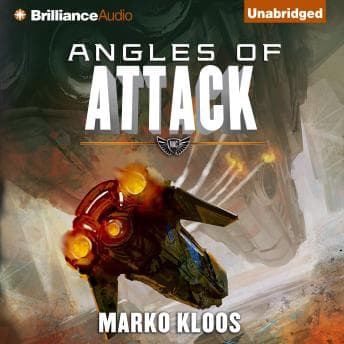

There's something almost therapeutic about listening to humanity get absolutely wrecked by aliens while you're sardined between a guy eating a breakfast burrito and someone's oversized backpack at 6:47 AM. Book three of the Frontlines series hit different on a particularly brutal Monday commute—the kind where the train was delayed twice and I genuinely started to envy Andrew Grayson's problems. At least he gets to shoot at his.
Bottom Line: Worth your commute. Military sci-fi that respects your intelligence, doesn't waste your time, and Luke Daniels continues to be criminally underrated.
When Your Enemies Become Your Only Hope
So here's the setup: Lankies have basically won. Mars is gone, Earth is next, and the only colony still holding out—New Svalbard—is starving to death while cut off from everything. The NAC's solution? Team up with the Sino-Russian Alliance they've been fighting for decades. You know, the people they were literally trying to kill two books ago.
Kloos does something clever here that a lot of military SF authors fumble. The alliance isn't some handwavy "we put aside our differences" moment. It's messy. The joint task force feels held together with duct tape and mutual desperation. Grayson's internal monologue about trusting people who were shooting at his friends months ago—that landed. The tension isn't artificial drama; it's the logical consequence of everything that came before.
The pacing is relentless without being exhausting. At just under 10 hours, Kloos doesn't pad. Every chapter moves the ball forward. The stealth mission to breach the Lanky blockade had me genuinely stressed during a gym session—I missed my rep count because I was too focused on whether they'd get spotted.
Luke Daniels: The Narrator Who Makes It Look Easy
Look, I'm a Ray Porter loyalist, but Luke Daniels? The man is doing elite-level work on this series and somehow flies under the radar. His Grayson is tired but not defeated—there's this weight in his delivery that accumulates across the series. By book three, you can hear the war in his voice.
The character differentiation is solid without being showy. He's not doing accents for the sake of accents. The Sino-Russian officers sound distinct enough that you track conversations without confusion, but he's not doing a cartoon Russian villain thing. It's subtle. Professional. The action sequences come through clean—you always know where Grayson is, what's happening, who's talking. That sounds basic but you'd be surprised how many narrators fumble combat chaos.
No audio issues I could catch, and I was listening at 1.5x through phone speakers on a loud train. The production is invisible, which is exactly what you want.
The Lanky Problem (In a Good Way)
Here's what Kloos gets right about his aliens: they're genuinely terrifying because we still don't understand them. Three books in and the Lankies remain almost completely opaque. No monologuing villains. No convenient weaknesses. They outgun, outmaneuver, and outthink humanity at every turn. The victories in this book feel earned because they're small and costly.
There's a sequence where the task force encounters Lanky defenses that should've been impossible based on everything they knew. The dawning realization that their intelligence was wrong, that they'd underestimated the enemy again—Daniels sells that creeping dread perfectly. His pacing slows just slightly, lets the silence breathe.
Who Should Queue This Up (And Who Shouldn't)
Perfect for: train, gym. Skip for: bedtime (too much adrenaline) or background listening (you'll miss tactical details that matter later).
If you haven't read books one and two, don't start here. This is not a standalone. The emotional payoffs depend on knowing Grayson's history, understanding the political situation, caring about characters who've been built up across hundreds of pages.
If you bounced off the first book because the characters felt generic—fair criticism, honestly—stick with it. Kloos grows as a writer. Grayson has more texture now. The supporting cast matters more.
If you want your military SF with elaborate alien cultures and first contact philosophy... this isn't that. Kloos is writing grunt-level warfare. Boots on the ground, limited intel, people dying because command made bad calls. It's Starship Troopers meets the parts of Battlestar Galactica where everything is falling apart. That same relentless pressure shows up in Tale of Two Cities, though Dickens trades alien invasions for guillotines.
ROI: Three Commutes, Zero Regrets
I finished this in 3 commutes and immediately queued up book four. Tight story, no filler, narrator who elevates the material. It's not reinventing the genre, but it's executing at a high level on exactly what it promises.
Kloos was a soldier. You can tell. The way Grayson thinks about logistics, about command structures, about the gap between what officers say and what actually happens on the ground—it has that authenticity you can't fake. And Daniels, with his sixteen AudioFile Earphones Awards (seriously, why isn't this guy more famous?), translates all of it.
The book ends on a note that's not quite a cliffhanger but definitely leaves threads dangling. Fair warning. But honestly? After three books, I trust Kloos to pay things off. And I trust Daniels to make me feel it when he does.