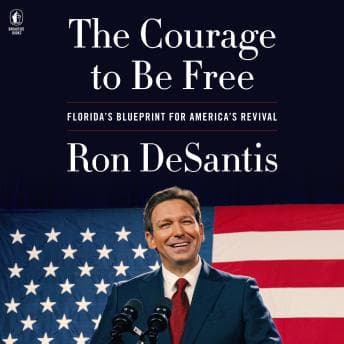

Look, I need to get something off my chest before we start: if you're going to write a political memoir that opens with your military service, you better get the details right. DeSantis does. His Iraq deployment at Guantanamo Bay and with SEAL Team One in Fallujah — he doesn't embellish it, doesn't turn it into some action movie. He talks about the legal work, the advisory role, the unglamorous parts. I respect that more than I can say, because I've read too many politician memoirs where guys who spent six months in a FOB act like they personally stormed Normandy.
That said, this book has problems. And I say that as someone who agrees with a fair chunk of DeSantis's policy positions.
I was up late finishing a security assessment for a corporate client — one of those sprawling reports nobody reads — and figured I'd let this play through the last few chapters while Ranger snored on his bed. Nine hours is a reasonable commitment for a political book, and I'd been chipping away at it during morning runs all week.
A Campaign Speech That Forgot to Take Off Its Suit
Let me cut to the chase: this is a campaign book. It was published in early 2023, right before DeSantis's presidential run, and it reads exactly like what it is — a carefully constructed argument for why Ron DeSantis should be the next president. Every chapter follows the same formula: identify a problem, explain how the media and the left got it wrong, describe how DeSantis fixed it in Florida, then close with a "and that's why my approach works" bow.
The COVID chapters are probably the strongest material here. His decision to reopen Florida early, the data he cites about senior mortality rates compared to states like New York, the pushback from media — there's actual substance to engage with. Whether you agree with every decision or not, he lays out his reasoning in a way that at least gives you something to chew on.
But the Disney fight chapter? The critical race theory sections? They start feeling repetitive. It's the same narrative arc every time: courageous governor takes on powerful enemy, media screams, DeSantis wins. By the sixth or seventh iteration, I was bumping the speed up to 1.5x just to push through. There's no real introspection, no moment where he admits something didn't go as planned or a decision kept him up at night. And that's what separates a good political memoir from a campaign brochure.
Pruden Does the Heavy Lifting
John Pruden handles the bulk of the narration, and he's... competent. Clear delivery, good emphasis on the policy arguments, professional pacing. But here's the thing — this isn't a thriller or a history with multiple voices to differentiate. I've heard Pruden tackle far more dynamic material — his work on Viper Pilot had actual tension to work with. It's one man's political philosophy delivered in a steady, measured tone for nine hours. Pruden doesn't inject drama where there isn't any, which I appreciate, but it also means the middle sections can feel like you're listening to a very polished stump speech.
DeSantis himself narrates the prologue and epilogue. Honestly? He's okay. Not terrible, not great. You can tell he's reading rather than speaking naturally — there's a stiffness that professional narrators learn to hide. Some folks online preferred his sections because they wanted to hear the man himself. I get that impulse, but Pruden's the better listen.
No sound effects, no music, no production tricks. Just a guy reading a political book. Clean audio, no complaints there.
Where It Lost Me
This is where it lost me — the book has almost zero vulnerability. I've commanded soldiers. I've made decisions that got people hurt. The leaders I respect most are the ones who can talk about what went wrong, not just what went right. That honesty is exactly what made Viper Pilot ring true — pilot owned his mistakes alongside his heroics. DeSantis's Yale-to-Harvard-to-Congress-to-Governor arc is presented as this inevitable march of a man who was always right and always brave. Real leadership doesn't look like that. It's messy and full of second-guessing at 0300.
The "blue-collar kid" framing also wears thin when every other page mentions Harvard Law or his baseball days at Yale. Pick a lane.
Who Should Strap In, Who Should Bail
If you're already a DeSantis supporter, you'll eat this up. It's red meat served efficiently. If you're genuinely curious about Florida's COVID response and education policies, the middle chapters have real policy detail worth hearing. But if you're looking for a political memoir with the depth of, say, Gates's "Duty" or even McCain's "Faith of My Fathers" — books where powerful men actually grapple with failure and doubt — this isn't it.
Worth your time? Here's the debrief: it's a well-produced audiobook of a book that reads like it was written by committee with an election in mind. Which, of course, it was.
Cooper's After-Action Report
Ranger slept through the whole thing, which tells you something. A solid listen for the politically aligned, a frustrating one for anyone wanting substance over spin. The military chapters earned my respect. The rest earned a shrug.






![Steve Jobs [unabridged audiobook] audiobook cover](/_next/image?url=https%3A%2F%2Fcovers.audiobooks.com%2Fimages%2Fcovers%2Ffull%2F9788499923406.jpg&w=1920&q=75)