
I told myself I was done with domestic thrillers. I really did. After twenty years of teaching high school English, I usually tell people my "fun reading" is re-visiting The Sound and the Fury. (That is a lie. My fun reading is usually cookbooks.)
But it was a Tuesday night, I had a stack of thirty Catcher in the Rye essays to grade—why do teenagers think Holden is just "whiny" without seeing the trauma? Ugh—and I needed a brain cleaner. Something fast. Something messy. Something where I didn't have to analyze the color of the curtains.
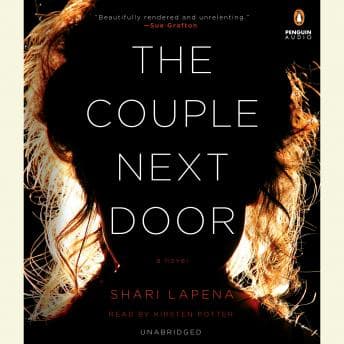
So I picked up The Couple Next Door. And honestly? I ignored the essays for three hours straight.
The "Elocution Lesson" Vibe
Let's talk about the narration first because it's... distinct. Kirsten Potter is the reader here. I hadn't listened to her before, and for the first hour, I was having a hard time settling in.
She has this incredibly precise, over-articulated style. You hear every T, every D, every consonant. It felt a bit like an elocution lesson from the 1950s. My students would call it "NPC energy."
And here's the problem: when the prose is already a bit blunt—and let's be real, Shari Lapena writes very functional sentences—the narration highlights the wood. It sounded a little robotic. I almost bailed during the dinner party scene in Chapter 1. It felt dry. I kept thinking, "Do people actually talk like this?"
But—and this is a big but—stick with it.
When The Panic Sets In
Once the actual crime happens (baby goes missing while parents are next door—yes, it's terrifying, yes, I judged them immediately), the rigid narration actually starts to work in the book's favor.
Especially with Detective Rasbach. Potter gives him this cold, analytical voice that fits her precise style perfectly. He's the shark in the water, and her delivery makes him sound unnervingly calm while the parents are falling apart.
Around the halfway mark, the narration loosens up. Or maybe I just got used to it. But when the characters start spiraling and the secrets start spilling (so many secrets, honestly, do these people talk to each other?), Potter injects some real frantic energy into Anne's voice. She captures that specific tone of a mother who is sleep-deprived and terrified. It redeems the slow start.
The "Popcorn" Factor
Is this high literature? No. If I analyzed the sentence structure on a whiteboard, I'd run out of red ink. It can be repetitive. We get told how characters feel rather than shown it. (Show, don't tell, people! It's rule number one!)
But does it matter? Not really.
The pacing is relentless. I listened while power-washing my deck (don't tell my wife, I said I was fixing the trellis), and I completely lost track of time. The twists are ridiculous—like, soap opera ridiculous—but they land fast and hard. You think you know who did it, then you don't, then you think you do again.
It reminds me of what I tell my students about plot: sometimes you just need the engine to run. This engine runs hot. I found myself sitting in the driveway for ten minutes after a grocery run just to hear the end of a chapter.
Who Should Listen (And Who Should Skip)
If you're looking for prose that flows like Virginia Woolf, run away. Seriously. You will hate this. The writing is stiff, and the narration starts off sounding like a GPS navigation system.
But if you want a twisty, messy, "thank god that isn't my marriage" story that moves faster than a freshman running to the cafeteria? This is it. Perfect for chores, commutes, or avoiding a stack of essays. Skip it if clunky prose genuinely bothers you—no amount of plot twists will save it for you.
It's a solid palate cleanser between the heavy stuff. Though if you want something with actual literary weight that still moves fast, Sing, Unburied, Sing manages to be both gut-wrenching and beautifully written.
Just maybe listen at 1.25x speed to smooth out the edges.