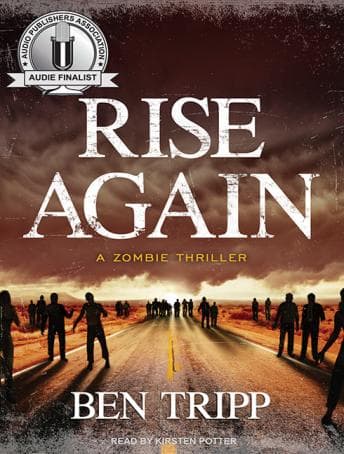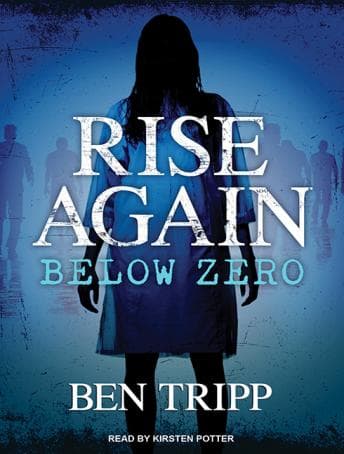
What separates good zombie fiction from the stuff that just... exists? The genre is so oversaturated that I've become genuinely picky. Like, unreasonably picky. My podcast listeners know this—I've ranted about lazy undead narratives for entire episodes. So when I tell you that Ben Tripp's Rise Again: Below Zero actually understands what makes post-apocalyptic horror work, I need you to understand the weight of that statement.
I listened to most of this during a late shift at the library, headphones in while I was shelving in the back stacks. (Yes, the horror section. Yes, on purpose.) There's something deeply unsettling about hearing Kirsten Potter describe evolved zombies—the hunters, the thinkers—while you're surrounded by dim fluorescent lighting and the smell of old books. Mistake? Maybe. Worth it? Absolutely.
Kirsten Potter Earned That Audie Nomination
Here's the thing about zombie audiobooks: they live or die by the narrator. You need someone who can sell you on the horror without tipping into camp, who can voice a hardened survivor without making her sound like a cartoon. Kirsten Potter nails it. She earned an Audie nomination for this performance, and after fourteen-plus hours with her voice in my head, I get why.
Sheriff Danny Adelman is the kind of protagonist I wish we saw more often in horror—competent, damaged, making impossible choices that actually feel impossible. Potter gives her this weathered quality, this exhaustion that never quite tips into defeat. The supporting cast stays distinct too, which matters when you're dealing with a "ragtag band" situation. I never lost track of who was speaking, even during the chaotic action sequences.
And those action sequences? They hit. Potter's pacing during the tense moments is genuinely excellent—she knows when to speed up, when to let silence do the work. The production is clean, professional, no weird audio artifacts pulling you out of the nightmare.
When Zombies Get Smart (And That's Terrifying)
Tripp does something clever here that I wish more zombie stories would attempt: he evolves the threat. Two years into the apocalypse, we're not just dealing with shamblers anymore. The hunters are fast and predatory. The thinkers are... well, the thinkers are the reason I had to pause the audiobook a few times and just sit with my own discomfort.
This book understands that horror isn't about gore—it's about dread. Yes, there are graphic scenes. One listener mentioned feeling genuinely nauseated during a particularly vivid sequence, and I won't pretend the violence is tame. But it serves the story. It's not torture porn; it's consequence. The world Tripp builds feels genuinely hostile, and the intelligence of the evolved undead adds this layer of paranoia that shambling corpses just can't provide.
The Midwest setting works beautifully too. There's something about the vast emptiness of post-apocalyptic America—the abandoned towns, the rumors of safety that might be traps—that creates this constant low-level tension. Danny's group is moving toward something, but the closer they get, the more wrong everything feels. Classic horror structure, executed well.
The Weight of Impossible Promises
What elevates this beyond standard zombie fare is the emotional core. Danny's carrying secrets, she's made promises she might not be able to keep, and there's a small, silent boy whose presence adds this aching vulnerability to everything. Potter handles the quieter moments with the same care as the action—maybe more. The relationship dynamics feel earned, not manufactured for drama.
I'll be honest: around the eight-hour mark, I wondered if the pacing would hold. Fourteen hours is a lot of apocalypse. But Tripp keeps introducing complications, keeps raising stakes, and the momentum never really died for me.
Who's this for? Horror fans who want their zombies evolved and their survivors complicated. Skip if you scare easily or can't stomach graphic violence—this one doesn't pull punches.
Sirley Was Unimpressed. I Was Terrified.
My cat didn't care about my occasional gasps. That's the review, really.
This is horror that respects the genre—it knows its tropes, subverts the right ones, and commits fully to its premise. That same commitment to genre fundamentals is what makes Murders in the Rue Morgue still worth revisiting, even if it's more cerebral than visceral. Kirsten Potter's narration is the kind of performance that reminds you audiobook narrators are actors, and the good ones create something the page alone can't. My podcast listeners are going to love this recommendation.
If you've been waiting for zombie fiction that takes the genre seriously while still delivering the visceral goods, this is your book. Just maybe don't listen alone in the dark. Or do. I'm not your parent.