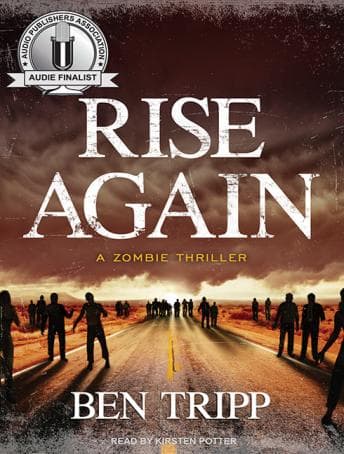

I was halfway through my morning jog along the Charles River when Sheriff Danny Adelman made a decision so psychologically fascinating that I stopped dead on the path. Some runner behind me probably cursed. I didn't care. I needed to process what I'd just heard.
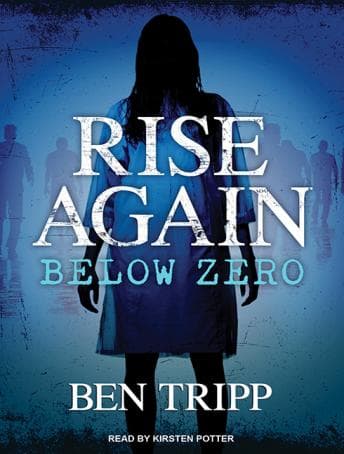
Here's the thing about zombie fiction: most of it treats the apocalypse as backdrop. The dead are shambling, society collapses, cue the survival montage. But Ben Tripp does something different with Rise Again. He uses the end of the world as a pressure cooker for examining trauma—specifically the kind that doesn't heal just because you survived it. Danny isn't just a sheriff dealing with zombies. She's a war veteran whose PTSD from Iraq gets layered with fresh horrors, and watching her psychological architecture crack and rebuild over sixteen hours? That's a case study I didn't expect from genre fiction.
The Protagonist as Case Study
Danny exhibits classic hypervigilance patterns from the start—the constant threat assessment, the emotional numbing, the inability to process her sister's disappearance as anything other than a tactical problem to solve. What makes this character compelling is that Tripp doesn't cure her. The zombie apocalypse doesn't give her purpose or magically heal her wounds. It just... adds more. The research actually shows that trauma compounds rather than cancels out, and Danny's journey across the California desert demonstrates this with uncomfortable accuracy.
Her obsession with finding her sister reads as both noble and concerning. There's a fine line between determination and dissociation, and Danny walks it throughout. I found myself asking: why does she really keep going? Is it love? Guilt? Or is the quest itself a coping mechanism—something external to focus on so she doesn't have to sit with what's happening inside her head?
(My therapist would have thoughts about this character. Many thoughts.)
Why Kirsten Potter Works
I'll admit I was skeptical in the first hour. Potter's narration is restrained—almost too controlled for a zombie thriller. But then it clicked. She's matching Danny's emotional register. This isn't a woman who screams and panics. This is someone who's already seen the worst humanity can do, and the walking dead are just... more data points in a pattern she recognized long ago.
Potter gives distinct voices to the supporting cast without ever going theatrical. The dialogue delivery is where she really shines—there's this steady, almost clinical quality to how Danny speaks that makes her rare moments of vulnerability hit harder. It uses a similar technique—restraint that makes the horror land harder when it comes. One scene involving a child survivor nearly broke me, and it worked precisely because Potter didn't oversell it. She trusted the material.
The pacing holds across all sixteen hours, which is no small feat. I listened during jogs, while cooking an elaborate dal that took way too long, and during one very late night when I couldn't stop. Potter maintains tension without exhausting you. That's skill.
The Slow Burn That Paid Off
Look, this isn't fast-paced horror. If you want constant action and jump scares, you'll be frustrated. Tripp takes his time building the world—the refugee swarms from Los Angeles, the breakdown of small-town dynamics, the political intrigue that emerges when civilization's rules stop applying. It's methodical. Some listeners will find it slow. I found it psychologically realistic.
Because here's what most apocalypse fiction gets wrong: people don't immediately become heroes or villains. They hesitate. They make bad choices for understandable reasons. They cling to normalcy long past the point of logic. Tripp understands human nature. That psychological realism reminded me of Girl Before: A Novel, where characters make choices that are deeply flawed but completely understandable. The secondary characters aren't zombie fodder—they're people with their own survival calculus, their own denial patterns, their own breaking points.
The gore is present but not gratuitous. Tripp uses violence strategically, which makes the graphic scenes land harder when they come. Fair warning if you're sensitive to that stuff.
Who This Is (and Isn't) For
If you want a psychological study wrapped in horror packaging, this delivers. If you want World War Z-style action, look elsewhere. Readers who appreciate character-driven horror and don't mind a slower pace will find plenty to chew on here. But if sixteen hours of internal struggle sounds exhausting rather than compelling? Skip it.
The Diagnosis
Probably won't relisten immediately—it's heavy, and I need some lighter fare after sixteen hours in Danny's head. But I'm genuinely impressed by what Tripp accomplished with his debut novel. He wrote a zombie thriller that's actually about something. The apocalypse as metaphor for internal collapse. The search for family as the last thread connecting someone to their humanity.
Potter earned that Audie nomination. The production is clean, the pacing works, and the character work is genuinely affecting.
Danny Adelman stayed with me for days after I finished—not because of the zombies, but because of what surviving them cost her. That's the kind of character work I live for.