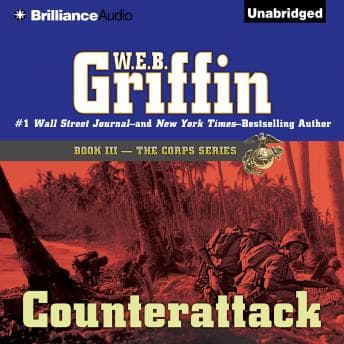

Everyone tells you W.E.B. Griffin is the gold standard for military fiction. And look - the man earned it. But here's the thing nobody warns you about with Counterattack: you're going to spend a lot more time in bedrooms than on beaches.
Let me cut to the chase. This is book three in The Corps series, covering the stretch from Pearl Harbor through the buildup to Guadalcanal, and it's a solid listen. But it's not what the cover promises. If you're expecting a blow-by-blow of Marines hitting the sand, you're going to be waiting. And waiting.
More Scotch and Sheets Than Sand and Steel
Griffin was a veteran. You can tell. The military bureaucracy, the interservice politics, the way orders filter down through layers of brass who don't want to stick their necks out - that stuff rings absolutely true. I've sat in those briefings. I've watched a perfectly good operation get strangled by a colonel protecting his career. Griffin nails that frustration.
But there's a real imbalance here. The romance scenes - and there are plenty of them - read like someone grafted chunks of a Danielle Steel novel into a war book. We're talking extended, R-rated encounters that don't move the plot forward. I'm no prude, but when I'm listening to a book about the Pacific Theater and I'm getting another detailed hookup scene instead of the Cactus Air Force, I start checking my mental watch. Griffin clearly loved his characters' personal lives. Maybe a bit too much for my taste.
The other issue - and this one's real if you haven't read books one and two - is the constant reintroduction of characters. Griffin had a big cast and he wanted to make sure you remembered everyone. Problem is, if you're coming in fresh, these recap passages feel like getting briefed on an operation you were never part of. Confusing rather than clarifying. If you're already invested in the series, it's a minor annoyance. If you're not, it's a genuine barrier.
Dick Hill Earns His Pay
Here's where the comparison matters. I've listened to Scott Brick narrate Griffin, and it's fine. Professional. But Dick Hill? He gets these characters in a way that clicks. His character definition is sharp - you know who's talking without the attribution tags. The officers sound like officers. The enlisted men sound like enlisted men. That distinction matters when you've got this many characters rotating through scenes.
Hill's pacing matches Griffin's prose, which tends toward the measured and methodical rather than breakneck. At 1.25x, it hits a sweet spot - keeps the momentum through the slower political maneuvering without rushing past the good stuff. Nearly twenty hours is a serious commitment, but Hill's consistency never wavers. I finished this one over a week of client drives around central Texas, and Ranger got the last three hours on the back porch one evening while I cleaned up the grill. He didn't object.
Where Griffin Still Outranks the Competition
What saves this book - what always saves Griffin - is that he understood how wars are actually fought. Not just the trigger-pulling, but the intelligence work, the logistics, the personalities clashing in conference rooms while young men die on islands most Americans couldn't find on a map. The Coastwatcher operations, the signals intelligence, the way the Marine Corps had to fight the Navy and the Army almost as hard as the Japanese - that's the real story here, and Griffin tells it with authority.
He also understood something a lot of military fiction writers don't: war is mostly waiting, punctuated by chaos. The pacing reflects that reality. Some listeners will hate it. I found it honest. Not every chapter needs an explosion. (Linda would be shocked to hear me say that.)
Compared to something like The Pacific or even Tom Clancy's early work, Griffin sits in a different lane. Less techno-thriller, more character study wrapped in a historical framework. Last Days of Night operates in that same lane - historical drama where the real battles happen in boardrooms and courtrooms, not on battlefields, and it's all the better for it. If you want nonstop action, go read Vince Flynn. If you want to understand how the sausage gets made at the command level while real people try to survive below - this is your book.
Worth Your Time? Here's the Debrief
Worth a credit if you're already in The Corps series. Absolutely. Dick Hill's narration alone justifies the investment, and the authentic military detail scratches an itch that most fiction can't reach. But temper your expectations on the action front, and be ready for the romance detours. Start with books one and two unless you enjoy being confused.
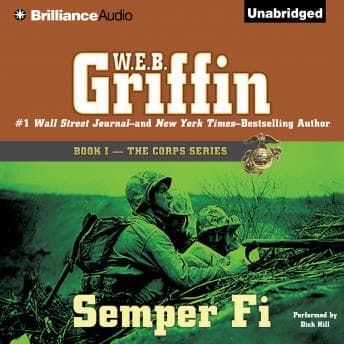
If you're new to Griffin entirely? Go back to Semper Fi first. Earn this one. The payoff's better when you know the players.
Ranger approved this one - though he fell asleep during the second love scene. Smart dog.