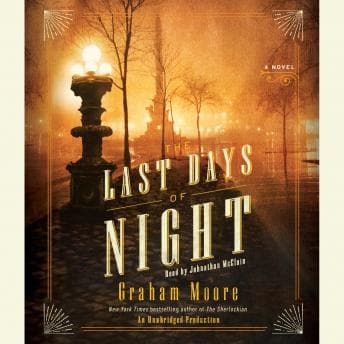
"The man who controls the light controls the future."
That line hit me somewhere around hour three, driving back from a client site in Houston at 0200. Empty highway, nothing but my headlights cutting through Texas darkness, and here's this audiobook talking about the men who literally invented that light. The irony wasn't lost on me.
Let me cut to the chase: this is one of the best historical thrillers I've listened to in years. And I don't say that lightly.
When Lawyers Become Warriors
Paul Cravath is twenty-six years old, fresh out of law school, and he's just been handed a billion-dollar lawsuit against Thomas Edison. The man has J.P. Morgan's money, private investigators, and newspapers in his pocket. Cravath has... enthusiasm.
I've seen this scenario play out in real life—young officer given an impossible mission because nobody else wants to touch it. Sometimes they crash and burn. Sometimes they surprise everyone. Moore captures that particular flavor of desperation and determination that comes with being the underdog who can't afford to lose.
The author clearly did his homework. The legal maneuvering here isn't Hollywood nonsense where someone yells "Objection!" and wins the case. It's dirty. It's strategic. Cravath has to think three moves ahead while Edison's team is actively trying to destroy his client's business, reputation, and maybe his life. Patent law as warfare—and I mean that as a compliment.
Edison, Westinghouse, and the Madman in the Lab
Here's where McClain earns his Earphones Award. His Edison drips with that dangerous charm of a man who's convinced his own genius justifies any action. Westinghouse gets this weary industrialist gravitas—a man fighting for his life's work against someone who fights dirtier. But Tesla? Tesla's the wild card.
McClain gives Tesla this slightly unhinged, almost otherworldly quality. The man's talking about wireless electricity and death rays in 1888, and you believe every word because the voice sells it. There's a scene where Tesla explains alternating current to Cravath, and I actually pulled over to listen properly. (Ranger gave me a look like I'd lost my mind, but he's heard weirder.)
The female characters get distinct treatment too—Agnes Huntington, the opera singer who's clearly playing her own game, comes across as sharp and calculating rather than just decorative. In a story dominated by ego-driven men, she's operating on a different level entirely.
The War of Currents as Actual War
What got me was how Moore frames this as a genuine conflict. Edison didn't just sue his competitors—he electrocuted animals publicly to prove alternating current was dangerous. He lobbied for the electric chair specifically to associate his rival's technology with death. This isn't business competition. This is psychological warfare.
I've briefed operations with less strategic complexity than what these men were doing to each other. The book doesn't shy away from showing Edison as genuinely villainous while still acknowledging his genius. Westinghouse comes across as the more honorable combatant, but he's not above playing dirty when survival demands it.
At 13 hours, this could've dragged. It doesn't. The pacing moves like a well-planned mission—setup, escalation, complications, resolution. Moore knows when to push forward and when to let a moment breathe.
Who Should Enlist (And Who Should Stand Down)
If you like your history with teeth—real stakes, real consequences, real human pettiness driving world-changing events—this is your book. Legal thriller fans will find plenty to chew on. Anyone who's ever wondered why we use AC power instead of DC gets their answer, and it's bloodier than you'd expect.
Skip this if you need constant action. There are no explosions. The violence is mostly economic and reputational. A Gentleman in Moscow operates on that same principle—high stakes played out in drawing rooms instead of battlefields. But if you appreciate the quiet tension of men destroying each other through paperwork and public opinion? Mission accomplished.
Ranger's Final Assessment
Worth your time? Absolutely. This is the rare historical novel that makes you smarter while keeping you entertained. McClain's performance elevates already strong material into something genuinely memorable. I finished it three days ago and I'm still thinking about Tesla's final scenes.
The content warnings mention violence, language, and sexual content—all present but not gratuitous. Nothing that would make me pause it around family.
Ranger approved this one. So do I.