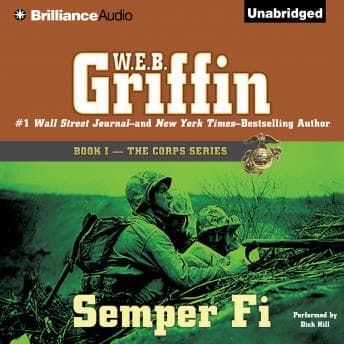

Look, I need to get something off my chest. W.E.B. Griffin commits what should be an unforgivable sin for a war novel—he makes you care about people before he puts them in harm's way. And I mean really care. I spent half this audiobook mentally preparing for heartbreak like I was grading senior thesis papers the week before graduation. You know they're going to disappoint you somehow, but you're invested anyway.
I listened to most of Semper Fi during my lakefront walks with Denise, and there's something almost too appropriate about hearing about Shanghai and Wake Island while watching Lake Michigan in November. The cold. The sense of something vast and indifferent. Griffin understood that war stories aren't really about war—they're about the waiting, the relationships, the small moments before everything changes.
The Slow Build That Hemingway Would Respect
Here's the thing about Griffin's prose—it's not literary in the way my grad school professors would approve. It's workmanlike. Accessible. And I mean that as genuine praise. This reminds me of what Hemingway said about writing true sentences. Griffin writes true military sentences. He was a combat correspondent in Korea, and you can feel it in every detail about rank structure, about the way Marines talk to each other, about the institutional memory of the Corps.
My students would probably find the first half slow. They'd be wrong. (They're often wrong about pacing—they think everything should move like TikTok.) Griffin is building something here. The character development isn't just window dressing before the action; it IS the point. When Pearl Harbor finally hits—and you know it's coming, we all know it's coming—it lands differently because you've spent hours with these men.
The prose deserves to be savored. At 1.0x speed, obviously. I'm not a monster.
Dick Hill Gets the Assignment
Dick Hill has been named a Golden Voice by AudioFile Magazine, and honestly? He earns it here. His style is clear, even, professional—which sounds like faint praise until you realize that's exactly what this material needs. Griffin isn't writing melodrama. He's writing institutional memory. Hill reads it like a man who understands that military fiction requires discipline, not theatrics.
Some listeners have complained about the narration being monotone. I get it. If you're expecting vocal pyrotechnics, you'll be disappointed. But I'd argue Hill's restraint is a choice, and it's the right one. There's a certain military bearing to his delivery that matches the material. You're not supposed to feel like you're watching a performance. You're supposed to feel like you're being briefed.
The one legitimate criticism—and I heard this from a few sources—is the female dialogue. Hill doesn't quite nail the women's voices, and yeah, it would've been nice to have a female narrator for those sections. Not a dealbreaker, but noticeable. Worth mentioning.
Where This Fits in the Canon
If you loved James Jones or Herman Wouk, this is their spiritual successor for the Marine Corps experience. That same attention to historical detail shows up in Camp of the Dog, though in a completely different setting. Griffin's knowledge of military history is encyclopedic—the man clearly did his homework, or more accurately, lived it. The details about pre-war Marine Corps culture, the politics of the Pacific, the institutional tensions between services—it's all there, and it's all authentic.
This is the first book in The Corps series, and I'll be honest—it doesn't stand entirely alone. The ending feels less like a conclusion and more like a pause before the next chapter. That's not necessarily a flaw if you're ready to commit to the series, but if you're looking for a self-contained war novel, adjust your expectations.
I found myself thinking about my grandfather during certain passages. He never talked much about his service, but Griffin captures something about that generation's relationship to duty that feels right. Not glorified. Not condemned. Just... true.
Who Should Enlist (And Who Gets a Deferment)
This is for military fiction enthusiasts, obviously. Long commuters—one listener said it makes a long drive seem like once around the block, and I believe it. History buffs who want the Pacific Theater from the ground level rather than the strategic overview.
Skip it if you need constant action. Skip it if slow-burn character development makes you impatient. And maybe skip it if you're sensitive to war violence—Griffin doesn't shy away from what combat costs.
Class Dismissed
Thirteen hours is a commitment. I'd make it again. Worth pausing the faculty meeting for. (Sorry, Principal Martinez.)