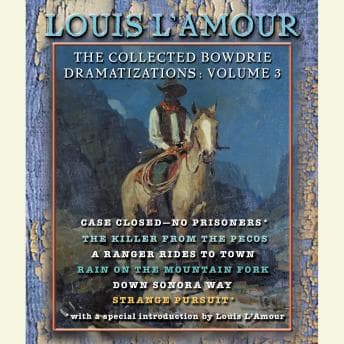
"The Rangers were called in to handle the tough cases, and Bowdrie was the toughest and smartest."
That line from the description pretty much tells you everything you need to know about the Chick Bowdrie stories. And look - I'll be honest up front. This isn't my usual territory. I live in the crawlspaces between Shirley Jackson and Thomas Ligotti. My podcast episodes are about cosmic dread and domestic horror, not cattle feuds and dusty trails. But here's the thing about genre loyalty: sometimes you wander into someone else's house and realize the architecture is surprisingly familiar.
I was shelving returns at the library on a quiet Wednesday afternoon - one of those gray Oregon days where the rain just hangs in the air without committing to actually falling - and I had this queued up because a podcast listener kept insisting that L'Amour's dramatizations were basically old radio horror shows but for westerns. Six stories, just under six hours. Full cast dramatization with sound effects. I figured worst case, it'd be pleasant background noise while I alphabetized the new YA arrivals.
It was not background noise.
Old Radio Magic With a Modern Catch
This production is designed to evoke those 1940s and '50s radio dramas, and when it works, it works. The sound effects - hoofbeats, gunfire, creaking saloon doors, wind across open desert - create an atmosphere that's surprisingly immersive for something so deliberately retro. There's a craftsmanship to the sound design that I genuinely respect. Horror podcasts could learn something from how these dramatizations build a scene with ambient sound before the dialogue even starts.
And L'Amour's introductions to each story? Those are genuinely special. He talks about where the ideas came from, the real places and people that fed his imagination. As a librarian, I'm basically contractually obligated to love primary source material, and hearing the author contextualize his own work before you dive in feels like a gift. It's the audio equivalent of reading a writer's personal marginalia. I found that same intimate connection with the author's process in Comstock Lode, which includes L'Amour's own lost treasures notes.
But then Jason Culp starts doing voices, and things get... complicated.
The Culp Problem (Or: When Your Tough Ranger Sounds Twelve)
So here's where I have to be blunt. Culp's natural storytelling voice is solid. He's got an easy, warm cadence that suits the western genre well - you can hear that he understands the rhythms of L'Amour's prose, the way sentences roll like someone telling a story around a campfire. When he's narrating, just narrating, I'm in.
But when he shifts into character voices - specifically some of the male leads - something goes wrong. There's this quality that creeps in where grown men, hardened Rangers and outlaws, start sounding like petulant ten-year-olds. Whiny. Thin. It's the vocal equivalent of casting a kid in a cowboy hat and hoping nobody notices. In a straight narration, you could overlook it. But this is a full dramatization. The voices ARE the performance. And when Bowdrie himself occasionally sounds like he should be complaining about homework instead of tracking killers across the Southwest, it pulls you right out.
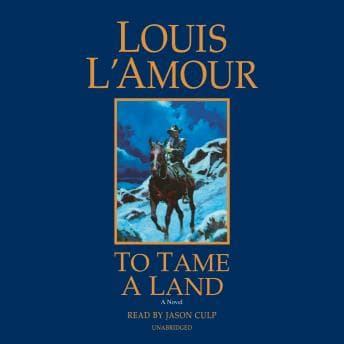
The narrator commits in the emotional scenes - there are moments where you can feel the weight of a standoff, the tension of a man deciding which side of the law he's going to land on. That commitment is rare. But consistency is the issue. One scene you're locked in, the next you're wincing at a voice choice that just doesn't fit the character's age or gravitas. I've heard Culp deliver more consistent performances in To Tame a Land, so these inconsistencies stood out even more.
Genre Respect Goes Both Ways
Here's what I kept thinking about while listening: L'Amour understood something that the best horror writers understand too. The landscape is a character. The silence between gunshots matters more than the gunshots. These Bowdrie stories aren't just action set pieces - they're about a man who could have gone wrong and chose not to, navigating a world where that choice gets tested every single day. Shirley Jackson walked so- okay, no, I can't make that comparison with a straight face. But the DNA of good genre fiction is the same regardless of whether your setting is Hill House or the Texas frontier. Atmosphere. Stakes. Characters who feel the weight of their choices.
L'Amour delivers that. The production design delivers that. The narration delivers it about sixty percent of the time.
Saddle Up or Ride Past?
If you're a L'Amour devotee, you probably already own this and you're just here to see if I agree with you. (I mostly do.) If you love old radio drama aesthetics and can forgive inconsistent voice work for the sake of great sound design and strong source material, this is a solid listen for long drives or focused afternoon sessions. If character voice consistency is a dealbreaker for you - and I wouldn't blame you, because in a dramatization format, it's kind of the whole point - you might find yourself frustrated.
Shirley (my cat) was unimpressed. But she's unimpressed by everything that doesn't involve tuna. I enjoyed it more than I expected, less than I wanted to. The bones are excellent. The flesh is uneven. And L'Amour's introductions alone are worth the price of admission for anyone who cares about where stories come from.