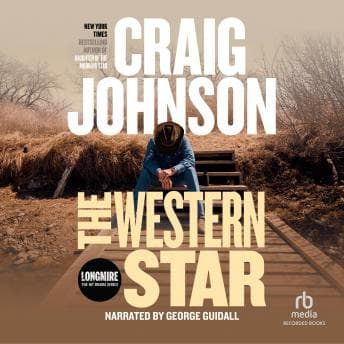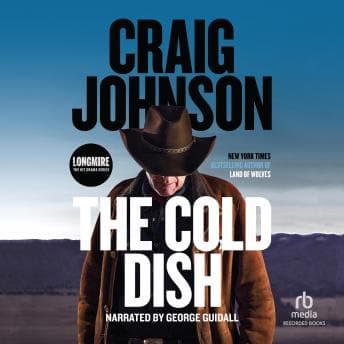

Look, I'll cut right to it - this book grabbed me by the collar about thirty minutes in and didn't let go until the credits rolled. Thirteen hours of Wyoming wilderness, cold-case vengeance, and a sheriff who reminds me of every good commander I ever served under. The kind who leads from the front and carries the weight so his people don't have to.
The setup is straightforward: four high school boys got suspended sentences for raping a Cheyenne girl. Now two of them are turning up dead, and Sheriff Walt Longmire has to figure out who's doing the killing before the body count climbs. Simple premise. But Craig Johnson does something smart here - he doesn't rush the investigation. He lets you settle into Absaroka County, meet the players, understand why everyone's got skin in this game.
The Voice That Sells It
George Guidall. This man gets it. He brought that same gravitas to Blowback, another book where the narrator needs to carry serious weight. His voice has that worn-leather quality that fits Walt Longmire like a broken-in pair of boots. There's warmth there, but also weight - you can hear the years of service, the accumulated grief, the bone-deep weariness of a man who's seen too much but keeps showing up anyway.
I've listened to plenty of narrators who phone it in on regional fiction. Guidall doesn't. He nails the cadence of Wyoming speech without making it a caricature. Henry Standing Bear - Walt's Cheyenne best friend - comes through with this quiet dignity that never feels forced. The banter between them? Ranger perked up every time they got going. (Yes, my dog has opinions about dialogue.)
Fair warning: some of the female voices blend together. Not a dealbreaker, but there were moments I had to rewind to figure out who was talking. And if you're expecting neutral, documentary-style narration, that's not what you're getting here. Guidall IS Walt. You're living in this man's head, seeing everything through his eyes. Some folks find that jarring at first. Give it an hour. It clicks.
Where the Mission Gets Personal
Here's what Johnson understands that a lot of thriller writers don't: justice isn't simple. These dead boys? They did something monstrous. The system failed their victim. And now someone's taking matters into their own hands. The book doesn't let you off easy with a clear hero and villain. Everyone's compromised. Everyone's got reasons. Midnight Line wrestles with similar moral territory - veterans, justice, and the messy space between them.
I've been in situations overseas where the "right" answer wasn't anywhere on the map. This book captures that moral ambiguity without being preachy about it. Walt's not some crusading white knight. He's a tired man trying to do his job while his own life's falling apart around him - his wife recently died, his daughter's distant, and he's questioning whether any of it matters.
The pacing is deliberate. Some might call it slow. I'd call it realistic. Real investigations don't wrap up in neat forty-minute episodes. There's legwork, dead ends, conversations that seem pointless until they're not. Johnson clearly did his homework on procedure and on the landscape. When he describes a winter storm rolling over the Bighorn Mountains, you feel the temperature drop.
The Uncomfortable Truth at the Core
I should mention - this book deals with sexual assault. It's handled with gravity, not exploitation, but it's central to the plot. If that's a hard line for you, know what you're walking into. Johnson doesn't sensationalize, but he doesn't look away either. The victim's trauma matters to the story. Her silence speaks as loud as the gunshots.
The violence, when it comes, is sudden and real. No Hollywood choreography. Just the ugly efficiency of people who know how to hurt other people. As someone who's seen the real thing, I can tell you Johnson gets it right.
Mission Debrief
Mission accomplished. This is a strong debut that earns its reputation. The mystery holds together, the characters feel lived-in, and Guidall's narration elevates the whole thing. I listened at 1.25x during a road trip to Houston and the hours disappeared.
Best for: Anyone who likes their mysteries with moral complexity and a strong sense of place. Fans of the TV series will find the book has more depth (and darker edges). Commuters, definitely - the chapters break naturally.
Skip if: You need constant action or you're sensitive to the assault content. Also maybe not ideal for bedtime - it's engaging enough to keep you up.
I'm already loading up the next Longmire book. Ranger approved.