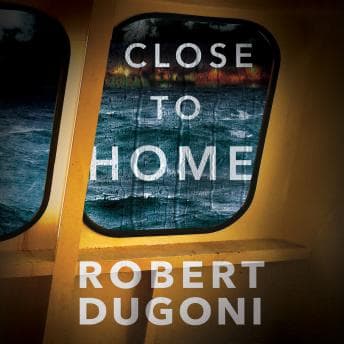

Look, I have a bone to pick with Robert Dugoni. Not because Close to Home is bad—it's actually quite good—but because he keeps doing this thing where he makes me care about characters in ways that feel almost manipulative. A dead child. A hit-and-run. A military cover-up. He knows exactly what buttons to push, and I resent being so predictable.
(My therapist would have thoughts about that resentment. We're working on it.)
I finished this one while making my mother's rajma recipe at 10 PM on a Tuesday, which is maybe too on-the-nose given the book's title. But there I was, stirring kidney beans and listening to Tracy Crosswhite navigate a conspiracy that kept expanding like concentric circles in water. Every time I thought I understood the shape of it, another ripple appeared. Unkindness of Ravens had that same quality of constantly shifting perspectives, though it leaned harder into unreliable narrator territory.
The Psychology of Institutional Protection
What makes this compelling is that Tracy isn't just fighting a killer—she's fighting a system designed to protect its own. The research actually shows that institutional loyalty often overrides individual moral judgment, and Dugoni captures this with uncomfortable accuracy. The naval base isn't evil. The people within it aren't monsters. They're just doing what institutions do: prioritizing survival over truth.
The heroin overdose connection took me by surprise. I found myself asking: why does the military protection extend this far? What's the actual mechanism of loyalty here? Dugoni doesn't spell it out in neon letters, which I appreciated. He trusts readers to connect dots.
Tracy exhibits classic investigator psychology—that particular stubbornness that looks like virtue but might actually be pathology. She can't let go. She won't let go. Even when the evidence disappears, even when the case is legally closed. Is that admirable or concerning? Probably both.
Emily Sutton-Smith Owns This Series
I've listened to enough mediocre narration to know the difference between someone reading words and someone inhabiting a world. Sutton-Smith does the latter. Her male voices are genuinely distinct—not that weird falsetto thing some female narrators do—and her accent work (Indian, Mexican, Italian-American) adds texture without becoming caricature.
The pacing is comfortable enough that I bumped it to 1.5x without losing anything. That's actually a compliment. Some narrators fall apart at higher speeds, their careful enunciation becoming garbled mush. Sutton-Smith stays crisp.
One listener called her "the sound of this series," and psychologically, that tracks. When you've spent multiple books with a voice, it becomes the character's actual voice in your head. Recasting would feel like a betrayal at this point.
Where the Conspiracy Strains Credulity
Okay, here's where I get nitpicky. The scope of the cover-up requires a lot of people to stay quiet. A lot. And while institutional loyalty is real, this many moving parts starts to feel less like realistic corruption and more like thriller convenience. People talk. People get guilty. People get drunk and confess to bartenders.
Psychologically, this doesn't quite track for me at the scale Dugoni presents. But—and this is important—I didn't stop listening. I didn't throw my phone into the rajma. The narrative momentum carried me past my skepticism, which is its own kind of skill.
The "close to home" element works because Tracy's personal stakes feel earned rather than manufactured. She's not investigating because the plot requires it. She's investigating because she's Tracy, and this is what Tracy does, even when it's self-destructive.
Who's In, Who's Out
If you're already invested in the Tracy Crosswhite series, this is a solid entry. Not the best, not the worst, but consistent. If you love police procedurals with institutional critique baked in, you'll find plenty to chew on.
Skip if you need your mysteries wrapped in neat bows. The resolution here is satisfying but messy—like real life, like real justice systems, like the uncomfortable truth that sometimes the bad guys face consequences and sometimes they don't. Big Little Lies does something similar with its exploration of how systems protect abusers—though it trades military institutions for suburban ones.
Content-wise: violence, language, and some sexual content. Nothing gratuitous, but also not cozy.
Closing the Case File
This is a fascinating case study in how genre fiction can explore systemic failure without becoming preachy. Dugoni isn't writing a polemic. He's writing a thriller that happens to ask uncomfortable questions about who gets protected and why.
I burned my rajma, by the way. Got too caught up in the final act. Worth it? Probably. My mother would disagree.