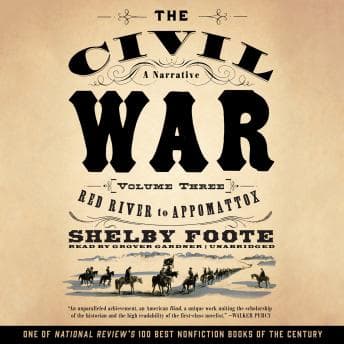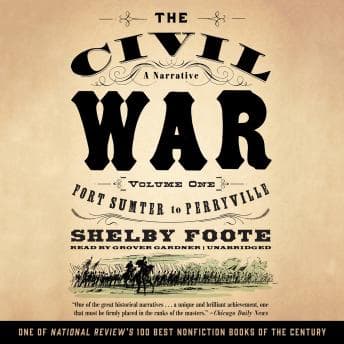

Forty-three hours. That's longer than most combat deployments feel when you're actually in the thick of it. I started this monster during a week of long drives between client sites across Texas, and I'm not exaggerating when I say Shelby Foote kept me company through about two thousand miles of highway.
Let me cut to the chase: this is the real deal. Foote wasn't just some academic pushing papers around. The man served as an artillery captain in WWII, and you can feel that military mind at work in every tactical breakdown. When he describes troop movements at Shiloh or the chaos of the Seven Days Battles, he's thinking like a commander, not a historian.
Where Most Civil War Books Get It Wrong
I've read—and listened to—more Civil War histories than I care to count. Most fall into two camps: dry academic recitations of dates and casualty figures, or romanticized Lost Cause nonsense that makes my blood pressure spike. Foote does something different. He treats both sides as professional military organizations with competent (and sometimes spectacularly incompetent) leadership making decisions under pressure.
The man clearly did his homework. When he breaks down why Braxton Bragg's decisions at Perryville were strategically questionable, he's not just Monday-morning quarterbacking. He walks you through the fog of war—the incomplete intelligence, the communication breakdowns, the terrain challenges. I've seen this scenario play out in real life, and Foote captures that chaos without losing the narrative thread.
His treatment of Fort Donelson is a perfect example. Most accounts give you the broad strokes—Grant's victory, the unconditional surrender demand. Foote puts you inside the Confederate command structure as it collapses, following the buck-passing between Floyd, Pillow, and Buckner. It's almost painful to listen to, like watching a staff meeting go sideways in slow motion. That same attention to internal political maneuvering shows up in History of Florence and of the Affairs of Italy, Vol. 1, though Machiavelli's writing about Renaissance power struggles doesn't have quite the same military precision.
Gardner's Voice Has That Old Soldier Quality
Grover Gardner sounds like what I imagine a 19th-century general would sound like reading his memoirs by firelight. There's this sandpaper quality underneath a smooth delivery—scholarly but not stuffy. He doesn't do theatrical voices for Lincoln or Davis, which I actually appreciate. Nothing breaks immersion faster than a narrator doing a bad impression of historical figures.
At 1.25x speed, his pacing works perfectly. The natural rhythm of Foote's prose—which is almost novelistic at times—comes through without dragging. I heard some folks complain the narration gets dry in volumes 2 and 3, but I didn't find that problem here. Maybe it's because this first volume covers the most dramatic early battles, or maybe Gardner just had more energy in the booth.
The Commitment Factor
Let's be honest about what you're signing up for. Forty-three hours is a serious time investment. This isn't background listening while you're doing dishes. I tried that once during a section about the political maneuvering in Washington, and I had to rewind twenty minutes because I'd completely zoned out.
But here's the thing—if you're going to understand the Civil War, really understand it beyond the highlight reel of Gettysburg and Appomattox, you need this level of detail. Foote covers the smaller engagements that shaped the larger conflict: Ball's Bluff, Pea Ridge, Island Ten. The Monitor versus Merrimac duel. The fall of New Orleans. Each piece builds toward a comprehensive picture you simply cannot get from shorter works.
Ranger sat through most of this with me during evening drives. He seemed particularly attentive during the cavalry descriptions. (German Shepherds have opinions about horses, apparently.)
Who Should Deploy—And Who Should Stand Down
If you're a serious student of military history, this is essential. If you want to understand American command culture and how it evolved through our bloodiest conflict, Foote delivers. Long commutes or road trips and want something that rewards sustained attention? Mission accomplished.
Who should skip it? Anyone looking for a quick overview. Anyone who gets frustrated by detailed tactical descriptions. And honestly, anyone who calls a magazine a "clip"—you're not ready for this level of precision. (Kidding. Mostly.)
The audio production is clean, no weird editing artifacts or background noise. Just Gardner's voice and Foote's words, hour after hour. Sometimes that's all you need.
Ranger Approved
I'm already queuing up Volume 2. Linda thinks I've lost my mind—"You're listening to MORE of that?"—but she doesn't understand. Some books you read for entertainment. Some books you read because they make you better at understanding how humans behave under impossible pressure. This is the second kind.







![Steve Jobs [unabridged audiobook] audiobook cover](/_next/image?url=https%3A%2F%2Fcovers.audiobooks.com%2Fimages%2Fcovers%2Ffull%2F9788499923406.jpg&w=1920&q=75)