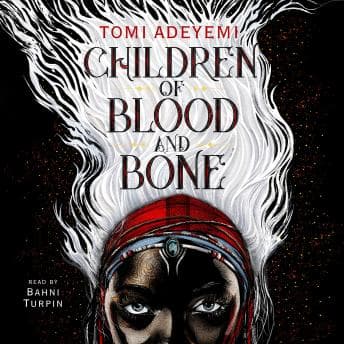

Look, I need to talk about the magic system in this book. Because Tomi Adeyemi did something that made my D&D-obsessed brain very happy - she created ten distinct maji clans, each with their own abilities, and they're all rooted in Yoruba mythology. Reapers who summon spirits. Burners who control fire. Tiders who command water. This is Sanderson-level world-building, but with West African cosmology instead of European-inspired fantasy. And honestly? It's about time.
I listened to this during a three-week period where I was definitely not working on my thesis. (Dr. Patel, if you're reading this, I was researching procedural generation of fantasy magic systems. Totally relevant.) The 18-hour runtime flew by. I'm not exaggerating - I missed my bus stop twice because I forgot I was supposed to be paying attention to the real world.
Bahni Turpin Walked So Other Narrators Could Run
Okay, so I'm a Steven Pacey stan. Everyone knows this. But Bahni Turpin? She's playing in the same league. Her Zélie is fierce and vulnerable in the same breath. Her Amari - the rogue princess - sounds completely different. Not just a pitch shift, but a whole different cadence, a different way of breathing through sentences. And when she does the Yoruba incantations? Chef's kiss. The chants feel musical and ancient and powerful in a way that would've been impossible to get from reading.
The emotional range is insane. There's this scene - I won't spoil it - where Zélie loses someone. Turpin's voice cracks in exactly the right places. I was walking through campus with tears streaming down my face like a complete weirdo. Worth it.
One thing though: the volume levels during intense scenes can be... a lot. When characters are shouting, Turpin COMMITS to the shouting. I had to yank my earbuds out a few times during battle sequences. Not a dealbreaker, but maybe don't listen at max volume if you're in public.
Where the Story Hits Different
This isn't just fantasy for fantasy's sake. The maji in Orïsha were systematically murdered. Their temples destroyed. Their children - the divîners - marked with white hair so they can be identified, taxed into poverty, and killed if they step out of line. Sound familiar? Yeah. Adeyemi isn't subtle about the parallels, and she shouldn't be.
But here's what makes it work as a story and not just a Message: the characters are messy. Zélie is angry - like, burn-everything-down angry - and sometimes that anger makes her do stupid things. The crown prince Inan is the enemy, but he's also genuinely trying to figure out what's right in a system that's raised him to believe magic is evil. Their dynamic is... complicated. That same enemies-to-lovers tension drives Court of Thorns and Roses, though with more fae politics and less systematic oppression. (Yes, there's romance. Yes, it's the enemies-to-lovers slow burn you're hoping for. My D&D group would eat this up.)
The pacing does drag a bit in the middle third. There's a lot of traveling and training that could've been tightened. But honestly, I didn't mind because I was so invested in the world. Every village has distinct customs. The mythology keeps expanding. New creatures keep showing up. Snow leoponaires! Vengeful water spirits! I was taking mental notes for my next campaign.
The Progression Fantasy Element
I don't think this is marketed as progression fantasy, but it scratches that itch. Zélie starts barely able to control her powers and gradually levels up through training and trials. The magic system has clear rules and limitations. There's a quest structure with defined goals. If you're into LitRPG or progression fantasy, this hits similar beats in a more literary package.
The world-building is dense but accessible. Adeyemi doesn't info-dump - she weaves the mythology into action scenes and character moments. You learn about the gods through prayers and rituals, not exposition. This is how you do it.
Who's Rolling Initiative on This One?
If you love fantasy with actual world-building, magic systems with internal logic, and you've been craving something that isn't another medieval Europe clone - grab this immediately. Progression fantasy fans will find a lot to love here too. Skip it if you need fast pacing throughout or if you're sensitive to volume spikes in your audiobooks. Also maybe skip if you're on a thesis deadline. (Do as I say, not as I do.)
Campaign Notes: Final Session
Already started the sequel. My thesis can wait. (It really can't, but here we are.)
This is an 18-hour commitment, and yes, it's worth it. Bahni Turpin's narration elevates already strong material into something special. The volume issues are minor compared to how immersive the overall experience is.
Just maybe keep the volume at 75%.