
It's 2:30 AM in the Georgia Tech CS lab. My procedural dungeon generator is currently generating nothing but empty 1x1 rooms, which is technically a dungeon, just a very boring one. My advisor, Dr. Patel, sent me an email with the subject line "Update?" three days ago. I haven't opened it.
Instead, I'm sitting here in the glow of three monitors, listening to Zélie Adebola absolutely lose her mind. And honestly? It's a vibe.
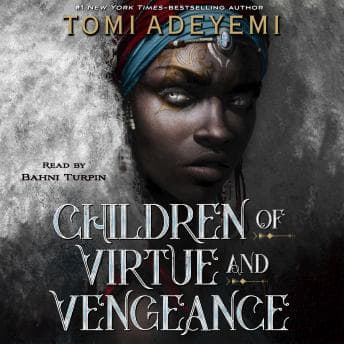
I needed something with high stakes to distract me from the fact that I might never graduate, and Children of Virtue and Vengeance is basically 13 hours of pure adrenaline and stress. (The good kind. Mostly.)
Bahni Turpin Is Narration Royalty
Look, if you listen to audiobooks, you know the name. She's absolute royalty in the narration game. While I'm over here trying to code distinct behaviors for NPCs, she's effortlessly juggling a dozen distinct voices without breaking a sweat.
Her performance here is... intense. Visceral, even. You can hear the exhaustion in Zélie's voice. You can hear the posh-but-trying-to-be-tough edge in Amari. It's not just reading; it's acting.
I did see some threads online—because yes, I doom-scroll Reddit when I should be writing—complaining that the accent sounds more South African than Nigerian. As a guy from rural Georgia whose exposure to accents is mostly limited to "Atlanta" and "Not Atlanta," I can't really weigh in on the linguistic accuracy. But purely from a performance standpoint? She nailed the emotion. When characters are angry, you feel it in your teeth. When they're grieving, it hurts.
Bahni Turpin's work on Hate U Give is where I first realized narration could be an art form unto itself—that performance still lives rent-free in my head years later.When the DM Punishes You for Winning
Here's the thing about the story itself. The first book was a classic fetch quest—get the magic back. We know that trope. We love that trope.
This book is what happens when your Dungeon Master decides to punish the party for succeeding.
"Oh, you want magic back? Cool. Now the bad guys have it too. Roll for initiative."
The magic system expansion is fascinating—giving the nobility powers creates this messy, chaotic power balance that feels way more realistic than "good guys have magic, bad guys have swords." It complicates the world-building in a way that my nerdy little heart appreciates. It's not just a battle for survival anymore; it's a political nightmare.
Dungeon Desolation captures that same feeling of a world spiraling out of control after a big win—and its magic system has consequences that make this one look almost forgiving.But—and this is me being real—the pacing gets bogged down in the middle. There's a lot of internal monologuing. Like, a lot. Zélie and Amari spend a good chunk of time in their own heads, rehashing their trauma. Which, fair. They've been through it. But around hour seven, I found myself zoning out while debugging my code, having to rewind because I missed a transition.
Who's Rolling for This One?
If you loved Children of Blood and Bone, you're going to listen to this anyway. You have to. The ending of the first book demands it. Fans of complex magic systems and morally gray political conflicts will eat this up. But if you bounced off the first book's YA romance and angst, fair warning: this one cranks both to an 11.
Time to Email Dr. Patel
Is it perfect? No. Sometimes I just wanted them to stop talking and cast some fireballs. But Bahni Turpin's performance carries the slower moments. She brings a gravity to the text that keeps you hooked even when the plot spins its wheels.
Now, if you'll excuse me, I have to explain to Dr. Patel why my thesis is delayed. Maybe I'll tell him a rogue maji corrupted my hard drive.