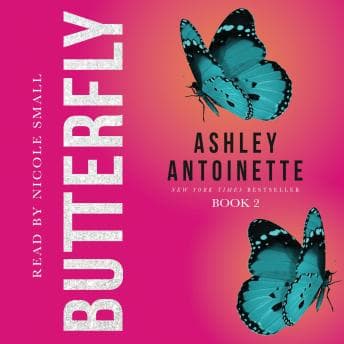

Morgan Atkins has more drama in her love life than my entire trauma unit on a Saturday night. And that's saying something.
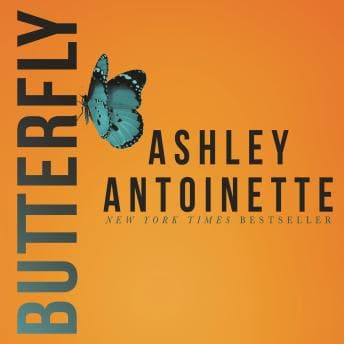
I picked up Butterfly 2 because I needed something completely different from my usual medical thrillers - something messy, emotional, the kind of story where everybody's making choices you want to shake them for. I got exactly that. Ashley Antoinette doesn't write characters who make sensible decisions. She writes characters who make human decisions, which means they're frequently terrible and always understandable.
Three Men and a Whole Lot of Bad Judgment
Here's the setup: Morgan's got Sebastian, who looks perfect on paper - stable, connected, accepts her kids - but wants to mold her into someone she's not. Then there's Ahmeek, Messiah's best friend, who heals something in her she didn't know was broken. And then Messiah comes back from the dead, which - look, I work in a trauma center, people don't just come back like that, but this is fiction and I'll allow it.
What Antoinette does well is make you understand why Morgan can't just pick one and move on. Each man represents something real: safety, passion, unfinished business. The push and pull between Morgan and Ahmeek had me gripping my steering wheel harder than I should've been at 8 AM on the I-10. That slow-burn tension where you know two people belong together but everything keeps getting in the way reminded me of the same ache I felt reading Bridgerton: The Duke and I — different world, same white-knuckle frustration. Their connection feels earned, not manufactured. But then Messiah shows up and throws a grenade into everything, and you can feel Morgan unraveling.
The criticism I've heard - that Morgan's storyline gets exhausting and repetitive - I get it. There are stretches where she's cycling through the same emotional loops. But honestly? I've watched real people do exactly that. Patients, friends, my own younger sister. When you're trauma-bonded to someone, you don't just cleanly move on. You circle. You backslide. It's frustrating to watch, but it's accurate. Whether that accuracy makes for a satisfying listening experience is another question, and somewhere around hour six, I was ready for Morgan to make a decision and stick with it.
Nicole Small Carries This on Her Back
Single narrator doing urban fiction with this many characters is a heavy lift, and Nicole Small mostly pulls it off. Her emotional delivery is the real star here - when Morgan is falling apart, you feel it in Small's voice. There's a rhythm to how she reads Antoinette's prose that borders on musical, almost like spoken word poetry in places. Antoinette writes with a cadence, and Small leans into that instead of fighting it.
But - and this matters - the character differentiation is thin. When Ahmeek and Messiah are in scenes close together, I sometimes had to pause and figure out who was talking. For a love triangle story where the whole point is distinguishing between these men and what they offer, that's a problem. I wanted more vocal separation. Give Meek a different energy in his voice, something cooler, more deliberate. Give Messiah that raw edge. Small has the emotional range; I just wish she'd stretched it further between characters.
Carlos asked why I was crying in the car. I blamed allergies. He didn't buy it. (He never does.)
The Urban Fiction Question
If you're already in the Ashley Antoinette universe - if you know the Ethic series, if you've read Butterfly 1 - this is going to hit exactly right. She's consistent in what she delivers: high-stakes romance tangled up with street life, women navigating impossible situations with men who are both their greatest love and their greatest danger. This isn't a standalone entry point, though. You need Butterfly 1. The emotional weight of Messiah's return only works if you've sat through the grief of losing him.
For people new to urban fiction who are curious? This is a solid example of what the genre does well - raw emotional honesty, zero sugarcoating, stakes that feel life-or-death because sometimes they literally are. But go back to book one first.
At nine and a half hours, it's a decent length. Not so long that you lose the thread between shifts, not so short it feels rushed. I knocked it out over three post-shift drives and one Saturday morning while the kids were at Carlos's mom's house and I had the kitchen to myself making adobo. (My mom would love this book, by the way. She reads Tagalog romance novels with plots just as dramatic and pretends she doesn't.)
Who Needs This and Who Doesn't
This is for you if you want messy, emotional, real romance with consequences. If you like your love stories sanitized and tidy, run. Content warnings for violence, language, and sexual content - this is grown folks' fiction.
Skip it if you need strong character voice differentiation in your audiobooks. The narration is emotionally powerful but won't help you track who's speaking in crowded scenes.
Perfect for that post-shift decompression when you need to feel something that isn't clinical.
Night Shift Prescription
Butterfly 2 is messy the way real love is messy. It drags in the middle like Morgan's indecision drags, and I can't fully tell if that's a flaw or the point. Nicole Small's voice is the thread holding it together - imperfect in technique, devastating in feeling. I'm in for book three. Somebody's heart is getting broken and I need to know whose.