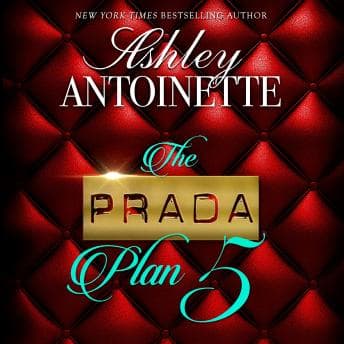

Nine hours. Nine hours of my life listening to a woman sabotage her own happiness because her husband isn't loving her "right." And you know what's maddening? I couldn't stop.
I finished grading a stack of junior essays on The Great Gatsby—all of them missing the point about Daisy's dissatisfaction—and put this on around midnight. Denise was already asleep. By 2 AM, I was pacing the kitchen, genuinely frustrated with YaYa's choices while simultaneously needing to know what happened next. That's Ashley Antoinette's gift, I suppose. She writes characters you want to shake while refusing to let you look away.
The Tragedy of Getting Everything You Wanted
This reminds me of what Hemingway said about happiness—that it makes up in height what it lacks in length. YaYa fought through four books to become Mrs. Indie Perkins. She won. Leah's gone. Her daughter's safe. And now? Now she's bored. Restless. Convinced that Indie is "loving her wrong," whatever that means.
Antoinette doesn't write literary fiction, but she understands something fundamental about human nature that half my AP students miss when we read Madame Bovary. Dissatisfaction isn't about circumstances. It's about the person. Wife Between Us: A Novel explores that same uncomfortable truth about marriage and self-deception, just with more suburban wine glasses and fewer street corners. YaYa's "Plan B" isn't really about Indie at all. It's about the terrifying realization that achieving your dreams doesn't automatically fix what's broken inside you.
My students would hate this. I love it. Not because it's comfortable, but because it's honest about how messy people really are.
Nicole Small Carries the Weight
Nicole Small's narration is phenomenal—and I don't use that word lightly. She doesn't just read YaYa's internal conflict; she embodies it. There's this exhausted edge to her voice when YaYa's rationalizing her choices, a brittleness that tells you everything about where this is heading before the plot catches up.
The book runs close to nine hours, and some listeners complained it's lengthy. They're not wrong exactly—there are stretches where the domestic tension circles back on itself. But Small's performance keeps you anchored. She shifts between YaYa's public composure and private desperation without ever feeling theatrical about it.
I listened at 1.0x because the author chose those words. And Small's pacing respects that choice. The pauses carry weight.
Where It Falls Apart (Literally)
Here's my complaint, and it's significant: the ending. Or rather, the absence of one.
I understand this is book five in an ongoing series. I understand Ashley Antoinette wants you to buy book six. But there's a difference between a cliffhanger that leaves you hungry and one that feels like the audiobook file got corrupted. This is the latter. You don't get resolution. You don't even get a proper dramatic pause before the credits roll. You get... nothing. Cut to black.
After eight hours and fifty-six minutes of emotional investment, that stings. Principal Martinez's budget meetings have better conclusions than this. (Sorry, Martinez. Still wasn't listening.)
Who Should Press Play—And Who Should Wait
If you've been with the Prada Plan series from the beginning, you already know if you're listening. This isn't a jumping-on point—the emotional stakes require context, and Antoinette doesn't waste time with recaps. If you love urban fiction that takes its characters' psychology seriously, that treats relationship drama with the weight of actual consequences, you'll find a lot here. The content warnings are real—violence, language, sexual content—but none of it feels gratuitous. It serves the story.
Skip this if you need closure. I mean it. If unresolved endings genuinely bother you, wait until book six exists and listen to them back-to-back. Your blood pressure will thank you.
Class Dismissed
The Prada Plan 5 is frustrating in the way good drama should be frustrating—because the characters feel real enough to disappoint you. YaYa's choices made me want to assign her supplementary reading on self-awareness. Indie's obliviousness made me think about every marriage I've watched struggle from the sidelines.
Nicole Small's narration elevates material that could easily become soap opera into something that actually examines what happens after "happily ever after." That's worth something.
But that ending. That ending is going to haunt me until I break down and buy the next installment. Which is probably exactly what Ashley Antoinette intended.
Well played.