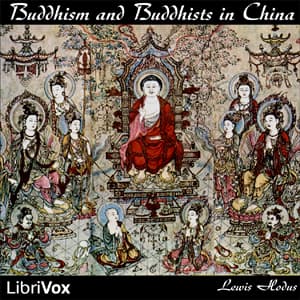

Can we talk about how frustrating it is when you pick up a book about Buddhism and suddenly find yourself reading between the lines for missionary subtext? Look, I get it—Lewis Hodous was a Christian missionary in early 20th century China, and expecting him to write a completely neutral academic text is like expecting a cat to ignore a laser pointer. It's just not going to happen.
But here's the thing: once I made peace with that reality, Buddhism and Buddhists in China turned out to be a surprisingly worthwhile listen. This isn't some fire-and-brimstone screed against Eastern religion. Hodous clearly spent years immersing himself in Chinese Buddhist communities, and his respect for the tradition comes through even when he's viewing it through his particular theological lens.
A Time Capsule from 1924
At just over three hours, this audiobook captures Buddhism as it existed in China during massive social upheaval—after the fall of the Qing Dynasty but before the Communist revolution would reshape religious practice entirely. That historical context alone makes it valuable for anyone studying how Buddhism adapted and survived in different political climates.
The narration comes from LibriVox's volunteer readers, which means you're getting a rotating cast rather than a single polished voice. I'll be honest—this can be jarring. Just when you've settled into one reader's rhythm, another takes over with a completely different cadence. For academic content like this, though, the clear and straightforward delivery works well enough. Nobody's trying to be dramatic here; they're just getting the information across.
The Curious Missionary
What struck me most was Hodous's genuine curiosity about Buddhist practice. He describes temple rituals, monastic life, and the relationship between Buddhism and Chinese folk religion with the eye of an anthropologist rather than a critic. Yes, he occasionally draws comparisons to Christianity—sometimes favorably, sometimes not—but these moments feel more like a scholar trying to build bridges for his Western audience than someone scoring points for Team Jesus.
The book works through Buddhism's historical arrival in China, its integration with Confucianism and Taoism, and its various schools and sects. Hodous is particularly good at explaining how Buddhism transformed as it absorbed Chinese cultural elements. Pure Land Buddhism, Chan (which would become Zen in Japan), and the popular devotional practices that mixed with local traditions all get attention here.
Fair Warning: This Is Academic Listening
Should you expect edge-of-your-seat entertainment? Absolutely not. This is academic writing from a century ago, and it reads like academic writing from a century ago. The prose is dense, the pacing is methodical, and if you're listening during a workout, you might find your mind wandering somewhere around the discussion of Mahayana doctrinal developments.
I found this worked best during focused listening sessions—the kind where you're actually paying attention rather than using it as background noise. The content rewards concentration. There are genuine insights here about how religions adapt to new cultural contexts, how missionary work shaped Western understanding of Asian religions, and how Buddhism functioned as a living tradition rather than just a philosophical system. That interplay between observer and observed reminded me of Science the Mind, which similarly examines how our frameworks shape what we think we're seeing objectively.
The missionary perspective, which initially annoyed me, eventually became one of the more interesting aspects. Reading Hodous is like reading a primary source document about early 20th century religious encounter. You learn as much about how Western Christians understood Buddhism as you do about Buddhism itself. That double vision—seeing both the subject and the observer—gives the text unexpected depth.
Who Should Press Play (And Who Should Skip)
Students of religious studies or Asian history will find primary source material in an accessible format here. If you're curious about how Buddhism looked to Western eyes a century ago, or how religions transform when they cross cultural boundaries, this delivers. Skip it if you want a meditation guide, spiritual inspiration, or anything resembling modern prose—Hodous is documenting a religious tradition, not advocating for it.
Class Dismissed
Just don't come to this expecting spiritual guidance. His Christianity is present but restrained, like a watermark on the page rather than bold text. If you can accept that limitation—and the century-old prose style—you'll find a thoughtful, respectful examination of Buddhism's Chinese incarnation at a pivotal historical moment.
The fact that this text remains readable and informative a hundred years later says something about Hodous's genuine scholarly engagement with his subject. Biased? Sure. But also curious, careful, and ultimately educational for anyone willing to meet it on its own terms.