
"The painting shows us a moment frozen in time, but the artist's whole life led to that single brushstroke."
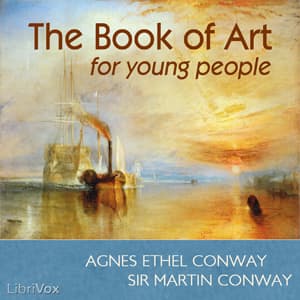
I'm paraphrasing from somewhere around the 45-minute mark, but that sentiment basically encapsulates what Agnes Ethel Conway and Sir Martin Conway were doing back in 1910 - and honestly? It still works.
Let me set the scene: I'm stuck on a delayed Caltrain at Millbrae, it's 7:15 AM, and I've already rage-quit my usual sci-fi because my brain is too fried from yesterday's incident review. So I throw on this random art history book that's been sitting in my library since some algorithm recommended it. Four hours later, I've learned more about Renaissance painting techniques than I did in my entire undergrad humanities requirement.
Not Your Museum Audio Guide
Quick Verdict: This is basically a crash course in art appreciation, but for people who think they don't care about art.
The Conways had this genius approach - instead of doing the boring "here's a painting, here are some facts" thing, they treat each artwork like a mystery to solve. Who was this artist? What was happening in their life when they painted this? Why did they choose that shade of blue? It's almost like debugging, honestly. You're tracing back through context and constraints to understand why something exists the way it does.
What surprised me most: Agnes Conway wasn't just some random author. She was a legit British archaeologist who worked in the Middle East in the 1930s. Her co-author Sir Martin Conway was equally credentialed. These weren't art enthusiasts writing a cute kids' book - they were serious scholars who happened to believe children (and honestly, clueless adults like me) deserved real knowledge, not dumbed-down nonsense.
Kara Shallenberg Does the Heavy Lifting
Here's where I have to be honest about my data limitations - I couldn't find detailed listener feedback on Shallenberg's specific performance quirks. What I can tell you is that her narration is clean, clear, and paced for comprehension rather than entertainment. She's not doing character voices or dramatic pauses. This is educational content delivered with respect for the material.
At 4 hours and 13 minutes, the ROI on this audiobook is surprisingly good. That's maybe 4-5 commutes for me, and you walk away with a genuine framework for looking at art that doesn't make you feel like a fraud at museums. I listened at my usual 1.5x and it held up fine - the language is formal (it's from 1910, after all) but not dense.
No sound effects, no music, just Shallenberg and the text. For this type of content? That's exactly right. You don't need production gimmicks when you're trying to imagine a painting based on verbal description.
The Weird Joy of Century-Old Educational Writing
Here's what I didn't expect: the writing style is genuinely charming in a way modern educational content rarely achieves. The Conways write with this earnest belief that young people are capable of appreciating beauty and complexity if you just explain it properly. No condescension, no "fun facts!" energy. Just: here's why this matters, here's how to see it.
The book moves chronologically through art history, focusing on individual paintings rather than trying to cram entire movements into your head. Each chapter is essentially a case study. If you've ever enjoyed those YouTube video essays that go deep on one specific thing, this is the 1910 audiobook equivalent.
Perfect for: commute, background while doing mindless coding tasks, falling asleep (not because it's boring - because it's soothing). Skip for: gym, anything requiring divided attention. You need to actually listen to get value here.
Download If / Skip If
You'll love this if: you've ever felt intimidated at art museums, you appreciate well-structured educational content, or you're looking for something genuinely different from your usual audiobook rotation. Also good for: parents who want to introduce kids to art history without the cringe factor of most "kids" content. That same respect for young audiences—treating them like actual humans capable of complex thought—is what made Invisible Women so effective at explaining statistical bias without dumbing anything down.
Skip it if: you need narrative tension to stay engaged, you're looking for contemporary art criticism, or the idea of formal early-20th-century prose makes you want to throw your phone.
My Commute-Worthiness Calculation
At 4 hours, this is a low-commitment experiment. The production is clean, the content is legitimately educational, and Shallenberg's narration does exactly what it needs to do. It's not going to change your life, but it might change how you look at the next painting you encounter. That's a pretty good return on a few train rides.
I finished this in 3 commutes and came away feeling like I'd actually learned something. In the audiobook landscape of "could've been a blog post" business books, that counts for a lot.




![Steve Jobs [unabridged audiobook] audiobook cover](/_next/image?url=https%3A%2F%2Fcovers.audiobooks.com%2Fimages%2Fcovers%2Ffull%2F9788499923406.jpg&w=1920&q=75)