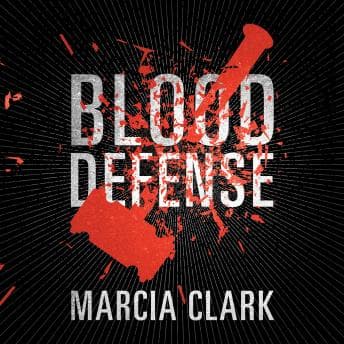

What happens when the woman who prosecuted O.J. Simpson decides to write fiction about a defense attorney? You get something that feels like it was written by someone who's actually stood in a courtroom under fire - because it was.
I knocked out Blood Defense over a long weekend of fence repair at the house. Ranger supervised from the shade while I split time between posthole diggers and earbuds. Nearly 12 hours of legal thriller, and I'll say this upfront: Marcia Clark knows her business. The courtroom strategy scenes alone are worth the listen. She writes legal maneuvering the way someone who's lived it would - no Hollywood shortcuts, no magical last-minute evidence reveals that make you roll your eyes. When Sam Brinkman builds her defense for a decorated LAPD detective accused of double murder, you can feel the chess match. Clark understands that real legal drama isn't about screaming "You can't handle the truth" - it's about which piece of evidence gets suppressed and why that matters.
The Prosecutor Writing for the Defense
Here's what got me: Clark clearly used her own prosecution experience to build a credible defense attorney. Sam Brinkman isn't some noble crusader. She's ambitious, calculating, and she takes the case knowing her client might be guilty because it'll put her name in lights. That moral gray zone is where the book lives, and it's more honest than 90% of legal thrillers I've listened to. Face: A Novel works that same moral gray zone hard - protagonist you're not sure you should be rooting for, but you can't look away. The supporting cast works too - her childhood friend and an ex-con as her associates give the firm a scrappy underdog feel that kept me invested. And that scene where Sam and Dale embrace without hesitation? Caught me off guard. Clark drops these human moments between the legal machinery, and they hit harder because she doesn't overplay them.
The twist toward the end - where Sam realizes her client might be a genuine sociopath who's been manipulating her the whole time - is genuinely unsettling. The author clearly did their homework on how predators operate within systems designed to protect people. I've seen this scenario play out in real life, not with lawyers specifically, but with people in positions of authority who use the trust built into their role as camouflage. Clark nails that dynamic.
But. And this is a real but. The middle section wanders. There's a stretch around hours five through seven where the plot meanders through personal subplots and background that could've been tightened by a good two hours. I found myself reaching for the speed controls more than once. At 1.25x it was manageable, but I understand why some listeners had to work to stay engaged.
Tavia Gilbert: Aggressive in Good Ways and Bad
Let me cut to the chase on the narration - Tavia Gilbert is a polarizing choice here. She runs hot. Her delivery matches Sam Brinkman's intensity, and when the courtroom scenes kick in, that aggressive energy works beautifully. She differentiates characters well enough that I never lost track of who was speaking, which matters in a book with this many lawyers and cops talking past each other.
Here's the problem: she doesn't have a low gear. That excitable, clipped cadence that makes cross-examination scenes crackle starts to wear on you during quieter moments. By hour eight, I needed breaks not because the story was bad, but because the narration was running at combat tempo during what should've been rest-and-refit scenes. It's like having a squad leader who whisper-shouts everything - effective in short bursts, exhausting over a full deployment. Some of the story's cleverer twists didn't land with the weight they deserved because the delivery was already at a ten when it needed to build from a five.
She's not bad. She's genuinely engaging and the performance kept me listening through that saggy middle section. But I'd put her at solid rather than exceptional.
Who Gets the Green Light
If you like legal thrillers with actual legal procedure and you can tolerate a narrator who runs a little hot, this is worth your time. Fans of John Grisham's earlier stuff or Michael Connelly's Lincoln Lawyer series will feel right at home. If you need tight pacing throughout or you're sensitive to narrator energy levels, maybe stream this one first before committing a credit. Skip it if bad legal details don't bother you - the authenticity is the main draw here, and if you don't care about that, there are tighter thrillers out there.
Mission Debrief
Worth your time? Here's the debrief: Marcia Clark wrote a legal thriller that actually understands how criminal defense works, built a protagonist with real moral complexity, and delivered a twist that genuinely recontextualized the whole story. The narration runs hot and the pacing sags in the middle, but the destination is worth the detour. Ranger slept through the fence repair but perked up during every courtroom scene, so take that for what it's worth.