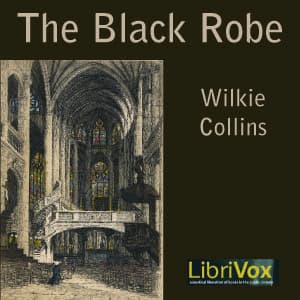

Look, I went into this expecting Victorian melodrama with a side of gothic dread. What I got was... complicated. And honestly? That's the most Wilkie Collins thing I could possibly say.
The Black Robe isn't the book that made Collins famous. It's not The Woman in White. It's not The Moonstone. But here's the thing—sometimes the B-sides tell you more about an artist than the hits do. And this 1881 novel about a scheming priest, a tormented landowner, and the woman caught between them? It's messy and manipulative and absolutely pulls you along whether you want it to or not.
The Conspiracy That Actually Works
Father Benwell is trying to reclaim church property by converting its owner, Lewis Romayne. That's the plot. Simple enough. But Collins does this thing where he layers secrets on top of secrets until everyone's hiding something and you're not sure who to trust. Romayne's got guilt eating him alive. Stella's got her own darkness. The priest is playing chess while everyone else thinks they're playing checkers.
Is it melodramatic? God, yes. The Victorians didn't know how to do subtle, and Collins especially didn't. But there's something almost horror-adjacent about the psychological manipulation here—the way Benwell works his way into Romayne's conscience, the slow corruption of a relationship. The Mystery of Mary plays with that same kind of creeping unease—someone isn't who they claim to be, and you feel it in your gut before the reveal. My podcast listeners would eat this up. It's not supernatural horror, but it's dread. Real, human dread about losing yourself to something you can't control.
Now. The elephant in the room. This book has been called anti-Catholic, and I'm not going to pretend that's not a valid reading. Father Benwell is a villain, full stop. If you're sensitive to religious bias—and that's a completely reasonable thing to be sensitive about—this might not be for you. Collins was writing in a specific context, and that context shows.
When the Narration Switches and You Lose Your Mind
Okay, here's where things get weird. This production has multiple narrators—Nicholas Boulton, David Timson, Gunnar Cauthery, David Rintoul, Lucy Scott, Penelope Rawlins, John Foley. That's a lot of voices. And when it works? It really works. The accents add atmosphere, the performances are committed, and the beginning and end of this audiobook are genuinely strong.
But somewhere in the middle, there's this... shift. Like the production hit a snag and nobody quite recovered. I've listened to a lot of multi-narrator productions, and usually the transitions flow naturally. Here, they're disconcerting. One minute you're settled into a voice, the next you're adjusting to someone new, and the rhythm breaks.
I couldn't find much information about what happened behind the scenes—whether this was a technical issue, a scheduling problem, or just a creative choice that didn't land. But it's noticeable. Shirley (my cat) didn't care. I definitely did.
The individual performances are solid, though. These are experienced audiobook actors who know what they're doing. When they're given room to breathe, they deliver. It's the patchwork quality that hurts, not the individual pieces.
Who Gets Pulled In (And Who Should Walk Away)
Here's my honest take: this is a good listen, not a great one. It's not Collins at his peak, but it's Collins doing what Collins does—psychological manipulation, secrets, and that particular Victorian flavor of "everyone is hiding something terrible."
If you're a completionist working through Collins's catalog, absolutely grab this. If you love Victorian sensation novels and want something that's not the obvious choices, this delivers. Time for Mercy tackles institutional power from a completely different angle—modern courtroom drama instead of Victorian scheming—but that same tension about systems bigger than individuals is there. If you're interested in how 19th-century writers handled religious anxiety and institutional power, there's meat here.
But if you need consistent narration to stay immersed? If anti-Catholic themes are going to pull you out of the story? If you're looking for your first Collins experience? Start with The Woman in White instead.
I listened to chunks of this during late-night shelving at the library. (Yes, the vibes were perfect. Empty stacks, dim lights, Father Benwell scheming in my ears.) The pacing issues meant I sometimes zoned out during the slower middle sections, but by the end, I was hooked again. The story pulls you along. That's just the Collins effect—even his lesser works have that compulsive quality.
Horror that respects the genre. Even when it's not technically horror at all.