
"Truth is a lie that has not been caught yet."
Somewhere around hour eight, that line hit me like a Stormlight Ideal. I was supposed to be debugging my procedural generation algorithm. Instead, I was lost in a mythological fever dream that made Malazan look straightforward.
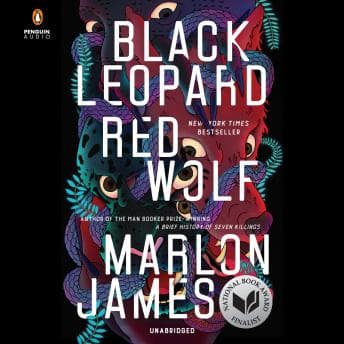
Black Leopard, Red Wolf is not here to hold your hand. It's here to drag you through African folklore, drop you into cities that feel ancient and alive, and make you question every single word the narrator—Tracker—says. Because here's the thing: he's telling this story to an inquisitor. He might be lying. He probably is. And Marlon James never lets you forget it.
The Magic System Is... Wait, What Even Is Happening?
Look, I love a good hard magic system. Sanderson has ruined me for vague mysticism. But James does something different here—he builds a world where the supernatural feels genuinely other. Shape-shifters that aren't just werewolves with extra steps. Witches that operate on dream logic. Creatures from African mythology I'd never encountered before, and I've read way too many monster manuals. The creature design in Call of the Wild felt similarly grounded in a specific cultural reality, even if Buck's world was the Yukon instead of mythological Africa.
The world-building is dense. Like, 24-hour-audiobook dense. James doesn't explain things the way fantasy usually does—you're dropped into Tracker's perspective, and he doesn't stop to define terms because why would he? He lives there. It's disorienting at first. By hour three, I was Googling Asanbosam and Ipundulu. By hour ten, I'd stopped and just let the mythology wash over me.
This isn't Sanderson-level world-building. It's something else entirely. More like if Tolkien had grown up in Jamaica reading African oral traditions instead of Norse mythology. The cities feel layered with history. The politics are brutal and real. And the violence—yeah, there's a lot of it.
Dion Graham Walked So Other Narrators Could Run
Seriously. This is a 24-hour commitment, and Graham carries it like he was born for this. His voice has this raspy, growling quality that fits Tracker perfectly—this is a man who's done terrible things and isn't apologizing for them. When he shifts into other characters, the differentiation is immediate. Sadogo, this giant warrior with a tragic backstory, gets this gentleness that made me genuinely sad for him. The intimate scenes between lovers? Graham handles them with this intensity that made me pause my thesis procrastination to actually feel things.
He sings, too. Like, actually sings. And it works.
The one thing—and this isn't Graham's fault—is that the narrative structure is confusing. Tracker jumps around in time, references events before he's explained them, and James's prose is dense even by literary fantasy standards. Some listeners will find this disorienting. I did, at first. But Graham's consistency helps anchor you. His voice becomes your compass through the chaos.
My D&D Group Would Either Love or Hate This
No in-between. If you like your fantasy with clear quest objectives and likeable protagonists, this isn't for you. Tracker is not a hero. He's barely an antihero. He's a mercenary who does mercenary things, and James doesn't soften it. The "band of adventurers" trope is here, but twisted—these people don't trust each other, and neither should you.
The relationship between Tracker and Leopard (the shape-shifter) is the emotional core, and it's complicated in ways that fantasy rarely allows. They're lovers, rivals, something else entirely. Graham plays their scenes with this tension that made me forget I was supposed to be working on chapter four of my thesis.
Who Should Spend 24 Hours Here (And Who Should Skip)
This is for readers who want fantasy that feels genuinely new. If you've read every Sanderson, every Abercrombie, every Robin Hobb, and you're hungry for something that doesn't follow the European medieval template—this is it. It's also for people who can handle an unreliable narrator, graphic violence, explicit content, and prose that demands attention.
Skip it if you need clear answers. Skip it if you want a protagonist you can root for uncritically. Skip it if you're looking for background listening while you do literally anything else—this book will punish you for not paying attention.
I listened at 1x speed, which I never do. The prose rhythm demands it.
Roll Initiative on Your TBR
Black Leopard, Red Wolf made me feel like I was encountering fantasy for the first time again. Not because it's better than the books I love—it's different. It's difficult. It's 24 hours of mythological density that left me exhausted and wanting more.
My thesis can wait. The Dark Star trilogy continues.