
"I was determined to be a millionaire before I was forty."
That's O.W. Gurley, speaking with the kind of quiet certainty that makes you stop chopping onions mid-motion. I was making dal—my mother's recipe, the one I always mess up—when that line hit. And I stood there thinking: this man built Black Wall Street in Tulsa. Built it from nothing. And most Americans have never heard his name.
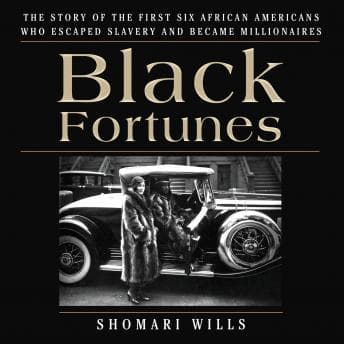
The research actually shows that wealth accumulation follows predictable psychological patterns—delayed gratification, risk tolerance, social capital networks. But what Shomari Wills documents here isn't just economics. It's a case study in impossible resilience.
Six Minds Against a System Designed to Break Them
What makes this book compelling is Wills' refusal to sanitize these people into inspirational posters. Mary Ellen Pleasant used her Gold Rush fortune to fund John Brown's raid on Harpers Ferry. She was calculating, secretive, and—depending on your moral framework—either a freedom fighter or a domestic terrorist. Hannah Elias leveraged her position as a white millionaire's mistress to build a Harlem real estate empire. She exhibits classic strategic thinking, yes, but also moral complexity that most historical narratives flatten.
I found myself asking: why does Annie Turnbo-Malone get erased while Madam C.J. Walker becomes the household name? Wills doesn't shy away from this. Walker worked for Turnbo-Malone. Learned the formulas. Then became her competitor. The psychology here is fascinating—the tension between mentorship and rivalry, between lifting as you climb and climbing over whoever's in your way. That same tension—between personal ambition and collective responsibility—shows up in Extreme Ownership, though in a completely different context.
Robert Reed Church buying up Memphis real estate after yellow fever epidemics emptied the city? That's not just business acumen. That's a particular kind of trauma response—turning devastation into opportunity because what else can you do when the world keeps trying to kill you?
Ron Butler Knows When to Step Back
Butler's narration is steady. Not flashy. He doesn't try to perform these historical figures—no exaggerated accents, no dramatic pauses for effect. For a book this dense with dates and property transactions and legal battles, that restraint works. You're not distracted by the performance. You're processing information.
His emotional delivery surfaces at the right moments. The Tulsa Race Massacre section—when Gurley's Black Wall Street burns—Butler's voice drops into something quieter. Heavier. My therapist would have thoughts about how we process historical trauma through narrative, and honestly, listening to that section while running along the Charles River felt almost disrespectful. I slowed to a walk.
At just under seven hours, the pacing is tight. Wills covers nearly a century of history across six lives, and Butler maintains attention without rushing. Good for focused listening. This isn't background noise material—you'll miss connections if you're not paying attention.
The Personal Thread That Holds It Together
Wills is the great-great-great-grandson of Napoleon Bonaparte Drew, one of the subjects. This could have been a liability—family history projects often drown in sentiment. But Wills uses his personal connection as an entry point, not a destination. He researched. He verified. He contextualized.
Psychologically, this doesn't read as ancestor worship. It's something closer to reclamation. These stories existed in fragments, in family oral histories, in county records nobody bothered to digitize. Wills assembled them into something coherent. Something that forces you to reconsider what you thought you knew about American economic history.
Who Needs This (And Who Should Skip)
If you want inspiration porn—rags to riches, pull yourself up by your bootstraps—this isn't it. These people succeeded despite a system actively working to destroy them, and Wills never lets you forget the "despite." The violence is present. The theft is documented. The constant threat of having everything taken away.
History and biography enthusiasts will find this essential. If you're interested in economic psychology, in how people build wealth under impossible constraints, in the mechanics of systemic racism as it operated in real time—this delivers. Skip it if you're looking for something light, something to half-listen to while doing dishes. This demands attention.
Still Thinking About Hannah Elias
I finished this book three days ago and I'm still thinking about her. About how she navigated a world that offered her exactly two paths—servitude or exploitation—and carved out a third option through sheer strategic brilliance. Wills understands human nature. He understands that survival under oppression requires moral compromises that comfortable people never have to make.
My dal burned, by the way. Worth it.