
Look, I deal with trauma for twelve hours straight. Gunshot wounds, car wrecks, the works. So you'd think the last thing I'd want on my drive home is more body bags. But here I am. (My mom still asks why I do this to myself. "Maria, why you want more blood?" She has a point, but don't tell her that.)
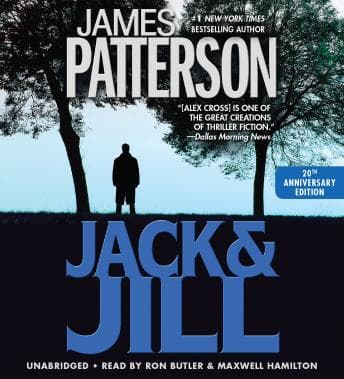
I picked this up because I needed something fast. Something that wouldn't make me think too hard while I navigated Phoenix traffic at 3 AM. But we need to talk about the nursery rhymes. Seriously? A killer leaving "Jack and Jill" poems? It's so theatrical. If I walked into a trauma bay and someone handed me a cryptic rhyme with the patient, I'd probably roll my eyes before I started the IV. It's cheesy. It's ridiculous. And—God help me—it kept me awake.
The Voice in the Dashboard
I've heard some narrators who make every woman sound like she's about to faint or seduce someone. No in-between. So, thank you, Ron Butler, for not doing that. (If I hear one more breathless, helpless female voice from a male narrator, I might actually drive into a cactus.)
Butler handles the heavy lifting here pretty well. He keeps the women sounding capable—which, as a woman who spends her nights bossing around residents, I appreciate. The transition between Alex Cross and the killers' POV is... a choice. Some people hate it. Honestly? It's jarring. But when you're fighting sleep on the I-10, jarring is good. It's like a sternum rub for your ears. You can't drift off because suddenly you're in the head of a psychopath.
When the Stakes Hit Too Close
Here's where the nurse in me gets a little twitchy. The plot involves a child victim. A little girl. I've seen what happens when kids get hurt. It's ugly, it's heartbreaking, and it stays with you. Patterson uses it here for maximum shock value, and I'm not gonna lie—it made me grip the steering wheel a little tighter. It's rough. Patterson goes even harder with the stakes in Kill Alex Cross, and somehow it still works. If you have kids, or if you treat them, just know that going in.
But the pacing? Patterson writes like he's double-parked. The chapters are short—like, "finish one at a red light" short. For my commute, that's perfect. I don't have to pause in the middle of a monologue. The story moves so fast you don't have time to question the plot holes. And there are holes. (Why is the security always so bad in these books? Trust me, hospitals have better lockdown procedures than the Secret Service in this novel.)
Who's This For (And Who Should Skip)
Night shift workers, long-commute drivers, anyone who needs something loud enough to keep them awake—this is your book. Skip it if violence against children is a hard no for you, or if you need your thrillers to hold up under scrutiny. This one won't.
Clocking Out
Is it high art? No. It's a bag of potato chips. You eat the whole thing, you feel a little greasy afterward, but it was exactly what you wanted in the moment. I had the same guilty-pleasure experience with 5th Horseman—Patterson knows what he's doing with these quick-hit thrillers. It's fast, it's loud, and it got me into my driveway without falling asleep.
Now, I'm gonna go sneak into bed before the sun comes up. And I'm definitely checking the locks.