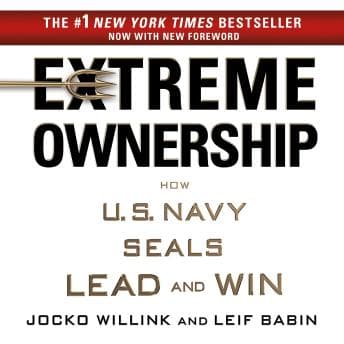

Let me cut to the chase - I listened to this during a particularly brutal week of consulting gigs, driving between three different corporate sites in Houston. Eight and a half hours of Jocko Willink's voice rumbling through my truck speakers. Ranger was in the back seat for most of it, and I swear even he sat up straighter during the Ramadi chapters.
Look, I've got complicated feelings about this book. And I need to be upfront about something: I was in Ramadi. Not with these guys, but I was there. Different unit, different AO, but the same dust, the same heat, the same chaos. So when Willink and Babin talk about the Battle of Ramadi, about Task Unit Bruiser, about the fog of war and the weight of command decisions - I'm not just nodding along academically. I'm remembering.
When SEALs Tell Their Own Story
Here's the thing about author-narrated books - they can go sideways fast. But Willink and Babin? They nail it. Jocko's voice is exactly what you'd expect if you've ever heard his podcast. Gravelly, deliberate, the kind of voice that makes you want to do pushups at 4:30 AM. (I don't, but I want to.) Babin's a bit smoother, more corporate-friendly, which actually works well when they transition from combat stories to business applications.
The combat chapters hit different when you're hearing them from the guys who lived it. There's this moment where Willink talks about a friendly fire incident - a blue-on-blue situation that was ultimately his responsibility - and his voice doesn't waver, but you can feel the weight of it. That's not something a professional narrator could replicate. That's a man who's carried that burden and made peace with it.
The Formula (Because There Is One)
I'm gonna be honest - the book follows a pretty rigid structure. Combat story, leadership principle, business application. Rinse and repeat. By chapter six or seven, I could predict the beats. Does that make it less valuable? Not really. But if you're expecting narrative surprises, you're in the wrong section of the library.
The combat stories are genuinely compelling. Clearing buildings in Ramadi, coordinating with Iraqi forces, managing up to senior officers who didn't always get it - this is where the book shines. The business case studies... look, they're fine. Necessary, probably, for the corporate crowd. But I found myself zoning out during some of the "and then we helped a manufacturing company improve their quarterly metrics" sections.
That said, the core principles are solid. Extreme ownership - the idea that leaders must own everything in their world, no excuses, no blaming subordinates or circumstances - is something I wish I'd had articulated this clearly when I was a young captain. I've seen similar principles in Think and Grow Rich, though Hill's approach is more about personal accountability than battlefield command. Would've saved me some painful lessons.
What Might Bug You
Some critics say the book is too self-promotional, that Willink and Babin don't give enough credit to their teams. I can see that argument. There's a lot of "I did this" and "we implemented that." But honestly? That's kind of the point. The whole premise is about leaders taking ownership rather than deflecting credit or blame. It would be weird if they spent the whole book saying "well, actually, my chief petty officer came up with that idea."
The bigger issue for me is the repetition. The principles - while valuable - get hammered home again and again. I get it, guys. Cover and move. Decentralized command. Simple, clear, concise. By hour seven, I was ready to move on. This is where the audiobook format actually hurts a bit - you can't skim the parts you've already internalized.
Also - and this is minor - there are moments where the transition between narrators feels slightly jarring. The audio production is clean, don't get me wrong, but sometimes you're deep in a Jocko story and suddenly Babin picks up, and it takes a second to recalibrate.
SITREP
Worth your time? If you're in any kind of leadership role - military, corporate, coaching your kid's soccer team - there's something here for you. The principles are battle-tested (literally) and the audiobook format adds authenticity you won't get from the print version.
But let's be real for a second. This isn't a book you need to listen to twice. Get through it once, internalize the principles, maybe take some notes. Mission accomplished. Move on to the next objective.
For my fellow vets - especially those who served in Iraq - this might hit different. Some of the Ramadi chapters brought back memories I hadn't thought about in years. Not in a bad way, necessarily. Just... heavy. If you're not in a place for that right now, maybe save it for later.
Who should listen: Leaders at any level who want a no-BS framework for accountability. Who should skip: Anyone looking for nuanced storytelling or who can't handle repetitive structure - and vets who aren't ready for Ramadi memories right now.
I'm giving it 4 stars. Solid leadership framework, authentic narration, occasionally repetitive, but the core message is one every leader needs to hear. Ranger approved this one - he didn't move during the entire friendly fire chapter.
Best at 1.25x speed unless you really want to savor Jocko's dramatic pauses. Trust me on this.