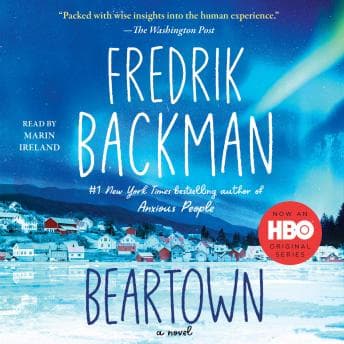

I finished this one on a cold walk along the lakefront, and I just stood there for a minute. Didn't move. Didn't start the next book in my queue. Just... stood there, watching the ice on the water and thinking about how a story about hockey in Sweden somehow felt like it was about every small town I've ever known.
Here's the thing about Backman - he writes sentences that sound simple until they hit you three paragraphs later. Like delayed emotional grenades. I teach Hemingway to teenagers who'd rather be anywhere else, and I kept thinking: this is what Hemingway was trying to do. Economy of language that carries the weight of the unsaid.
Not a Hockey Book (But Also, Yes, Hockey)
Let me be clear: this is not a hockey book. I mean, yes, there's hockey. There's a semi-final game that the whole town has pinned their dying hopes on. But Backman uses that ice rink the way Faulkner used Yoknapatawpha County - as a lens to examine everything ugly and beautiful about human nature.
The story centers on what happens after a violent act at a party. A young girl named Maya. A star player named Kevin. And a town that has to decide what it values more - its children or its dreams. I won't spoil the specifics, but I will say this: Backman doesn't let anyone off the hook. Not the parents. Not the coaches. Not the kids who knew something was wrong and said nothing.
My students would probably hate how slowly this unfolds. There's no twist every chapter, no cliffhanger manipulation. It's a slow burn that trusts you to care about these people before it breaks your heart. And it will break your heart. Multiple times.
Marin Ireland Understands the Assignment
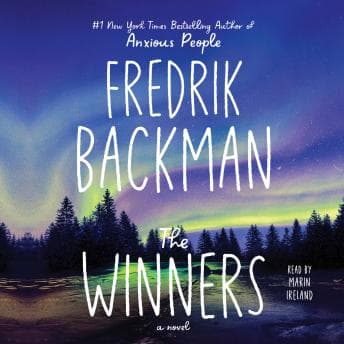
I've listened to maybe two hundred audiobooks in the last five years, and Marin Ireland's performance here belongs in the top tier. She doesn't do "voices" in the cartoonish sense - she does something harder. She pulled off the same restraint in Pineapple Street, where understatement is the entire point. She finds the emotional register of each character and lives there.
The way she reads the teenage boys - Amat, Benji, Kevin - you can hear their bravado and their terror underneath it. The way she reads Maya's mother... honestly, there's a scene near the end that I had to pause because I was walking past other people and I didn't want them to see my face.
What I appreciate most is her pacing. She understands that Backman's prose needs room to breathe. The pauses are punctuation. She's not rushing to the next plot point because she trusts that the emotional weight of a sentence matters more than what happens next. (My students would call this "boring." My students are wrong.)
The Darkness You Should Know About
I need to be honest here: this book goes to some heavy places. The assault. The town's response. The way people protect power instead of victims. There's a scene involving a locker room that made me think about every faculty meeting where we've discussed "boys will be boys" culture, and I had to stop grading papers and just sit with my anger for a while.
If you're looking for a feel-good sports story where the underdog wins and everyone learns a valuable lesson - this isn't it. Backman is Swedish, and there's something almost Scandinavian noir about how he handles darkness. He doesn't sensationalize it, but he doesn't look away either.
The content warnings are real: violence, sexual assault, toxic masculinity, and the kind of institutional failure that feels uncomfortably familiar. If you're in a place where you need lighter fare, save this for when you're ready.
Who This Is For (And Who Should Wait)
This is for people who read literary fiction and wonder why it doesn't hit the same in audio form. It's for anyone who loved A Man Called Ove but suspects Backman has more range than quirky old men. That one made me laugh-cry on the train; this one just made me need to sit down. It's for parents of teenagers who want to understand the pressures their kids navigate. It's for coaches, teachers, anyone who works with young people and wonders if they're doing enough.
Skip it - or at least wait - if you need something lighter right now, or if the content warnings above hit too close to home. There's no shame in saving this for when you're ready.
It's also, frankly, for anyone who thinks audiobooks can't be "real" literature. Hand them this. Thirteen hours of proof that narration is interpretation, that performance is art.
The Kind of Story That Does Your Homework For You
Honestly? I won't relisten soon. Not because it wasn't brilliant - it was - but because it's the kind of story that stays with you whether you want it to or not. I'm still thinking about Benji. Still thinking about Maya's father. Still thinking about what I would do if I lived in Beartown and my kid was on that team.
But I've already recommended it to three colleagues and my book club. And I'll probably assign excerpts to my AP Lit students next year. (They'll complain. They always complain. But some of them will get it.)
This is why we still read. This is why narration matters. This is a story that deserved to be heard, and Marin Ireland made sure we heard it right.