
Look, I have a complaint. I'm a grown woman with a PhD track in narrative psychology, and I just spent eight hours deeply invested in whether a fifteen-year-old necromancer would hold hands with a werewolf boy. I was chopping onions for chana masala — alone, on a Tuesday night, voluntarily — and I actually stopped mid-dice because Chloe Saunders made a decision so psychologically accurate for a scared teenager that I needed a moment.
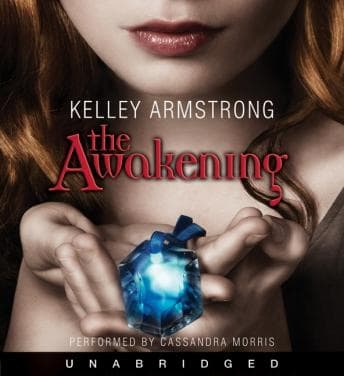
That's the thing about Kelley Armstrong's Awakening. It has no business being this smart about how people actually behave under stress.
A Paranormal Chase Story That Actually Understands Trauma Responses
This is the second book in the Darkest Powers trilogy, and where the first book felt like setup — here's the creepy group home, here's the sinister organization, here are your supernaturals — Awakening is the payoff in motion. Chloe, Derek, Simon, and Tori are on the run from the Edison Group, which is basically what you'd get if you let a pharmaceutical company play god with supernatural genetics. And sure, that's standard YA paranormal fare. But what Armstrong does differently is let the group dynamics deteriorate in realistic ways.
Tori — the "disgruntled witch" from the blurb — doesn't just slot into the friend group because the plot needs a fourth body. She's abrasive, resentful, and genuinely difficult. The protagonist exhibits classic in-group/out-group negotiation when she tries to manage Tori's hostility while keeping the boys from making it worse. I found myself asking: why does Chloe really keep advocating for Tori when Tori gives her nothing back? And the answer isn't "because she's the Nice Protagonist." It's because Chloe recognizes — without articulating it — that Tori's rage is just terror wearing armor. That's a sophisticated read on adolescent psychology for a book marketed at thirteen-year-olds.
Derek, the cynical werewolf, is the character my therapist would have thoughts about. He pushes people away through bluntness, struggles with a body that's literally transforming against his will (puberty metaphor? Absolutely, but Armstrong earns it), and shows care exclusively through problem-solving rather than words. The research actually shows that adolescents with insecure attachment styles often default to instrumental support over emotional support — and Armstrong nails this without once making it feel like a textbook exercise.
Cassandra Morris Knows What She's Doing With Silence
Morris narrates with a clear Chloe voice — slightly breathy, uncertain, young but not infantile. Where she impressed me is the character differentiation: Derek gets this lower, flatter delivery with minimal inflection that perfectly mirrors his emotional guardedness, while Simon (the sorcerer, the easy one to like) sounds warmer, more rhythmically varied. Tori gets a sharper edge, a kind of vocal eye-roll. It's not showy voice acting. It's psychological casting.
The one thing I noticed — and this is minor — is that during high-action sequences, Morris's pacing stays pretty even. The narration doesn't accelerate to match the adrenaline of the chase scenes, which occasionally made me feel like I was hearing about urgency rather than experiencing it. Not a dealbreaker, but I bumped the speed to 1.15x during the back half and it helped.
Where the Story Stalls (And Why It's the Trilogy's Fault)
Here's my honest frustration: Awakening is a middle book, and it knows it. There are threads about the Edison Group's full agenda, about what exactly was done to these kids genetically, about a network of supernatural safe houses — and almost none of them resolve. You get just enough to stay hungry. The pacing in the middle third dips because there's a stretch of "find safe house, lose safe house, run again" that starts feeling circular.
Psychologically, the character arcs stay compelling through this — the Chloe-Derek dynamic develops in this wonderfully awkward, unspoken way that feels true to how real teenagers navigate attraction when they're also, you know, fleeing for their lives. But plot-wise? You're reading a chapter in a longer story, not a self-contained experience. If that bothers you, fair warning.
This is a fascinating case study in getting YA supernatural right
This isn't a book that will change your understanding of the human condition. But it's a book where every character motivation tracks, where the group dynamics evolve instead of resetting chapter to chapter, and where a teenage girl's growing confidence feels earned rather than decreed by plot convenience. Armstrong understands human nature — specifically, she understands that teenagers are not miniature adults, and she writes them with all their contradictions intact. Run to Ground is another one in this space that attempts the same grounded-characters-in-chaos energy, though it lands with less psychological precision than Armstrong manages here.
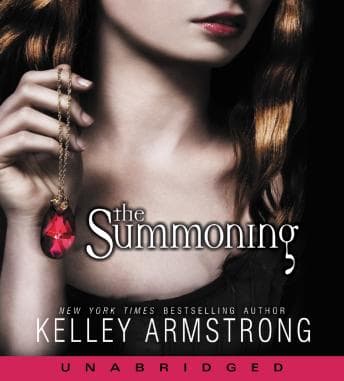
If you're a reader who cares about character psychology in your paranormal fiction — or if you're a parent wondering whether this is just supernatural fluff — give it a shot. The bones are solid. My one caveat: start with The Summoning first, because this book drops you mid-crisis and never looks back.
(And yes, I finished the chana masala. It was excellent. The onions were perfectly diced despite the interruption. I'm a professional.)