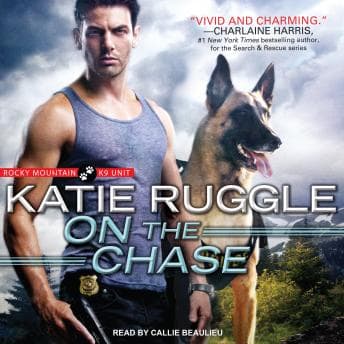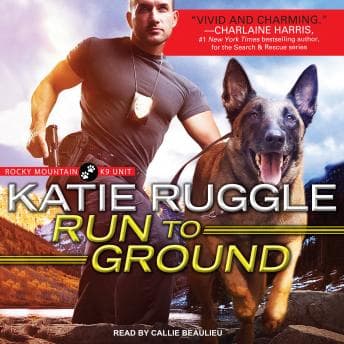

Callie Beaulieu's narration of Run to Ground is going to divide listeners right down the middle, and I find myself fascinated by why.
I started this one during a late-night cooking session—making dal from my mother's recipe, the kind that takes forever because you have to watch it or it'll burn. Perfect for a romantic suspense that needs you half-present. And honestly? This audiobook worked beautifully in that context. But I kept pausing to think about what Beaulieu was doing with her voice, and whether it was brilliant character work or a serious miscalculation.
The Sam Problem (And It Is A Problem)
Let me be direct: Beaulieu voices Sam, one of Jules's rescued siblings, with a pronounced stutter and choppy speech pattern. The research actually shows this is intentional—Sam's trauma manifests in his communication. Psychologically, this tracks. Children who've experienced abuse often develop speech patterns that reflect their internal chaos. But here's where it gets complicated. I've seen similar debates around trauma representation in Time for Mercy, where Grisham handles a child's testimony with comparable intensity.
Some listeners heard careful character work. Others heard something that felt like mockery of speech impediments. I found myself asking: why does this performance land so differently for different people? After nearly ten hours with this audiobook, I think I understand. Beaulieu commits fully to the speech patterns, which means when it works, you're hearing a traumatized kid struggling to communicate. When it doesn't work—when you're not bought into Sam as a real person yet—it can feel exaggerated to the point of caricature.
My therapist would have thoughts about this character. Specifically about how Ruggle uses Sam's speech as external manifestation of internal wounds. It's not subtle, but abuse survivors aren't subtle. They carry their trauma in their bodies, in their voices.
Theo: A Case Study in Functional Grief
The protagonist exhibits classic complicated grief—he's lost his partner (work partner, not romantic, which matters), and he's doing that thing where he convinces himself he doesn't deserve connection. Beaulieu's voice for Theo carries this weight. There's a flatness to his internal monologue early on that shifts as Jules and her chaotic family crack through his defenses.
What makes this character compelling is that Ruggle clearly did her homework. She's a police academy graduate with tactical training, and you can feel that authenticity in how Theo thinks about threat assessment, how he reads rooms, how his K9 companion becomes an emotional proxy for connection he can't admit he wants. The dog falling for Jules's family before Theo does? Classic displacement. He's letting the dog feel what he won't let himself feel.
Beaulieu handles the romance beats with appropriate warmth without tipping into melodrama. The tension between Theo's cop instincts (something's off about Jules and her "siblings") and his growing attraction creates genuine suspense.
The Threat That Never Quite Lands
Here's my frustration: the external threat—whoever Jules is running from—stays too abstract for too long. We know she "rescued" her siblings, we know she's hiding, but the specific danger feels like it's being held back for series purposes rather than organic storytelling. A fascinating case study in how romance series sometimes sacrifice individual book satisfaction for arc momentum.
At nine and a half hours, there's room for both the romance development AND a more present antagonist. Instead, we get a lot of will-they-won't-they while the actual danger lurks in the margins. Not a dealbreaker, but it did make my attention wander during some of the middle hours.
Who Should Listen (And Who Should Steer Clear)
If you love K9 romance—and there's a devoted fanbase for this subgenre—this delivers. The dog stuff feels authentic (probably because Ruggle actually knows what she's talking about), and the found-family dynamics with Jules's siblings add emotional stakes beyond the central romance.
But if you're sensitive to how speech differences are portrayed in media, preview a sample first. Seriously. The narrator's choices will either work for you or actively irritate you, and there's no middle ground. I've rarely seen reviews split so cleanly on a performance. Skip this one if you need your romantic suspense villains front and center—the threat here stays frustratingly vague.
For me, it worked more than it didn't. Beaulieu's character differentiation—distinct voices for the various siblings, the contrast between Theo's gruff exterior and his internal vulnerability—kept me engaged through the dal-making and the cleanup and the sitting-on-the-couch-eating-alone portion of my evening.
Case Closed, File Incomplete
This is a solid series opener that does its job: establishes the world, makes you care about the characters, leaves enough threads dangling that you'll probably grab book two. The narration is divisive for reasons that are genuinely interesting from a performance psychology perspective. And Katie Ruggle writes cops who feel like actual cops, which is rarer than you'd think in romantic suspense. That authenticity in character work—people who feel like they have actual jobs and lives—is something One Plus One also nails, though in a completely different context.
Worth a credit if you're already a genre fan. Worth a sample if you're on the fence about Beaulieu's style. Either way, it's the kind of audiobook that'll keep you company through repetitive tasks—just don't expect it to demand your full attention.