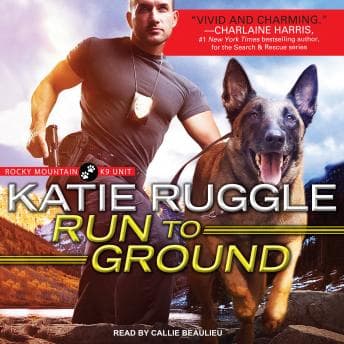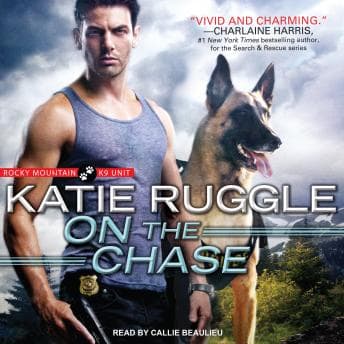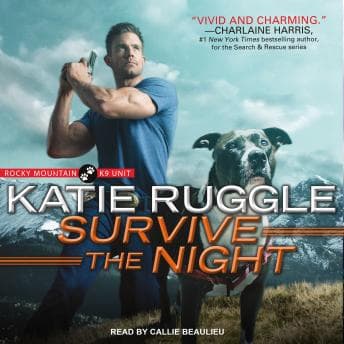

Look, I need to talk about the first sexual encounter in this book because it genuinely made me set down my spatula mid-stir and say "wait, what?" out loud to my empty kitchen. I was making chana masala - the kind that requires patience, layering spices, letting things develop - and Katie Ruggle apparently decided that character intimacy doesn't need the same treatment. Otto and Sarah go from emotionally guarded to physically entangled with the narrative equivalent of a jump cut. Psychologically, this doesn't track. You've spent chapters establishing Sarah as someone running from trauma, someone whose trust has been shattered by her own family, and then the vulnerability required for that kind of intimacy just... appears? My therapist would have thoughts about this character's attachment timeline.
But here's the thing. I kept listening. Through the entire pot of chana masala and well into eating it alone at my kitchen counter. So clearly something's working.
Otto Gunnersen: The Big-Hearted Fixer and Why That's Both Sweet and Clinically Concerning
The protagonist exhibits classic savior complex patterns, and Ruggle - to her credit - seems at least partially aware of this. Otto is Monroe's unofficial animal rehabilitator, the guy who takes in injured creatures, and the moment he meets Sarah's "haunted eyes" he slots her right into that same framework. What makes this character compelling is that Ruggle wrote a Police Academy graduate's understanding of someone like Otto. She knows the type. The man who channels emotional unavailability into caregiving for things that can't challenge him back - dogs, injured wildlife, people too desperate to push him away.
Sarah is more interesting to me as a case study. She's caught between crime families - her own brother being the power-mad antagonist - and her learned helplessness versus her growing agency is the actual engine of this story, not the romance. When she starts fighting back, it's not some overnight transformation. There are moments where she defaults to flight mode, where her body language (as described) contradicts her stated intentions. Ruggle gets the regression patterns right even when the romance pacing feels rushed.
Callie Beaulieu handles the dual nature of these characters well. Her voice for Otto has this steady, warm quality - almost too steady, which actually works for a man who's using calm as a control mechanism. Sarah gets more vocal variation, more breath, more hesitation. The differentiation between male and female characters is solid; you never lose track of who's speaking in dialogue-heavy scenes. I found myself asking: why does Beaulieu's laughter during lighter moments hit so differently? And I think it's because the action scenes are genuinely tense - militia warfare, real threat - so when she lets warmth back in, the contrast lands.
Militia Warfare in Small-Town Colorado, or: When Your Romance Novel Suddenly Has a Body Count
This is a fascinating case study in genre collision. The mystery-thriller elements are where Ruggle's background shines - she's a Police Academy grad with Krav Maga training and ice-rescue certification, and you can feel that tactical knowledge in the action sequences. The militia confrontations have spatial logic. Characters use cover correctly. People get hurt in ways that make anatomical sense. I appreciated this more than I probably should have. American Desperado scratches a similar itch if you want that same grounded, tactically-credible violence without the romance pacing to negotiate around it - though fair warning, it comes with considerably more cocaine and considerably less emotional growth.
But - and this is where the 2-3 star reviews have a point - the pacing between action and romance is uneven. The book oscillates between "people might actually die" and "let's have a cute moment with a rescue dog" with a tonal whiplash that occasionally gave me vertigo. At eleven hours, there's room for both, but Ruggle doesn't always earn her transitions. The most intense action sequence builds to a climax that left me genuinely confused about what happened spatially. I rewound twice. Still not entirely sure I tracked it correctly.
The research actually shows that readers tolerate pacing inconsistency much better in series books than standalones - this is book three in the Rocky Mountain K9 Unit series - because they've already bought into the world and the ensemble cast. If you're jumping in cold like I did, you feel the unevenness more acutely.
Who's Going to Love This (And Who Should Keep Scrolling)
If you read romantic suspense and you want the suspense part to actually be suspenseful - not just a flimsy excuse for proximity - this delivers. Ruggle knows her tactical stuff. If you need your character psychology to be airtight before you can relax into the romance, you'll have the same friction I did. Sarah's arc mostly works, Otto's is thinner than it should be, and their relationship accelerates past what their respective traumas would realistically allow.
Beaulieu's narration is a genuine asset. She's not doing anything revolutionary, but she's consistent, emotionally present, and handles both gunfight tension and quiet domestic moments without either feeling forced. Good for a focused commute listen or a long drive - you won't zone out during the action, and you won't cringe during the romance.
The Case File Summary
Solid romantic suspense with a narrator who earns her keep, hampered by uneven pacing and a romance that needed two more emotional beats before it could feel real. I ate an entire pot of chana masala to this book and regret neither the calories nor the listening time. But I do wish Ruggle had trusted her own slower moments more. The best parts of this book aren't the explosions - they're Sarah quietly deciding she's allowed to want safety. Those moments deserved more room to breathe.