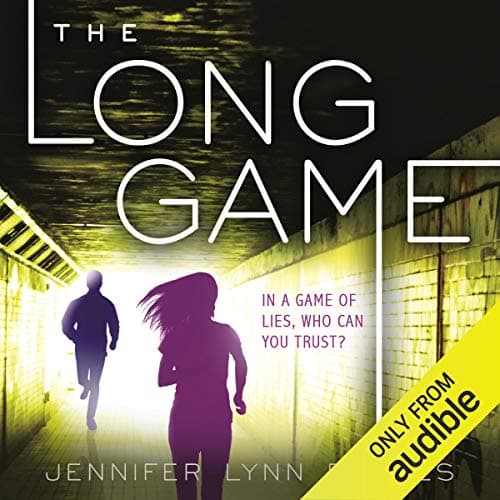

Jennifer Lynn Barnes writes teenagers like she's been studying them under a microscope - which, given her degrees in psychology and cognitive science, she literally has.
I was walking Luna through Griffith Park on a Sunday morning, the kind of foggy early light where LA almost feels quiet, and Tess Kendrick was in my ears dismantling a student council election like it was a Senate confirmation hearing. And I just kept thinking: I know this kid. I've sat across from versions of her in my office - the ones who learned too young that reading a room isn't a skill, it's a survival mechanism.
When the Fixer Is Also the One Who's Broken
Tess is a fixer. That's the premise, sure, but Barnes does something smart with it in this second book - she lets you see the cost. Tess runs a classmate's student council campaign at Hardwicke, this elite DC prep school where every kid's last name is basically a lobbying firm. But the campaign becomes a pressure cooker for secrets that belong to their parents, not them. And here's what got me: Tess doesn't process her own trauma while she's busy solving everyone else's problems. She just... doesn't. She compartmentalizes with the efficiency of someone who's been doing it since childhood.
This character feels like one of my kids. The ones who show up to session having already fixed three friends' crises that week but can't name a single emotion they felt while doing it. Barnes nails that pattern - the parentified teenager who treats vulnerability like a liability.
The parallel plotline with Tess's guardian investigating a terrorist attack on Capitol Hill ratchets the stakes beyond high school drama, and the book is better for it. When the student election secrets start bleeding into actual DC power plays, it stops feeling like a teen drama and starts feeling like a story about how children of powerful people never really get to be children. That hit different.
Cassandra Morris Gets the Cool Under Pressure Right
Morris's performance here is steady in a way that serves Tess specifically. She doesn't oversell the emotional moments - which is the right call for a character who keeps everything locked down. You hear Tess's composure, and more importantly, you hear the tiny cracks in it when things get personal. The restraint is the performance.
Where I wanted more was in differentiating the secondary cast. With so many political kids circling each other - alliances shifting, loyalties questioned - I occasionally had to rewind (at 1.25x, so that's on me too) to catch who was talking. The voices blend a bit when the conversations get rapid-fire. It's not a dealbreaker, but in a book where everyone has an agenda, I needed clearer vocal separation to track whose agenda was whose.
The Psychology Is the Plot - And That's the Whole Point
Barnes's background shows in how she constructs her twists. These aren't gotcha reveals for shock value. Every twist comes from character psychology - someone's coping mechanism failing, someone's loyalty being a mask for fear, someone's secret being less about what they did and more about why. The book is full of turns that throw you, but when you look back, every one of them was seeded in behavior you should've caught.
That's what separates this from a lot of YA thrillers. The mystery isn't just "who did it" - it's "what wound made them capable of it." My clients would feel seen by this, honestly. That same psychological honesty is what drew me to Victorious - characters whose worst moments feel less like plot mechanics and more like the inevitable consequence of everything they've been carrying. The idea that people's worst decisions usually trace back to their deepest fears? That's not a plot device. That's just true.
The pacing does slow in the middle stretch when the political machinations get dense. There's a section - maybe hours four through six - where you're tracking so many moving pieces that the emotional thread thins out. I noticed it because Luna and I had finished our walk and I was just standing outside my apartment, not wanting to go in until the tension picked back up. It did. But that middle section asks for patience.
Who Should Listen (And Who Should Skip)
If you loved The Naturals or The Inheritance Games, this is the same Barnes brain at work - pattern-recognition protagonists, layered social dynamics, secrets with real psychological weight. But you need to have read The Fixer first. This is book two and it doesn't hold your hand on backstory.
Pick this up if you want a teen thriller that respects its characters enough to let them be complicated. Skip it if you need standalone stories or if political intrigue makes your eyes glaze - there's a lot of DC machinery here and Barnes doesn't simplify it.
Luna and I Are Still Thinking About It on the Walk Home
The thing Barnes understands - and this is why I trust her with these stories - is that teenagers in high-pressure environments don't get to fall apart on schedule. They fall apart later, sideways, in ways that look like competence until they don't. Tess Kendrick is competent as hell. And she's also a kid carrying way too much. Both of those things are true at the same time, and Barnes never pretends otherwise. That's how healing actually sounds - messy, delayed, and wrapped in a hundred other people's problems first.