Can we talk about love triangles for a second? Because I am so tired of them. So bone-deep exhausted by the "which supernatural boy will she choose" formula that I almost didn't finish this series. And yet here I am, having burned dinner because I couldn't pause during the final chase sequence, admitting that Kelley Armstrong actually made it work.
Shirley (my cat, not Jackson, though obviously named after her) abandoned me somewhere around hour three. She does this when I get tense—curls up on my chest for the slow parts, then bolts when my breathing changes. Smart cat. Knows when things are about to get ugly.
A Necromancer Who Actually Scares Herself
Here's what Armstrong understands that so many YA paranormal authors don't: powers should be terrifying. Chloe Saunders doesn't have cute necromancy. She has rotting corpses clawing out of the ground because she sneezed wrong. She has spirits she can't control, dead things that won't stay dead, and absolutely zero ability to turn it off. That's horror. That's the good stuff.
The Edison Group—this evil corporation hunting Chloe and her friends—could've been a faceless Big Bad. Instead, Armstrong makes them feel like exactly the kind of institutional nightmare that keeps me up at night. Scientists experimenting on children. Treating supernatural kids as problems to be eliminated. It's not subtle, but it doesn't need to be. Some evil is just evil.
The first quarter drags. I'll say it. Same pacing as the previous two books—running, hiding, exposition. I was folding laundry, half-listening, wondering if the payoff would ever come. Then something clicks around hour three and Armstrong stops holding back. The action accelerates. The stakes get real. My laundry sat in a wrinkled pile for two days.
Derek Deserves Better Than "Brooding Love Interest"
Okay, the werewolf thing. Derek is antisocial, aggressive, genuinely difficult to be around. He's not brooding for aesthetic purposes—he's struggling with something monstrous that lives inside him. And Chloe's attraction to that darkness makes sense in a way most YA romance doesn't. She's a necromancer. She literally talks to dead people. Of course she's drawn to someone who understands what it means to be seen as a monster.
Simon, the sweet sorcerer brother, is... fine. He's nice. He's supportive. He'd make a great boyfriend for someone who isn't Chloe. Armstrong doesn't drag out the triangle longer than necessary, and I respect that. We all knew where this was going.
Cassandra Morris Gets It
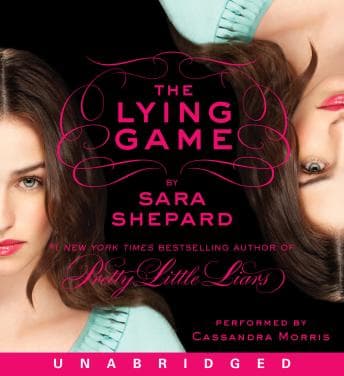
Morris has been with this series from the start, and you can hear the familiarity. She knows Chloe's voice—the fear underneath the bravado, the exhaustion of being hunted, the teenage frustration of having feelings during a crisis. She brings that same specificity to secrets-and-survival stories too—her work in Lying Game has a similar quality where you can hear the character's self-deception cracking at the edges. The emotional delivery fits without ever tipping into melodrama. Try narrating a fifteen-year-old's internal monologue about a werewolf crush without making it cringe. It's harder than it sounds. Morris pulls it off.
At 9 hours and change, this is a solid commitment but not a marathon. Good for focused listening—the action sequences demand attention, and you'll miss plot points if you zone out. I finished it over two nights, the second session while allegedly making pasta. (The garlic situation was... regrettable.)
The Ending Will Frustrate Some of You
I promised my podcast listeners I'd never lie about endings, so here it is: not everything gets resolved. This is the final book in the Darkest Powers trilogy, and there are threads left dangling. If you need every mystery solved, every villain defeated, every relationship defined with a bow on top—you might walk away frustrated.
Armstrong does something similar in Calling—that book lives in the same unresolved tension, and I think it's a deliberate authorial choice rather than a loose thread.But here's my take. Horror rarely gives you clean endings. Real dread lingers. The Edison Group represents systemic evil, and systemic evil doesn't get wrapped up in 9 hours. The fact that Chloe and her friends survive, that they find each other, that they keep fighting—that's the victory. It's messier than a traditional finale. It's also honest.
Who Needs This (And Who Should Skip)
If you've been with this series, obviously finish it. This is the strongest entry—highest stakes, fastest action, most earned emotional payoffs. New to the trilogy? Don't start here. Go back to The Summoning. The investment matters.
If you scare easily? Actually manageable. It's YA horror—the violence exists but doesn't linger. The dread is psychological. What it means to be hunted. What it means to have power you can't control. But if you need romance to dominate the plot? Look elsewhere. The love triangle exists, but survival drives this story.
Shirley Jackson Walked So Armstrong Could Run
I said what I said. Armstrong respects her readers enough to let the horror be horrifying, even in a YA package. The unanswered questions sting—I won't pretend otherwise. But for a trilogy closer that treats its teenage protagonist like a real person with real terror and real desires, it works.
My podcast listeners are going to love this. Finally, horror that respects the genre.