
What happens when two characters who've literally died and come back still can't stop trying to destroy each other?
I was supposed to be debugging a procedural terrain generator at 1 AM - the kind of thankless work that makes you wonder why you're in grad school at all - when I fired up Victorious thinking I'd just listen to a chapter or two and get back to work. Reader, I did not get back to work. Dr. Patel is going to be very disappointed when she checks my commit history and sees nothing but timestamp gaps perfectly correlated to this book's runtime.
The Chessboard Got Flipped and Someone Set It on Fire
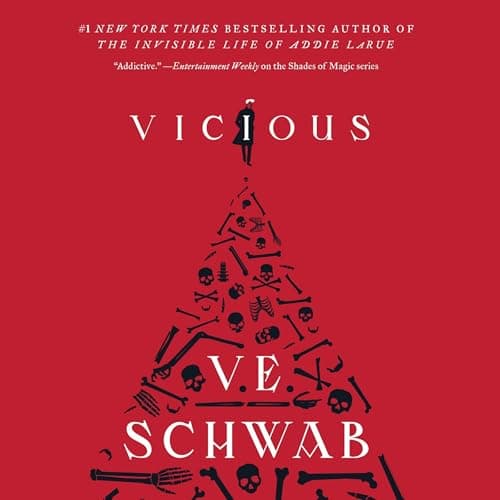
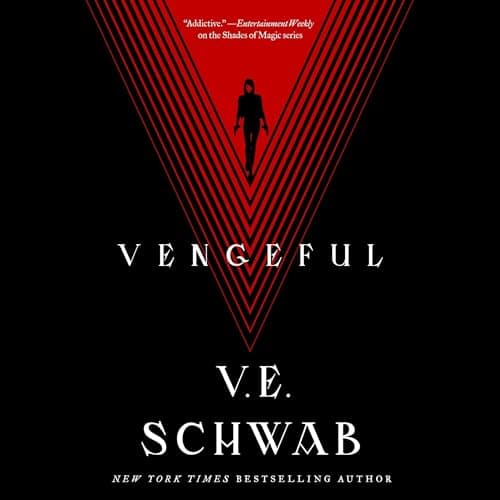
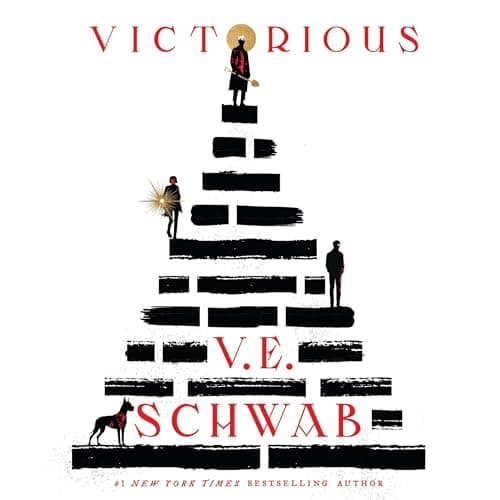
Schwab's been playing a long game with the Villains series, and Victorious is where every piece she's placed across Vicious and Vengeful finally crashes into each other. Eli and Victor's rivalry has always been the spine of this series, but what makes this finale work is that neither of them is really the protagonist anymore. They're more like opposing gravitational fields, and the characters caught between them - Sydney, Marcella, the whole messy constellation of EOs - are the ones actually driving the story forward.
The thing I kept thinking about while listening was alignment charts. (Yes, I'm that guy.) Schwab writes characters who defy easy D&D alignment. Victor isn't chaotic good. Eli isn't lawful evil. They're both operating under internally consistent moral frameworks that happen to be completely incompatible. It's the kind of character work that would make for an incredible villain NPC backstory - the kind where your players genuinely can't decide who to side with.
The ethical dilemmas here hit different from your standard fantasy fare. There's no Dark Lord, no prophecy, no chosen one. Just people with extraordinary abilities making choices that feel disturbingly rational given their circumstances. The closest I've come to this kind of morally unmoored horror elsewhere is Dracula, where the monster's internal logic is so coherent it stops feeling like evil and starts feeling like a different set of values entirely. Schwab doesn't let you off the hook by making any of them purely sympathetic.
Jeremy Arthur Understood the Assignment
Here's the thing about narrating a book where the "hero" and the "villain" are essentially mirrors of each other - you need a narrator who can make two similarly cold, calculating men sound fundamentally different without resorting to cartoon voices. Arthur pulls this off. His Victor has this controlled, almost clinical precision, like someone who's always three steps ahead and slightly annoyed that you're not keeping up. His Eli carries something warmer on the surface but with this undertone of righteous conviction that's honestly scarier.
But where Arthur really earns it is with Sydney. There's this quality in his voice when he shifts to her perspective - softer, yes, but not fragile. He captures that she's been through things that should have broken her and came out the other side harder than anyone expected. The shift from her sections to Marcella's sharp, vindictive energy is like watching someone flip a switch. You always know exactly who's talking, and Arthur does it without the kind of over-the-top voice acting that pulls you out of the story.
Steven Pacey walked so other narrators could run, but Arthur is sprinting here. A genuine step up from the earlier books' narration, and it matters because Schwab's nonlinear timeline structure would be confusing as hell with a lesser narrator.
Not for the Faint of Heart (or the Distracted Listener)
Fair warning: this is a book with visceral violence and moral ambiguity cranked to eleven. If you're looking for a clean resolution where the good guys win and the bad guys lose, you're going to have a bad time. The violence isn't gratuitous, but it is present and it is uncomfortable, which I think is the point.
Schwab's timeline-hopping structure also means this is not a "fold laundry and half-listen" audiobook. At nearly 15 hours, it demands your attention. I tried multitasking during a couple of sections and had to rewind because I'd missed a crucial shift. This is the kind of book where a scene set in "three years ago" connects to a scene set in "six hours from now" and if you miss the transition, you're lost.
Who Gets to Roll Initiative (And Who Should Sit This One Out)
If you loved the moral complexity of the first two Villains books and you've been waiting for the payoff, this delivers. If you enjoy stories where superpowers are treated less like comic book spectacle and more like thought experiments about what humans would actually do with them, this is your thing.
Skip it if you haven't read Vicious and Vengeful. Just don't start here - you'll be completely lost. Also steer clear if you need tidy moral categories or want something you can half-listen to while grinding dailies.
The Thesis Can Wait (It Always Can)
Schwab stuck the landing. In a genre full of series that fumble the finale, Victorious closes the loop without betraying the moral complexity that made the series work in the first place. I listened to this instead of writing my thesis, and I'd do it again. Yes, it's nearly 15 hours. Yes, it's worth it. My D&D group would love this - I'm already planning an EO-inspired one-shot campaign that nobody asked for.