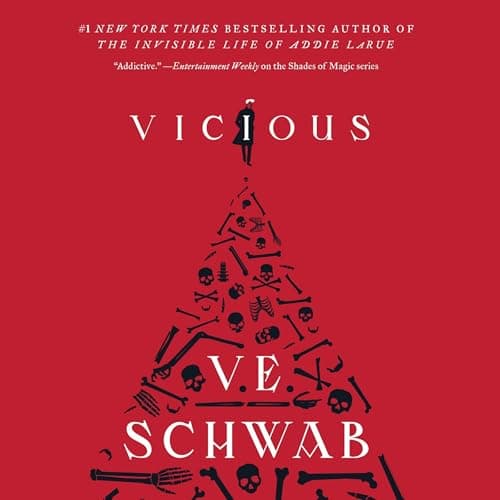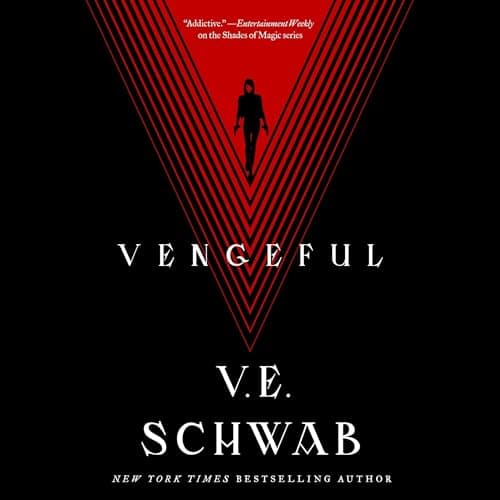

Schwab wrote a supervillain novel where nobody gets to be the hero, and I mean nobody.
I was halfway through the lakefront walk with Denise on a Saturday morning — one of those gray Chicago days where the lake looks like hammered steel — when Marcella Riggins burned a man's face off with her bare hands and I actually stopped walking. Denise had to circle back. "You okay?" I was not okay. I was grinning like an idiot because Schwab had just introduced a character who makes Victor Vale look like a philosophy professor having a bad day. Which, honestly, he kind of is.
Where Vicious Gave You Two Villains, Vengeful Gives You a Whole Ecosystem of Them
Let's talk about what Schwab is really doing here. Vicious asked a clean question: if two brilliant men gained superpowers, would either of them be a hero? The answer was no, and it was elegant. Vengeful complicates that elegance — deliberately, I think — by throwing Marcella into the mix. She's not a foil for Victor or Eli. She's a third axis entirely. Where Victor is methodical and Eli is righteous, Marcella is purely acquisitive. She wants control the way some people want oxygen. And what makes her work as a character is that Schwab never asks you to sympathize with her. She just asks you to watch.
The structure is going to bother some people. Schwab jumps between timelines — five years apart, sometimes more — and rotates through POVs like she's shuffling a deck. The first quarter moves slow. You're getting pieces of what Victor, Mitch, and Sydney have been doing in the five years since Vicious, and Schwab parcels that information out with almost cruel patience. I kept thinking of Faulkner playing with chronology in Absalom, Absalom! — not because the prose is similar (it isn't; Schwab's is blade-sharp where Faulkner's is baroque) but because both authors trust the reader to hold fragments until the picture assembles itself.
My students would hate that comparison. I love it.
The slow reveal of Eli's copycat situation — someone mimicking his kills — is genuinely satisfying when it clicks. And the discovery lands because Schwab earned it through those disorienting time jumps rather than in spite of them.
Jeremy Arthur Knows That Quiet Menace Is Harder Than Loud Menace
This is a single-narrator performance covering a cast that includes sociopathic killers, a thirteen-year-old girl, and a woman whose power literally destroys everything she touches. Arthur manages it without resorting to caricature. His Marcella has this sharp, controlled edge — like someone who's been practicing authority in the mirror for years and has finally earned it. His June gets a slight accent that signals her shapeshifting nature before you even understand what her power is. Smart choice.
But what impressed me most was his Victor. Victor Vale is a character who says the least interesting thing in the room on purpose, and Arthur plays that restraint beautifully. The pauses between Victor's lines aren't empty — they're loaded. The narrator understands that pause is punctuation. When Victor's body starts failing him, when the seizures begin and the pain bleeds through his composure, Arthur lets the voice crack just enough. Not a performance of suffering. A performance of someone trying very hard not to perform suffering.
I listened at 1.0x because the author chose those words, and Arthur chose those silences. Some listeners apparently went 1.5x with no issues. I can see that working, especially through the slower early chapters. But you'd lose the tension in those pauses, and I wouldn't trade that.
The Big Showdown Earns Its Stage — Mostly
The final convergence — Victor, Marcella, Eli, EON, everyone crashing into the same space — pays off the fragmented structure. You've been watching chess pieces move for twelve hours and when they finally collide, it feels earned. Not every thread lands with equal weight. Some of the middle chapters, particularly certain Marcella recruitment scenes, feel like they're stalling for position rather than building genuine momentum. But the architecture holds.
What stays with me is Schwab's refusal to redeem anyone. This reminds me of what Hemingway said about writing — that the dignity of movement of an iceberg is due to only one-eighth of it being above water. Schwab shows you about one-eighth of these characters' moral reasoning. The rest is submerged, and you feel its weight without ever seeing it clearly.
Who Should Listen (And Who Should Skip)
If you loved Vicious and want the world expanded rather than repeated, this delivers. If you loved the X-Men but always thought Magneto had a point — and wanted a book that takes that idea seriously without winking at you — Schwab's your author. Skip this one if you need a single linear timeline and a clear protagonist to root for — you're going to spend the first three hours frustrated and it won't get better for you. Paula Hawkins pulls a similar trick with unreliable timelines and no one to trust in Into the Water — I gave it a 3.5 because the payoff didn't quite stick the landing the way Schwab's does here, but if fragmented structure is your thing, it's worth the ride.
Worth pausing the faculty meeting for. Principal Martinez, I swear I'll catch up on the budget presentation. Eventually.