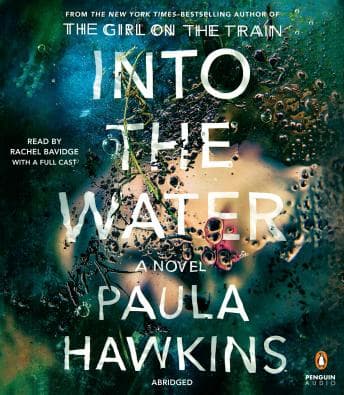

Ten. There are TEN narrative voices in this book. Ten different perspectives across short chapters, jumping around like a trauma bay on a Saturday night. And Paula Hawkins expects me to keep track of who did what to whom in a small English town where apparently everyone has secrets and grudges and complicated histories with drowning women? At 3 AM, charting my fifth admission, I almost threw my phone across the nurses' station.
But here's the thing—I didn't.
When The Chaos Finally Clicks
The full cast production is either going to save you or sink you. Five narrators splitting those ten-plus voices, and for the first few hours, I was genuinely confused. Rachel Bavidge handles the third-person sections and Nel's voice. Sophie Aldred takes Jules. Daniel Weyman does both Sean and Josh. Imogen Church is Erin Morgan. And Laura Aikman—she's Lena, the fifteen-year-old who just lost her mother to the river.
Aikman's work as Lena is where this audiobook earns its keep. The grief, the anger, the stubborn refusal to be pitied—it's raw in a way that reminded me of actual teenagers I've worked with in the ER. Kids who've seen too much, lost too much, and are holding themselves together with spite and silence. That's not easy to perform without tipping into melodrama, and Aikman walks that line perfectly.
The problem? Some listeners find the multiple narrators monotonous—similar tones across too many voices. I get it. There were moments where I had to rewind because I'd lost track of whose chapter I was in. This is NOT a background listening book. If you're folding laundry or half-asleep (guilty), you will get lost. Period.
The River Remembers Everything
The premise hooked me immediately. A single mother dead at the bottom of a river. A teenage girl before her. A town with a history of women drowning in those same dark waters—some by choice, some by force, some by something in between. The Drowning Pool, they call it. And now Jules, the dead woman's estranged sister, has to come back to this place she fled and take care of Lena.
Hawkins is doing something interesting with memory and trauma here. The way the past keeps reaching forward, the way secrets compound and mutate over decades. As someone who's actually worked with families in crisis—the way they protect each other, lie for each other, destroy each other—this felt uncomfortably real. The psychology is solid even when the plot gets tangled.
But the complexity is a double-edged scalpel. There are so many interconnected backstories, so many characters with their own perspectives and agendas, that the narrative weight becomes almost unbearable by the middle section. I found myself making mental notes like I was tracking patient histories. "Okay, so Sean was involved with Nel, but also there's something with his father, and Lena knows something about Katie's death, and Jules has her own trauma from childhood..." It's a lot.
The Girl On The Train Comparison (You Knew It Was Coming)
Everyone's going to compare this to Hawkins' debut. Some listeners think this is better—more ambitious, more layered. Others think it's a sophomore slump, too complicated for its own good. I land somewhere in the middle.
The propulsive writing is still there. Hawkins knows how to end a chapter on a note that makes you need the next one. The setting is more atmospheric than the train commute—that river is practically a character, dark and patient and hungry. Where the Crawdads Sing uses water the same way—as something beautiful and dangerous that shapes every character who comes near it. But The Girl on the Train had a tighter focus. Three narrators, one mystery. Here, you're juggling multiple mysteries across multiple timelines with multiple unreliable perspectives.
Ambitious. Also exhausting.
Who Should Wade In (And Who Should Stay On Shore)
This is for readers who like their mysteries complex and their casts sprawling. If you enjoyed the multiple-narrator structure of books like The Poisonwood Bible or if you're the type who makes charts while reading (no judgment, I've done it), you'll appreciate what Hawkins is attempting here.
Skip it if you listen casually, need clear-cut answers, or you're already sleep-deprived. Night shift folks, maybe save this for your days off.
The content warnings are real—violence, abuse, some sexual content, and heavy themes around suicide and drowning. Not light material.
Clocking Out
Carlos found me in the driveway at 7:45 AM, still sitting in the car, needing to know how it ended. That's not nothing. The resolution is satisfying if you've been paying attention—threads come together in ways that feel earned rather than convenient. But I won't pretend the journey wasn't frustrating at times.
Laura Aikman's Lena will stay with me. The river imagery will stay with me. Some of the middle-book confusion? Already fading. Worth the eleven hours, but only if you're ready to commit.