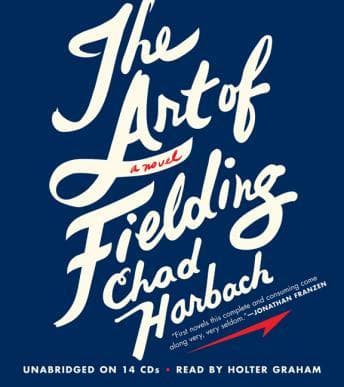

Carlos took the kids to their Saturday morning games and I was supposed to be sleeping - I had another night shift coming up. Instead I'm on the patio in Phoenix heat with cold coffee, completely invested in a college kid who can't throw a baseball anymore.
I don't even like baseball. (Sorry, Carlos.)
The Yips Are Real, and Harbach Knows It
Here's the thing about Henry Skrimshander's spiral after that one terrible throw - it's not really about baseball. It's about being the person everyone expects to be great, and then your body just... betrays you. As someone who's watched plenty of people's bodies betray them at 3 AM in a trauma bay, I felt that in my bones. The way Henry goes from this instinctive, almost supernatural fielding ability to suddenly being unable to make a routine throw to first base - Harbach writes the psychology of it so precisely that I kept thinking about new nurses I've seen freeze during their first real code. The mechanics are there. The knowledge is there. But something between the brain and the hands just disconnects. Matt Fitzgerald's How Bad Do You Want It? gets into the actual neuroscience behind this kind of performance breakdown, and even though it's nonfiction, it gave me better language for what Harbach is fictionalizing here than I ever expected a sports psychology book to deliver.
And that's just ONE of five storylines. You've got Guert Affenlight, the college president falling hard for Owen Dunne - Henry's roommate - and suddenly this distinguished man in his sixties is sneaking around his own campus like a lovesick teenager. Mike Schwartz, who poured everything into building Henry up and has nothing left for himself. Pella, Guert's daughter, running from a bad marriage straight into another mess. Owen, simultaneously the most self-possessed and most vulnerable person on the page.
What got me was how Harbach lets each of these people be genuinely messy. Not cute-messy. Real messy. The kind where you're making terrible decisions and you know they're terrible and you do them anyway because you're human. My mom would love this - not for the baseball, but for the family dynamics. The way Guert and Pella circle each other, both carrying guilt they can't name? That's every parent-child relationship that's more complicated than either person wants to admit. (She still thinks I should've been a doctor, but she'd recognize herself in Guert's desperate need for his kid's approval.)
Holter Graham Carrying Five People on His Vocal Cords for 13 Hours
Graham gives each of these five their own distinct sound, and he holds it for over thirteen hours. Henry sounds young and uncertain. Schwartz has this gruff, determined energy. Owen is measured and deliberate - you can hear the intelligence without Graham making it showy. And Pella - I'm always skeptical when male narrators voice female characters, but Graham gives her this restless, searching quality that actually works. She doesn't sound like a man performing a woman. She sounds like Pella.
The pacing is conversational and easy, which matters for a book this length. At 13 and a half hours, there's nowhere to hide if the narration falters, and Graham never lost me. The dialogue scenes feel like actual people talking, not someone reading lines. I listened at normal speed and never felt tempted to bump it up, which is rare for me.
Around Hour Eight, I Had Doubts
I'll be honest. Somewhere in the middle stretch, when the Affenlight storylines take over and the baseball recedes, things get a little predictable. You can see where some threads are heading. The Pella-Schwartz relationship follows beats you'd expect, and Guert's arc has a certain inevitability that felt almost too literary for a book that's otherwise pretty honest about the mess of being alive. I didn't yell at my dashboard on this one - no medical inaccuracies to rage about - but I did mutter "really?" at one plot development near the end that felt more like a novelist's careful architecture than something that would actually happen.
But here's what surprised me: that ending hit harder than I expected. Carlos asked why I looked like I'd been crying when I came inside from the patio. I blamed allergies. It was 95 degrees in Phoenix. He didn't buy it.
Night Shift Prescription
This is a book for anyone who's ever been really good at something and then lost it - or watched someone they love lose it. It's for people who want their fiction character-driven and patient. If you need constant plot momentum, the middle chapters will test you. If you want to spend 13 hours with five people you genuinely care about, even when they're being idiots? Perfect for that post-shift decompression. Night shift approved - but save it for when you can actually pay attention. This one rewards focus.