
"I can't spare this man. He fights."
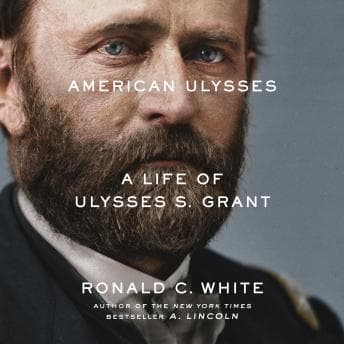
That Lincoln quote about Grant - probably apocryphal, definitely earned - kept running through my head somewhere around hour 14 of this 27-and-a-half-hour biography. I was on a red-eye to Boston, couldn't sleep, and had committed to finishing this thing before a client meeting on post-merger leadership. Figured Grant's management of subordinate generals might give me something useful. It gave me way more than that.
The Quiet Operator Nobody Understood
Bottom line: This is a genuinely important biography that rehabilitates a president most Americans write off as a drunk and a corrupt failure. Ronald C. White makes a persuasive case that Grant was neither - or at least, that those labels are grotesquely incomplete. The alcohol chapters are handled with surprising care. White doesn't dodge Grant's drinking, but he contextualizes it in ways that previous biographers haven't bothered to. Grant binged when he was separated from Julia and isolated from purpose. When he had a mission and his family nearby, he was sober and razor-sharp. That's not an excuse. That's a pattern. And patterns are data.
What hit me hardest was Grant's post-presidency race against throat cancer to finish his memoirs - knowing the book deal with Mark Twain was the only thing standing between his family and financial ruin. The man literally wrote himself to death to provide for Julia and his children. My parents would've understood that arithmetic perfectly. You do what needs doing. You don't complain about the cost.
White's research is genuinely deep - seven years of primary documents, some never previously examined. You feel that rigor. But here's where I have to be honest: the book doesn't have a grand thesis so much as a grand rehabilitation project. It's less "here's a new framework for understanding Grant" and more "here's everything you got wrong, chapter by chapter." That works. But around the Reconstruction chapters, it starts to feel like a very thorough correction rather than a story with its own momentum.
27 Hours Is a Commitment. Here's What's Worth It.
The Civil War sections - roughly the middle third - are outstanding. Grant's ability to manage massive egos (Sherman, Sheridan, the insufferable McClernand) while keeping his eye on the strategic picture is a masterclass in leadership. I've seen CEOs with half the organizational complexity completely lose the thread. Grant delegated naturally, trusted his people, and only intervened when someone was actively screwing up. There's a scene where Grant angrily disciplines soldiers for mistreating horses that tells you everything about his character - the quiet man who erupts when something genuinely offends his sense of decency.
The presidency sections are where White's revisionism is most valuable. Grant's war against the KKK, his evolving position on Native American rights, his second-term struggles - this is history most Americans never learned. Skip to those chapters if you're short on time (around chapters 25-30). The early childhood and West Point years are fine but honestly could've been compressed.
Julia Dent Grant also gets her due here, and that's welcome. She wasn't just "the wife." She was a strategic partner who influenced decisions and maintained Grant's equilibrium. White treats their marriage as a genuine partnership, not a footnote. Jenny would approve of this framing. (Jenny approves of very little in my reading habits, so this is notable.)
Arthur Morey Plays It Straight - And That's the Right Call
Morey's narration has the energy of a well-produced PBS documentary. Clear diction, somber tone, controlled pacing. He doesn't try to do voices or inject drama where the text doesn't call for it. For a 27-hour biography of a stoic Civil War general, that's exactly the right approach. You don't want someone chewing scenery while narrating the Siege of Vicksburg.
The occasional French mispronunciation is noticeable if you care about that sort of thing. I noticed it twice and moved on. At 1.5x speed (yes, I dialed it back from my usual 2.0x - Morey's measured pace actually rewards slightly slower listening), the whole thing took me about 18 hours across a week.
Who Gets the ROI
If you're into Civil War history, presidential biography, or leadership case studies - this is worth your credit, full stop. If you've only ever heard "Grant was a drunk who presided over a corrupt administration," this book will genuinely change your mind with evidence, not sentiment. Business leaders managing complex organizations with strong-willed subordinates will find more applicable insight here than in most books actually shelved in the business section. Three Days in January operates on a similar register - another quiet, underestimated general-turned-president who gets more credit from historians than from the American public, and whose organizational mind only becomes visible when someone bothers to look closely.
If you want a tight, thesis-driven narrative that respects your 2.0x speed lifestyle? This one meanders. It's thorough in ways that sometimes trade momentum for completeness. My 2.0x speed couldn't save the early chapters from feeling leisurely.
But the core story - a quiet, underestimated man who kept showing up when it mattered, who fought for what was right even when it cost him everything, who literally wrote until his hand couldn't hold the pencil to make sure his family was taken care of - that story earned every one of those 27 hours. This is what my parents did instinctively. Now it has a TED talk. And a Pulitzer-finalist biography. And a very tired consultant on a red-eye who couldn't stop listening.






![Steve Jobs [unabridged audiobook] audiobook cover](/_next/image?url=https%3A%2F%2Fcovers.audiobooks.com%2Fimages%2Fcovers%2Ffull%2F9788499923406.jpg&w=1920&q=75)