
Look, I need to get something off my chest: why do production companies insist on cranking the background music to eleven during the exact moments when characters are whispering critical plot information? I was walking my dog, totally locked into Feyre's emotional spiral, and suddenly a wall of cinematic orchestration swallowed half a sentence whole. I rewound three times. Three. My dog was confused. I was annoyed. And yet — and this is the infuriating part — I couldn't stop listening.
Bottom Line: A full-cast, sound-designed dramatization that turns ACOTAR Book 2 into something that genuinely sounds like an HBO production piped into your ears. When the mix works, it's spectacular. When it doesn't, you're straining to hear dialogue over what sounds like someone scoring a Marvel trailer in the background. Still absolutely worth it if you can listen in a quiet space with the volume up.
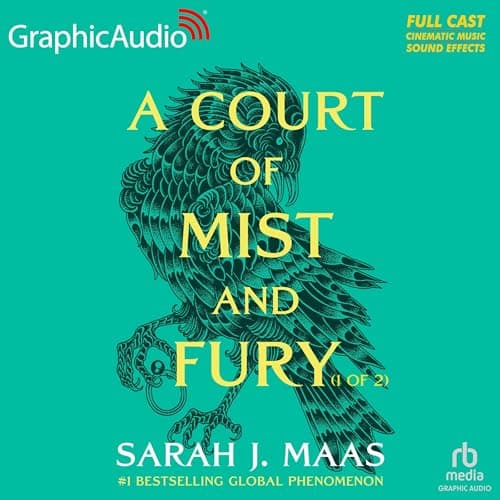
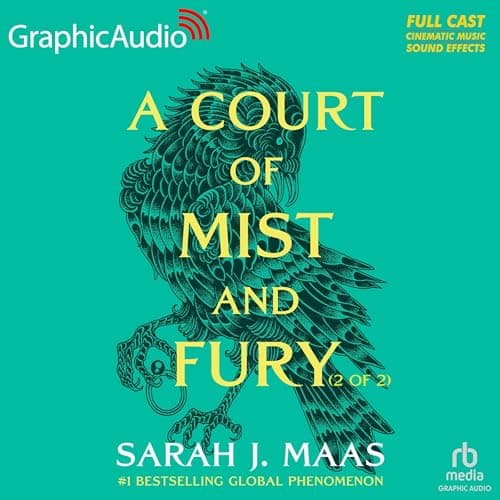
This dramatized adaptation of A Court of Mist and Fury (Part 1 of 2) takes Sarah J. Maas's beloved second installment in the ACOTAR series and gives it the full treatment — cast, sound effects, cinematic scoring, the works. And when it clicks, it clicks hard. When it doesn't, you're rewinding. Again.
Let's talk about what absolutely lands. The voice cast is doing serious work here. Melody Muze carries Feyre with a rawness that hits different from a standard narration. You can hear the fractures in her — the PTSD from Under the Mountain, the hollowness she's drowning in while everyone around her expects gratitude and normalcy. Anthony Palmini brings a layered presence as Rhysand that balances menace with vulnerability, which is exactly what that character demands. The supporting cast fills out the world in a way that a single narrator simply can't replicate. Each character arrives with their own vocal identity, and during dialogue-heavy scenes, the effect is genuinely immersive. That kind of multi-voice ensemble storytelling is actually something Auggie & Me: Three Wonder Stories pulls off beautifully too, each narrator section landing with its own distinct emotional weight.
The scenes that listeners keep circling back to — The Weaver, The Bone Carver — are where this production format earns its keep. The sound design during those sequences creates an eerie, skin-crawling atmosphere that reading on the page or hearing from a solo narrator just can't match. There's a reason this won an AudioFile Earphones Award. The production team understood the assignment for horror-adjacent fantasy moments, layering ambient sounds that make you glance over your shoulder on a Tuesday afternoon.
But here's where I have to be honest about the trade-offs. This is not a background listen. Don't put this on while cooking dinner or half-paying attention during a commute in heavy traffic. The dramatized format demands your full attention, and the audio mixing — while mostly excellent — has stretches where the music competes with the narration rather than supporting it. Some of this feels intentional, creating mood through layered sound, but intention doesn't change the fact that you'll occasionally miss words. If that kind of thing drives you up a wall, you might want to stick with the standard audiobook version.
Story-wise, this is where Maas's series pivots from a Beauty and the Beast retelling into something much darker and more politically complex. Feyre's depression and her suffocating relationship with Tamlin in the Spring Court are handled with real weight here. The voice acting sells the emotional claustrophobia in a way that gave me actual chest tightness. And when the story shifts to the Night Court and Feyre's dynamic with Rhysand, the tonal shift is palpable — the music changes, the energy changes, and you feel the world expanding.
A quick content note: this story deals with depression, controlling relationships, violence, and sexual content. The dramatized format makes some of these elements hit harder than they do on the page, so adjust your expectations accordingly.
The fact that this is Part 1 of 2 means you're getting roughly half the novel in just over eight hours, and yes, it ends on a point that will have you immediately reaching for Part 2. That's both a compliment to the pacing and a warning for your wallet. The adaptation trims and reshapes the source material to fit the dramatized format, and while purists might notice what's been cut, the core emotional arc and major plot beats are intact.
Who Should Listen (And Who Should Skip)
ACOTAR fans who've already read the books and want a genuinely fresh way to re-experience the story — this is for you. Newcomers who don't mind starting with a full-production format will find it an exciting entry point, though I'd suggest starting with the dramatized A Court of Thorns and Roses first. Skip this if you're looking for something to half-listen to during chores or a noisy commute; the production demands quiet and full attention. Either way, make sure your volume is turned up and your dog walk can wait.










![A Court of Wings and Ruin (1 of 3) [Dramatized Adaptation] audiobook cover](/_next/image?url=https%3A%2F%2Fm.media-amazon.com%2Fimages%2FI%2F51TsSCZLoZL._SL1200_.jpg&w=1920&q=75)