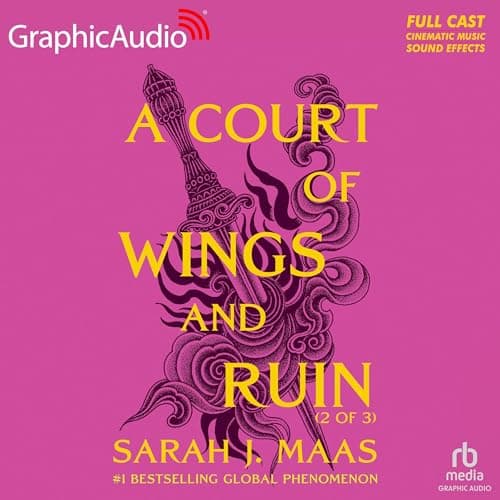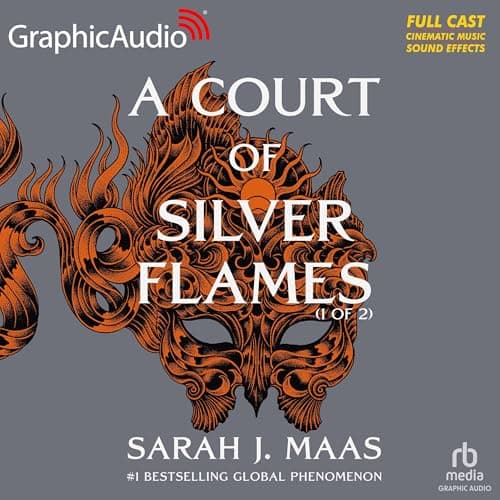

I was shelving returns in the back of the library — alone, because my coworker called in sick and it was a Tuesday afternoon, which in small-town Oregon means the building was basically empty. I had my earbuds in, and the dramatized Cauldron scene hit with full sound design while I was crouched between the stacks in dim fluorescent light. Jumped hard enough to knock a copy of Beloved off the shelf. Toni Morrison would've understood.
Look, I need to be upfront: this isn't horror. But Nesta Archeron's story trades in something horror fans know intimately — dread that lives inside you. The kind you can't outrun because it's not a monster in a hallway, it's the thing you did, the thing that was done to you, the way you can't stop destroying what you love. Sarah J. Maas isn't writing Shirley Jackson, obviously. But this dramatized adaptation of A Court of Silver Flames understands that the scariest thing in any story is a character who's at war with themselves and losing.
Nesta's Spiral Sounds Like Something Breaking
The full-cast approach here does something a single narrator can't — it externalizes Nesta's isolation. When every other character sounds warm, present, alive through their individual voice actors, and then you hear Nesta through Amanda Forstrom's delivery — clipped, brittle, holding everything at arm's length — the loneliness becomes acoustic. You hear the wall she's built. Forstrom doesn't play Nesta as sympathetic. She plays her as someone who's given up on being liked, and that's a much harder, braver choice.
The standout moment everyone talks about is the scene where Nesta screams in pain, and yeah — it earned every bit of its reputation. The sound design pulls back, strips almost everything away, and Forstrom commits to a sound that's genuinely ugly and raw. Not performative anguish. Actual anguish. Shirley (my cat) was unimpressed. I was not okay.
Cassian's voice work lands differently. The male voice actors — and this seems to be a point of division — don't have the same electric specificity. Cassian is fine. Competent. But where Forstrom gives you a character who sounds like she's swallowing glass every time she speaks, Cassian's delivery feels more... functional. He moves the romance forward, he says the right lines, but there's a steadiness that flattens some of the tension. When these two are supposed to be combustible, the audio sometimes reads more like a slow simmer from his end.
The Sound Design Is Doing Heavy Lifting (Mostly)
This is a full dramatized production — music, ambient sound, effects. And when it works, it works. The Night Court feels like a place. Footsteps on stone, wind through the House of Wind, the ambient hum of magic. I've listened to a lot of fantasy audiobooks that sound like someone reading in a booth. This sounds like a world. The closest comparison I can draw from a completely different shelf is What is the Bible? — which sounds like a strange pairing until you consider that both productions understand how layering voices and texture around dense source material can make something inaccessible suddenly feel lived-in and immediate.
But — and this is a real but — some of the sound effects land weird. There are moments where the foley feels slightly off-register, like the effect was pulled from a generic library rather than designed for the scene. A door will close with a sound that belongs in a modern apartment, not a Fae fortress. It's small. It's the kind of thing that only bugs you if you're listening with intent. And I listen with intent.
The music cues are more successful. They're restrained, which is smart — the story already runs hot emotionally, and an overbearing score would've tipped it into melodrama. Instead, the music supports without leading. It trusts the actors, which is exactly what good production should do.
What This Gets Right About Damage
Here's why I'm reviewing this on a horror-leaning account: Nesta's arc in this first half is essentially a haunting narrative. She's haunted by the Cauldron, by the war with Hybern, by her own choices. The dramatization leans into this — there's a nightmare chapter in the second half that, with the full sound design and Forstrom's delivery, plays like actual psychological horror. The walls close in. The audio design goes claustrophobic. If you scare easily, skip. If you don't, you need this — not because it's a horror book, but because it borrows horror's best tools.
Maas has always been better at damage than she gets credit for. The romance community claims her, the fantasy community claims her, but nobody talks about how well she writes people falling apart. This adaptation honors that. The editing for performance — cutting internal monologue into dialogue beats, letting silences do actual work — transforms dense prose into something leaner and meaner.
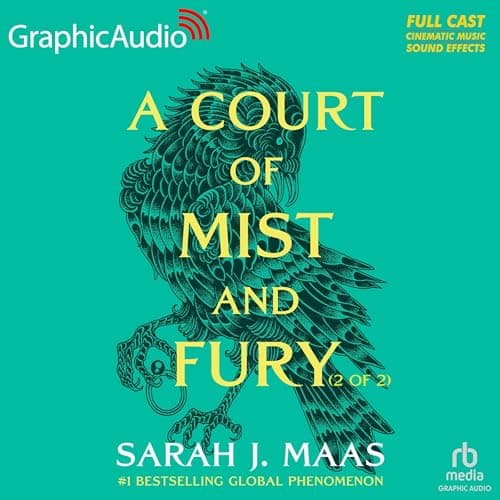
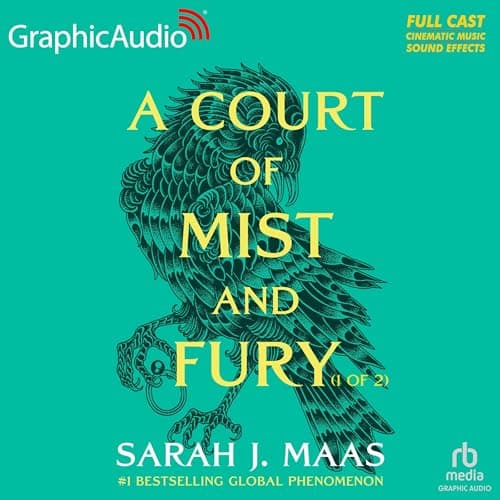
Is this Part 1 of 2? Yes. Does it end on a cliffhanger that'll make you immediately need Part 2? Absolutely. Am I annoyed about this? A little. But the 10-hour runtime for a half-book means nothing feels rushed. Nesta's healing isn't fast. It shouldn't sound fast.
Who Should Listen (And Who Should Skip)
If you've bounced off the standard audiobook narration for Silver Flames — and I know many have, the complaints about the solo narrator are loud and valid — this dramatized version is the fix. It's a completely different experience. The full cast doesn't just improve it; it recontextualizes it. Horror fans who appreciate psychological dread wrapped in fantasy trappings? This is your entry point into Maas.
Skip this if you need constant action or you're planning to half-listen while doing dishes. The emotional beats require your attention. The quiet moments are where the real work happens, and if you miss them, you're just listening to a fantasy romance without the thing that makes it hurt.
Closing the Book (For Now)
My podcast listeners are going to love this — not because it's horror, but because it uses horror's grammar. Dread. Isolation. The monster inside. I listened in the dark. Mistake? Maybe. Worth it? Absolutely. Now I need Part 2, and I need Forstrom to keep choosing fury over likability. That's where the magic is.






![A Court of Wings and Ruin (1 of 3) [Dramatized Adaptation] audiobook cover](/_next/image?url=https%3A%2F%2Fm.media-amazon.com%2Fimages%2FI%2F51TsSCZLoZL._SL1200_.jpg&w=1920&q=75)