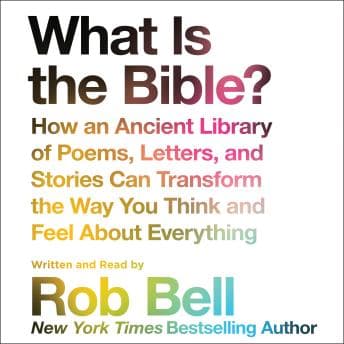

What if everything you thought you knew about reading the Bible was getting in the way of actually understanding it?
I was grading sophomore essays on The Great Gatsby at 11 PM—the usual ritual of red pen and regret—when Rob Bell started asking questions I've been dodging for twenty years. Not theological questions, exactly. Literary ones. The kind of questions I ask my students about Fitzgerald but somehow never applied to Genesis.
The English Teacher Finally Gets Schooled
Here's what Bell does that stopped me mid-annotation: he treats the Bible like literature. Not dismissively, not reductively, but seriously. He asks what any good reader should ask—who wrote this? For whom? What was happening in their world? What genre is this, anyway?
This reminds me of what Hemingway said about reading—that you have to see what's actually on the page before you can see what isn't. Bell's approach is essentially that. He walks through passages I've heard a thousand times in church and asks, "But have you noticed this is a poem? Have you noticed this is ancient Near Eastern treaty language? Have you noticed this is polemic against Babylonian creation myths?"
I haven't. I really haven't.
The prose deserves to be savored here. Bell writes (and reads) in these short, punchy sentences that build like jazz improvisation. There's a rhythm to it. A pause. Then the next thought lands. My students would hate this. I love it.
When the Author Narrates His Own Argument
Bell reading Bell is a specific kind of experience. His cadence has this almost hypnotic quality—he knows exactly where the emphasis belongs because he put it there. The pauses are punctuation. When he's making a point about ancient Hebrew poetry, you can hear him leaning into it, almost conspiratorial, like he's letting you in on something the Sunday school teachers missed.
At 6 hours and 24 minutes, this isn't a casual listen. I tried it during a faculty meeting once—Principal Martinez was discussing budget allocations, and I was learning about how the book of Jonah is satirical comedy. (Sorry, Martinez. The irony of escape wasn't lost on me.) But honestly? This one demands focus. Bell builds arguments across chapters, and if you zone out during his explanation of Second Temple Judaism, you'll miss why his reading of certain Gospel passages matters.
The Controversy That Isn't—Or Is
Let's talk about what Bell is really saying, because this is where listeners split hard.
Some reviewers call his theology "dangerous" or "apostate." Others say he's finally asking the questions they've been afraid to voice. That tension between comfort and challenge shows up in Girl, Wash Your Face, though Rachel Hollis is working with much different material. I'm an English teacher, not a theologian, so I'll say this: Bell's approach is essentially literary criticism applied to sacred text. He's asking readers to consider context, genre, authorial intent, historical moment. This is what we do with Homer. With Shakespeare. With Faulkner.
The question is whether you think the Bible should be read that way.
Bell doesn't quite answer whether the Bible is divinely inspired or merely historically significant—he kind of dances around that presupposition. Some listeners found this frustrating, wanting him to commit. I found it honest. He's more interested in showing you how to read than telling you what to believe.
Who Will Love This (And Who Should Run)
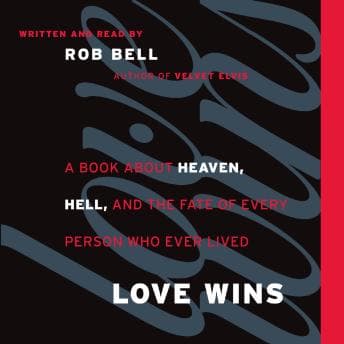
If you loved Love Wins, this is its spiritual successor—same questioning spirit, same refusal to accept easy answers. If you're someone who's felt alienated from Scripture by rigid interpretation, Bell offers a way back in.
But if you need your theology systematic and your conclusions definitive, this will drive you crazy. Bell is comfortable with ambiguity in ways that some listeners absolutely are not. One reviewer said the book "slides too far" toward relativism. I'd say Bell is comfortable with questions staying questions. Your mileage will vary based on how you feel about that.
Skip this if you want background listening. Don't try it while cooking or commuting through traffic. You need to be present.
Class Dismissed (But the Reading Continues)
I've spent two decades teaching kids that context matters, that genre shapes meaning, that we can't understand what an author is saying without understanding who they were and when they lived. Rob Bell just applied my own pedagogy to the one text I'd exempted from it.
That's uncomfortable. And probably necessary.
Bell's pauses land exactly where they should—he understands that silence is punctuation. This is why we still read the classics, I kept thinking. Because someone, eventually, comes along and shows us we never really read them at all.