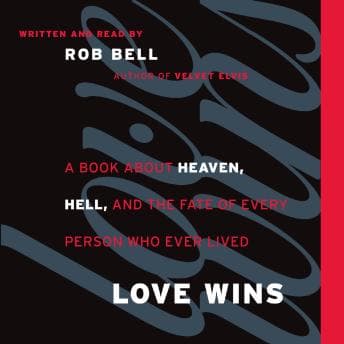

"Does God get what God wants?"
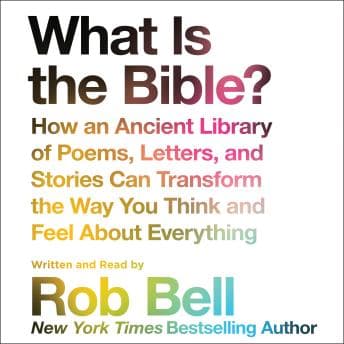
That question hit me somewhere around the forty-minute mark, walking the lakefront with Denise on a Sunday morning. She asked why I'd stopped talking. I told her Rob Bell just asked me something I'd been avoiding for twenty years of church attendance and ten years of teaching Dante's *Inferno* to teenagers who mostly want to know if their ex-boyfriends are going to hell.
Look, here's the thing about *Love Wins*: it's not a theology textbook. It's not even really an argument. It's more like... a pastor sitting across from you at a coffee shop, asking questions you've been too scared to voice in your small group. And Bell reads it himself, which matters. A lot.
When the Author IS the Narrator
I've listened to hundreds of author-narrated audiobooks. Most of them are disasters—academics who drone, novelists who can't find their own rhythm, memoirists who sound like they're reading a grocery list. Bell is different. The man knows how to teach. His NOOMA videos proved that years ago, but hearing him read his own words? It's like the difference between reading a Shakespeare sonnet and hearing Patrick Stewart perform it.
His delivery is warm, conversational, almost playful at times. And yes—some listeners find that tone too light for eternal damnation discourse. I get it. But honestly? After decades of hearing hellfire preached with angry certainty, Bell's gentleness feels like a glass of water. He pauses in the right places. He lets questions breathe. This is a man who understands that pause is punctuation.
At three hours and thirty-nine minutes, it's basically a long sermon. I finished it in two walks and one faculty meeting. (Principal Martinez was discussing budget allocations. I was contemplating universalism. No regrets.)
The Questions That Linger
Here's where I need to be honest with you: this book will frustrate certain listeners. Bell raises question after question—about the Greek word "aion," about what Jesus actually said versus what we've assumed he said, about whether the traditional view of hell is more Augustine than apostle. And he doesn't always land the plane.
My students would recognize this approach. It's Socratic. It's the guy who answers your question with another question until you want to throw your copy of *The Republic* at his head. Some people love that. Some people want clear answers, doctrinal certainty, a systematic theology they can underline and memorize.
If you're in that second camp, skip this one. Seriously. You'll hate it, and you'll leave angry reviews about Bell being a heretic, and we'll all be exhausted.
But if you've ever sat in a pew wondering why the God who is supposedly love would create billions of people knowing most of them would suffer eternally—if that question has kept you up at night or driven you away from faith entirely—Bell is offering you permission to wonder out loud.
What Bell's Actually Arguing (Sort Of)
This reminds me of what C.S. Lewis explored in *The Great Divorce*—the idea that heaven and hell might be less about geography and more about orientation. Torment wrestles with similar questions about suffering and divine justice, though from a completely different angle. Bell isn't saying hell doesn't exist. He's asking whether our certainty about who goes there and for how long might be more cultural than biblical.
The prose deserves to be savored. Bell writes in short, punchy sentences. Fragments, really. Like poetry. Like someone who knows you're listening while driving or walking or pretending to grade papers. He's not trying to impress you with his seminary vocabulary. He's trying to reach you.
And when he reads lines like "What we believe about heaven and hell is incredibly important because it exposes what we believe about who God is"—you feel the weight of it. The man believes what he's saying. You can hear it.
Would I Assign This to My Juniors?
My students read Dante's *Inferno* every spring. They love the violence, the creative punishments, the celebrity sightings in hell. They rarely ask the harder questions: Why this system? Who designed it? Does the punishment fit the crime—forever?
I might assign this as a companion piece. Not because I agree with everything Bell says—I'm still working that out myself—but because good education isn't about giving answers. It's about teaching people to sit with uncertainty.
The audiobook production is clean and professional. No weird audio glitches, no distracting music. Just Bell's voice, doing what it does best.
If you loved *Mere Christianity* but wished Lewis had pushed further on the hard questions, this is its spiritual successor. If you're looking for orthodox Reformed theology, this ain't it.
Worth pausing the faculty meeting for. Definitely worth a lakefront walk.