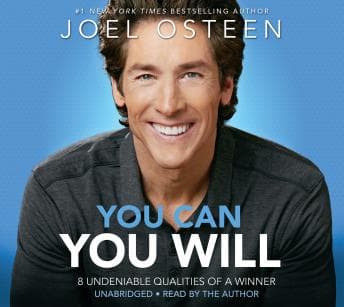

Look, I'm going to be upfront about something: I'm not Joel Osteen's target audience. I'm a software engineer who debugs distributed systems and listens to hard sci-fi about uploaded consciousness. My spiritual life mostly consists of praying my code compiles on the first try. (It never does.)
But here's the thing—I grabbed this audiobook because I was in the middle of a brutal on-call rotation, running on four hours of sleep, and my usual diet of optimization podcasts was making me feel like a productivity robot about to short-circuit. Sometimes you need something different. Sometimes you need someone to just... tell you it's going to be okay.
The Voice That Sells It
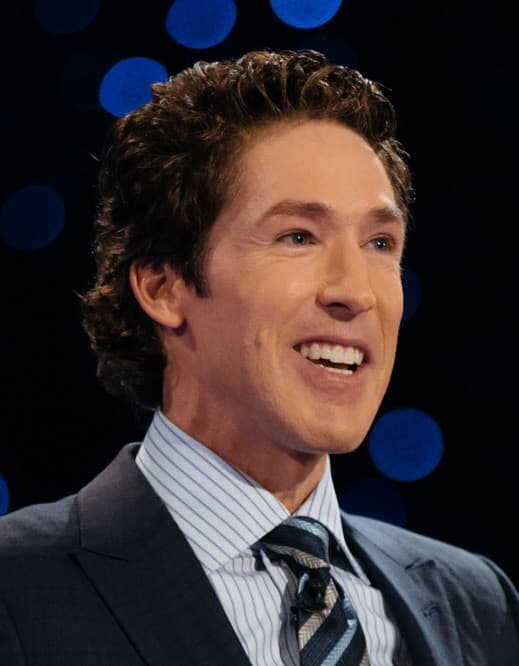
Joel Osteen narrating his own book is the only way this works. And I mean that as a genuine compliment. His delivery is warm without being saccharine, passionate without tipping into televangelism territory. The man knows how to land a story. He'll set up an anecdote about someone who failed seventeen times before succeeding, and his timing is just—it works. You believe him.
At 3 hours 41 minutes, this is basically a long commute and a half for me. I finished it in two days, and honestly? The pacing felt right. Each of the eight principles gets its own section, and Osteen doesn't belabor any single point. He makes his case, tells a story or two, and moves on. For a self-help book, that's refreshing.
Where the Engineer Brain Kicked In
Okay, so here's where I get a little analytical. The eight principles—Keep Your Vision in Front of You, Run Your Race, Expect Good Things, etc.—are not revolutionary. If you've read any self-help in the last twenty years, you've encountered these ideas. Positive mindset. Growth mentality. Service to others. This is basically "Mindset" by Carol Dweck but wrapped in faith-based language. Crush It! takes a similar approach to motivation—less about revolutionary ideas, more about delivery and conviction.
But here's my counterargument to my own skepticism: sometimes you don't need new information. Sometimes you need the same information delivered with conviction by someone who genuinely believes it. And Osteen believes it. You can hear it in his voice.
The analogies he uses are surprisingly sticky. There's this one about how eagles don't waste energy fighting crows—they just fly higher where the crows can't follow. Is it a little cheesy? Sure. Did I think about it during my next frustrating code review? Also yes.
The Faith Factor (Being Honest Here)
I can't write this review without addressing the religious element. This is a faith-based book. God comes up. A lot. If that's not your thing, you're going to have a hard time with this audiobook, full stop.
For me personally, I grew up going to church with my parents before the whole CS degree and FAANG life took over. So the language wasn't jarring—it was actually kind of nostalgic? Like hearing my grandmother's voice telling me I was meant for good things. (She was probably talking about getting married and having kids, not shipping production code, but still.)
The ROI Calculation
Bottom line on the practical value: This is a mindset reset, not a skill-building book. I didn't learn any new frameworks or methodologies. What I got was about four hours of someone telling me, in a very convincing way, that I'm capable of more than I think I am.
After two weeks of 2 AM production incidents, that was worth more than another book about system design. When I need to actually focus and build skills, I'll reach for something like Power of Concentration, but that's a completely different use case. Sometimes your mental stack needs a different kind of optimization.
Perfect for: morning commute when you're dreading work, gym sessions when you need motivation, any moment when your inner critic is being particularly loud. If you're actively opposed to religious content, skip this. If you're religion-neutral and can extract principles without the packaging, you might get something out of it.
Skip for: deep work, learning new skills, or if you need something to actively engage your brain. This is vibes, not information.
Would I Listen Again?
Kevin (the boyfriend) asked me what I was listening to and I said "motivational church content" and he looked at me like I'd grown a second head. But honestly? I'd listen again during my next rough patch. And that's the real test.