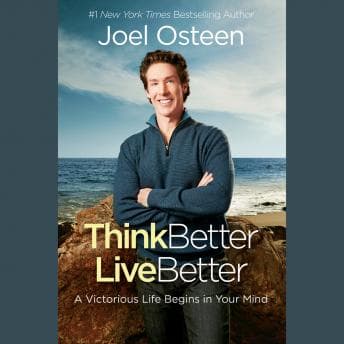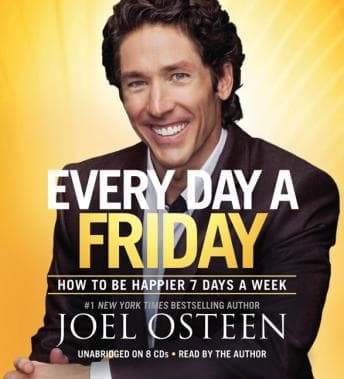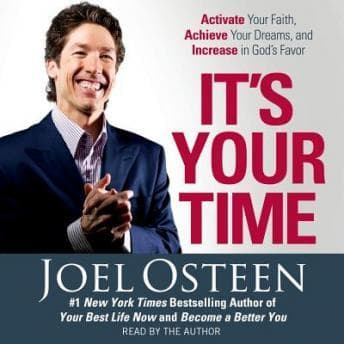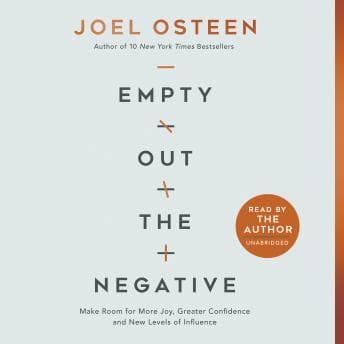

Osteen repeats "empty out the negative and make room for the positive" about forty-seven times in under three hours. I counted. Well, I estimated. My 2.0x speed couldn't save this one.
Bottom line upfront: if you already drink the Osteen Kool-Aid, this audiobook will feel like a warm Sunday morning hug. If you're looking for actionable frameworks or evidence-based strategies for mindset shifts, keep scrolling.
What My Parents Would Call This
I was listening to this during a client flight delay at LAX—three hours stuck at gate 47B with nothing but Osteen's Southern drawl and overpriced airport coffee. And here's the thing that kept nagging me: my parents worked 14-hour days at their dry cleaning business. They dealt with difficult customers, tight margins, equipment breakdowns. They didn't have time to "empty out the negative" each morning. They just... worked. Showed up. Did the thing.
Osteen's core message—that you need to release guilt, resentment, and worry to make room for joy—isn't wrong. It's just incomplete. He's selling the destination without the vehicle. My mom didn't need someone telling her to "power up and get your mind going in the right direction." She needed a working steamer and customers who paid on time.
The Osteen Delivery System
Here's what I'll give him: the man knows how to work a room, even when that room is your earbuds. His voice has this warm, almost hypnotic quality—that Houston megachurch pastor cadence that rises and falls like he's personally invested in your success. Author-narrated books can go either way, but Osteen reading Osteen makes sense. This is essentially a sermon you can pause.
The 2 hours 42 minutes runtime is actually merciful. Most self-help books pad themselves to 8+ hours with repetitive examples and unnecessary case studies. Osteen keeps it tight. The flip side? There's maybe 30 minutes of actual content here, stretched like pizza dough across the full runtime. Same concepts, different biblical references, repeat.
The Repetition Problem (That Might Actually Be a Feature)
One reviewer noted that the audiobook format actually helps with the repetitive nature of the text. They're not wrong. When you're reading, repetition feels lazy. When you're listening—especially during a mindless task—repetition becomes reinforcement. It's the difference between reading "drink more water" once and having someone remind you every twenty minutes.
So if you're the type who needs constant positive reinforcement—and no judgment, some people genuinely do—this works as ambient encouragement. Pop it on during your commute, let Osteen's affirmations wash over you, arrive at work slightly more optimistic. That's not nothing.
The 30-Minute Nugget Buried in Here
One key takeaway is worth the listen. The other 2 hours? Not so much. But here's the nugget: Osteen argues that holding onto negative emotions isn't just unpleasant—it's taking up mental real estate that could house better things. It's an opportunity cost argument dressed in spiritual language.
From a pure business lens, he's not wrong. I've seen executives torpedo their own companies because they couldn't let go of a grudge. I've watched founders implode startups because they were still bitter about a failed partnership from five years ago. The inability to "empty out the negative" has real costs.
But Osteen never gets into the how. How do you actually release resentment when someone genuinely wronged you? How do you stop worrying when your business is actually failing? "Just give it to God" might work for his congregation, but it's not a strategy deck I can present to a Series B startup.
Jenny Would Say I'm Being Harsh
Jenny is right. I'm evaluating this like a McKinsey deliverable when it's clearly meant to be spiritual comfort food. Not everything needs an ROI calculation. Sometimes people just need to hear that they're worthy of good things, that their past doesn't define them, that tomorrow is a fresh start. American Religious History does a fascinating job tracing how this particular brand of prosperity gospel became so embedded in American spirituality.
And honestly? Sitting in that airport, delayed for the third time that month, running on four hours of sleep and too much caffeine—there was something almost pleasant about Osteen's voice telling me to let go of frustration and trust that things would work out.
I didn't believe him. But it was nice to hear.
Who Gets Value Here (And Who Doesn't)
If you're already in Osteen's orbit, it's a quick, pleasant listen—spiritual comfort food for the commute. If you're looking for practical psychology or actionable frameworks with actual research backing, this isn't your book. Skip to something with citations.
At under 3 hours, it respects your time more than most. At 1.5x speed, you can knock it out during a long commute. Just don't expect it to change your life unless you were already primed to be changed.