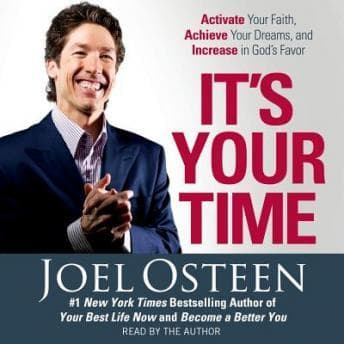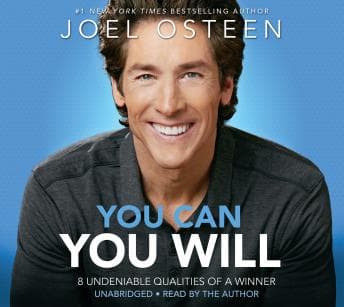

Look, I'll be honest with you. I went into this one skeptical. Joel Osteen isn't exactly the first name that comes up when consultants swap book recommendations over bourbon. But my mom—Korean immigrant, worked herself to the bone for 40 years, never complained once—she loves this guy. Watches him every Sunday. So when she asked if I'd listened to any of his books, I figured I owed her at least one honest try.
And here's the thing: I didn't hate it. I actually... kind of got it?
The ROI on Positive Thinking
Let's cut to the bottom line first, because that's what we're here for. At 4 hours and 22 minutes, this is mercifully short by self-help standards. I've sat through 12-hour business books with less substance. Osteen's core thesis—that your mental patterns determine your outcomes—isn't revolutionary. Every executive coach I've worked with says some version of this. The difference is Osteen wraps it in faith-based language and delivers it with the warmth of a pastor who genuinely believes what he's saying.
Is the framework rigorous? No. There's no McKinsey-style analysis here, no data backing up the claims. But that's not really the point, is it? This is spiritual motivation, not a Harvard Business Review case study. And for what it is, it's effective. The key takeaway—reprogram your mental defaults—is worth the listen. The religious framing won't work for everyone, but the underlying principle is solid.
My parents did this instinctively, by the way. They never read positive psychology research. They just showed up every day believing the dry cleaning business would work because it had to work. Now that mindset has a TED talk and a bestselling book.
Osteen Narrating Osteen
Here's where I'll give credit where it's due. Joel Osteen narrating his own work makes sense in a way that most author-narrated audiobooks don't. The man is a professional speaker. This is literally his job. And you can tell—his delivery is warm, clear, and genuinely engaging. No stumbling over his own sentences. No weird pacing issues. Just a guy who's given this sermon a thousand times and knows exactly where to put the emphasis.
I listened at 1.5x (I know, I'm slowing down in my old age) and it held up perfectly. His natural cadence actually benefits from a slight speed bump—keeps the momentum without losing the emotional beats. At 2.0x it got a little too chipmunk-preacher for my taste, but your mileage may vary.
The production is clean. No audio issues, no weird background noise. Just Osteen's voice, steady and encouraging, telling you that you're capable of more than you think.
Where This Works (And Where It Doesn't)
I listened to most of this during a particularly brutal consulting project—long drives between client sites, too tired to focus on anything demanding. And in that context? It worked. Not because I was having some spiritual awakening, but because sometimes you need someone telling you that your negative self-talk is garbage. Even at 2.0x, that message landed.
But let's be real: this isn't for everyone. If you're allergic to religious language, skip it. If you want actionable frameworks with measurable outcomes, this ain't it. For that kind of rigor—though from the opposite perspective—God Is Not Great delivers the intellectual firepower Osteen never attempts. If you're looking for peer-reviewed psychology, you're in the wrong aisle entirely.
This is for people who need encouragement. People stuck in negative mental loops who need someone with a warm voice to tell them it's okay to expect better. People like my mom, who works 60 hours a week and deserves to hear that good things are coming.
The Consultant's Honest Take
Here's what I keep coming back to: I've seen so many founders and executives crash because they couldn't get out of their own heads. Brilliant people, great ideas, but they'd convinced themselves they weren't good enough or that failure was inevitable. No amount of strategy could fix that. The mental game mattered more than the spreadsheets.
Osteen isn't teaching strategy. He's teaching the mental game. And while his approach is wrapped in faith language that won't land with my usual crowd, the underlying principle—that your thoughts shape your reality—is something I've seen play out in boardrooms and startups alike.
Would I recommend this to my consulting clients? Probably not directly. Would I recommend it to my mom? Already did. She's listened to it twice.
Jenny says I'm being surprisingly generous here. She's right. But sometimes a book doesn't have to change your life to be worth four hours. Sometimes it just has to remind you that the voice in your head doesn't have to be your enemy.