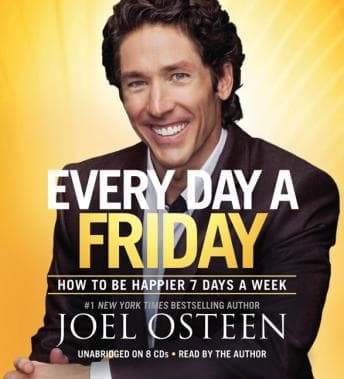

Can you actually choose to be happy? Like, as a decision you make before your feet hit the floor in the morning?
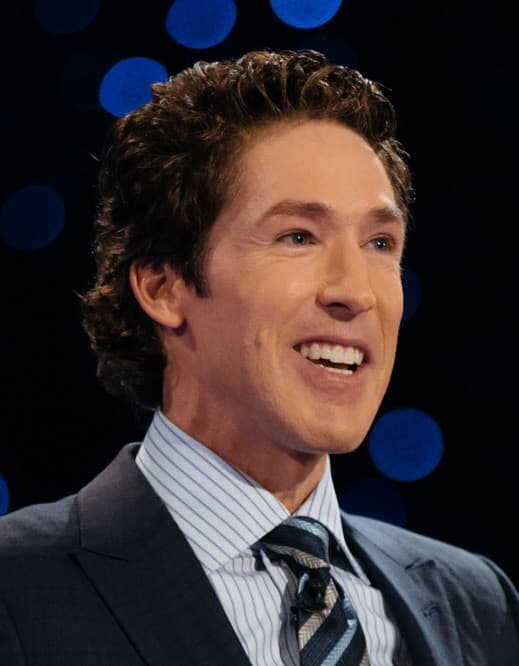
I've spent years studying the psychology of positive thinking, reading the research on hedonic adaptation and cognitive reframing. So when I pressed play on Joel Osteen's Every Day a Friday, I had my skeptic's hat firmly in place. (My therapist would have thoughts about this defensive posture, I'm sure.) But here's the thing—I found myself genuinely curious about how Osteen would translate the megachurch experience into an audiobook format.
CBT Lite, Wrapped in Scripture
What makes this audiobook fascinating as a case study is how Osteen structures his approach to happiness. He's essentially doing cognitive behavioral therapy lite, wrapped in scripture and delivered with the warmth of a pastor who genuinely believes what he's saying. The research actually shows that intentional positive reframing can shift baseline happiness levels—and Osteen, whether he knows the academic literature or not, is teaching exactly that.
His framework is simple: choose your thoughts, choose your attitude, choose your response to circumstances. Is it groundbreaking psychology? No. But the way he delivers it—with personal anecdotes, humor, and that unmistakable Texas optimism—makes the medicine go down easy. I kept asking myself: why does this work for so many people when the advice is, frankly, stuff we've all heard before?
The answer, I think, is the narrator himself.
When the Author IS the Voice
Osteen narrating his own work is the right call here. His voice has this quality—warm, unhurried, genuinely encouraging—that would be impossible to replicate. It's like listening to a really good sermon, which is both the strength and the limitation. If you've heard him preach, you know exactly what you're getting. The pacing is deliberate, almost meditative. He pauses in the right places. He sounds like he means it.
I listened to chunks of this during my morning jogs through Cambridge, and honestly? It's not a bad vibe for 6 AM when you're questioning all your life choices. There's something about his consistent positive outlook that functions like—and I'm borrowing this from other listeners—vitamins for the brain. You don't feel the effect immediately, but there's a cumulative warmth.
But here's where my academic brain kicks in: the sermon-like delivery means the pacing can feel repetitive. Point, story, scripture, application. Point, story, scripture, application. If you're listening straight through, you might zone out around hour five. Osteen is essentially the protagonist of his own self-help narrative, and he exhibits classic patterns of someone who has genuinely internalized their own message. Which is either inspiring or slightly exhausting, depending on your tolerance.
Who Should Press Play (And Who Should Skip)
Look, I'm not Osteen's target audience. I'm a researcher who picks apart character motivations for a living and grew up watching my mother find comfort in faith while my father found it in logic. I exist in the tension between those worldviews.
But I can recognize when something works for the people it's meant for. The listener who said her 14-year-old daughter asks to hear this on the way to school every morning? That tracks. This is a fascinating case study in how consistent positive messaging can become a ritual, a touchstone. The commuter who listens during tough times and arrives at work smiling? Psychologically, that makes sense—you're priming your brain for a different response pattern.
If you're looking for deep theological analysis, this isn't it. If you want a rigorous examination of the science of happiness, you'll need to look elsewhere. But if you want someone in your ear reminding you that you can choose your perspective, that setbacks don't define you, that Friday-level joy is available on a Tuesday—Osteen delivers that with sincerity. Skip it if you need empirical backing for every claim; you'll be frustrated within the first hour.
The production is clean, his voice is clear, and at 8.5 hours, it's substantial enough to feel like you're getting something without being overwhelming.
The Researcher's Final Note
Probably wouldn't listen again cover to cover. But would I recommend it to my cousin who's going through a divorce and needs something gentle and encouraging during her commute? Absolutely. Would I suggest it to my colleague who wants empirical evidence for every claim? She'd throw her headphones across the room. For someone who craves that evidence-based approach, Driven to Distraction offers the rigorous psychological framework that Osteen's work doesn't attempt.
Know yourself. Know what you need. And if what you need is someone who sounds like they genuinely believe you can be happier, Osteen's got you covered seven days a week.