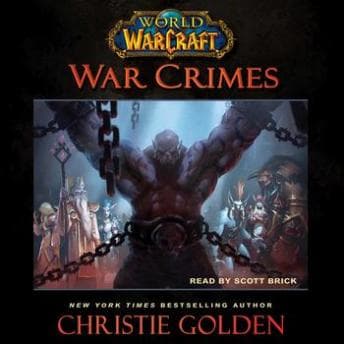
Look, I'm going to be upfront: I've never played World of Warcraft. Not a single hour. My exposure to Azeroth consists of that one South Park episode and whatever lore my roommate has shouted at me while raiding at 2 AM. So when I picked up War Crimes, I was basically walking into a courtroom drama where I didn't know the defendant, the lawyers, or why everyone seemed so personally invested in this green guy's fate.
And you know what? Christie Golden made it work anyway.
A War Criminal Walks Into a Courtroom
Here's the setup: Garrosh Hellscream—former warchief, current war criminal—is on trial for basically every atrocity you can imagine. Genocide, warmongering, the works. The trial takes place in Pandaria, and various faction leaders show up to either prosecute or defend him. The twist? The bronze dragonflight can literally project visions of past events, so everyone gets to relive their worst memories in stunning magical HD.
It's a clever narrative device. Instead of just telling us Garrosh did bad things, we see them. We watch characters confront moments they'd rather forget. Some question whether they're any better than the orc on trial. Heavy stuff, and Golden handles the moral complexity with surprising grace for what could've been a simple "bad guy gets punished" story.
The courtroom drama structure is both the book's strength and its weakness. If you're here for epic battles and dungeon crawls, you're going to be disappointed. This is a character study wrapped in legal proceedings, with action sequences that feel almost secondary to the emotional excavation happening in the testimonies.
Scott Brick: The Controversial Choice
Okay, so here's where things get complicated. Scott Brick is one of those narrators who people either love or actively avoid. I've heard him in other projects and found him perfectly serviceable, but War Crimes highlights both his strengths and his limitations.
The good: He nails the fantasy name pronunciations. Every orc clan, every Pandaren title, every ridiculous Warcraft proper noun comes out clean and consistent. For a book this steeped in established lore, that matters. His character voices are distinct enough that I could follow who was speaking, which—trust me—is not a given in ensemble fantasy audiobooks.
The not-so-good: There's a flatness to his delivery that undercuts some of the emotional heavy lifting. When characters are reliving traumatic memories, when they're breaking down on the witness stand, the narration doesn't always rise to meet those moments. It's like watching someone describe a house fire in the same tone they'd use to read a grocery list. Technically correct, but missing something essential.
I found myself wishing for more dynamic range, especially during the vision sequences. These should hit like gut punches. Sometimes they did—Golden's writing carries a lot of weight—but sometimes Brick's steadiness worked against the material.
Who Should Queue This Up (And Who Should Pass)
Let me be real: if you're not at least somewhat invested in Warcraft lore, parts of this will feel like homework. Characters reference events and relationships that clearly carry enormous weight for longtime fans, and while Golden does provide context, there's a difference between understanding something intellectually and feeling it in your bones.
But here's the thing—and this surprised me—the core themes are universal enough that even a Warcraft outsider like me found things to grab onto. Questions about justice versus vengeance. Whether understanding someone's trauma excuses their actions. How cycles of violence perpetuate themselves across generations. Braving the Wilderness digs into similar territory about how we process collective trauma and belonging, just without the orcs. That's not just video game tie-in stuff. That's real.
For Warcraft fans, this seems like essential listening. It bridges major game expansions and apparently sets up some significant plot developments. The character work on figures like Jaina and Sylvanas (names I actually recognized!) gives depth to what I assume are fan favorites.
For everyone else? It's a solid courtroom fantasy with some pacing issues in the middle third. The trial structure means things can get repetitive—testimony, vision, reaction, repeat—and at nearly fourteen hours, you'll feel that length. Skip this if you need constant action or have zero patience for legal procedural pacing.
Case Closed
War Crimes is a weird hybrid. It's a video game tie-in novel that wants to be prestige television. A fantasy epic that takes place mostly in a single room. A war story told through legal proceedings. That single-location intensity reminded me of Court of Thorns and Roses, which also traps its characters in confined spaces and forces them to confront uncomfortable truths. And somehow, it mostly works.
Scott Brick's narration won't convert anyone who already finds him monotone, but it won't ruin the experience either. I'd recommend sampling before committing—his style is divisive enough that you'll know within ten minutes whether you can handle thirteen more hours.
I listened to this during a road trip through eastern Oregon, which felt appropriate. Long stretches of nothing punctuated by moments of genuine beauty. That's War Crimes in a nutshell. Patient, occasionally frustrating, but ultimately rewarding if you stick with it.
Shirley (my cat) slept through the whole thing. But she sleeps through everything, so that's not really a review.