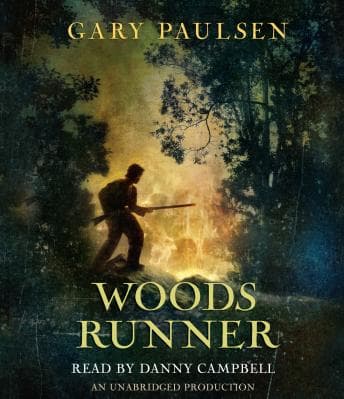

I expected a simple frontier adventure. Something I could half-listen to while sorting through a stack of sophomore essays on The Crucible at 11 PM. And for the first twenty minutes, that's what I thought I was getting - a boy, a forest, survival skills. Then the Iroquois and British soldiers burned Samuel's settlement, and I stopped grading entirely.
Here's what caught me off guard about Woods Runner: Gary Paulsen doesn't romanticize a single thing. This is a Revolutionary War novel for young readers, and Paulsen refuses to wave any flags. The violence is blunt. The fear is real. Samuel is thirteen years old, alone in woods he knows better than any adult, tracking his kidnapped parents through territory that's become a war zone overnight. And Paulsen writes it with the kind of lean, stripped-down prose that Hemingway would've nodded at. Short sentences. No wasted words. The prose deserves to be savored, even at under four hours.
Paulsen's Secret Weapon: The Documentary Breaks
What makes this audiobook structurally interesting - and what I didn't expect - is that Paulsen interrupts the fiction with short nonfiction passages. Historical context. Facts about frontier life, musket accuracy, the real conditions of British prison ships. Danny Campbell shifts into a deeper, flatter register for these sections, almost like a History Channel narrator stepping in before handing the story back. It's a bold choice for a novel, and it works. My students would probably call it "the boring parts." They'd be wrong. Those sections ground the fiction in something uncomfortably real. When Samuel finds bodies, you already know the statistics. The math of colonial warfare. It hits different.
This is what I wish more historical fiction for young people did - trusted the reader enough to say, "Here's what actually happened. Now watch this kid try to survive it."
Campbell's Campfire Voice
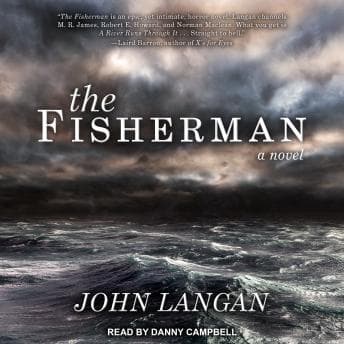
Someone described Danny Campbell's narration as sounding like he's telling the story around a campfire, and that's exactly right. There's a rough, smoky quality to his voice - not polished, not theatrical. It sounds like a voice that's been outdoors. He builds suspense through pace and projection rather than dramatic tricks, letting Paulsen's spare sentences land with their own weight. The narrator understands that pause is punctuation. When Samuel is moving through the forest, tracking British soldiers, Campbell slows down. You feel the careful placement of each footstep.
Where Campbell really earns it is in the emotional register. Samuel's determination has this quiet, stubborn edge in Campbell's reading - not heroic bravado, but the scared resolve of a kid who literally has no other option. There's a difference between courage and desperation, and Campbell finds it. He doesn't oversell the moments of horror either. Paulsen's prose is already doing that work. Campbell just stays out of its way, which is harder than it sounds.
I should note - this is a solo narration, clean production, no sound effects or music. Just Campbell and Paulsen's words. For a story this lean, that's the right call.
The Three-Hour Question
At 3 hours and 42 minutes, this is barely a long podcast episode. And I'll be honest - part of me wanted more. More of Samuel's journey through occupied New York. More of the allies he finds along the way. The pacing is relentless, which suits the survival story, but the ending arrives fast. Paulsen doesn't linger. He never does. If you've read Hatchet, you know - the man believes in economy.
But here's what I kept thinking about afterward, walking the lakefront with Denise while the wind came off the lake hard enough to make my ears ache: this book does something sneaky. It takes the Revolutionary War - this thing American kids learn about as a triumphant origin story, all founding fathers and liberty bells - and shows it as what it actually was for most people. Chaos. Loss. Families torn apart by forces they couldn't control. If you loved My Brother Sam Is Dead, this is its spiritual successor. Same refusal to glorify. Same gut-punch honesty. Three Day Road carries that same refusal to let war be anything other than what it is - I reviewed it a while back and kept thinking about these two books in the same breath.
Who This Is For (And Who Should Know About It)
If you're a parent or teacher looking for historical fiction that doesn't condescend to young listeners, this belongs on your list. If you're an adult who thinks YA can't punch above its weight class, spend four hours with this and reconsider. My students would hate this. I love it. (Okay, some of them would love it too - the ones who actually read Hatchet instead of just watching the SparkNotes video.)
If you need epic scope and complex political intrigue, this isn't that. It's small and sharp and fast. A thirteen-year-old running through the woods with a flintlock rifle, trying to get his parents back. Sometimes that's enough.
The Assignment I'd Give
Worth pausing the faculty meeting for - though at under four hours, you could finish it in a single faculty meeting. (Principal Martinez, that's not a suggestion. That's a dream.) Campbell's Earphones Award is well-earned, and Paulsen's prose is the kind of clean I wish I could get my sophomores to write. This is why we still read the classics of children's literature. Because the best ones aren't really for children at all.