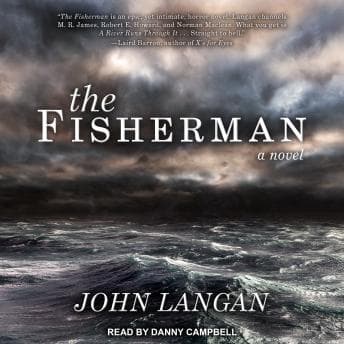

Everyone kept telling me The Fisherman was this generation's cosmic horror triumph. Bram Stoker Award winner. The horror novel for people who think they've read everything. So I queued it up expecting to be absolutely wrecked.
Instead, I spent the first two hours wondering if I'd accidentally downloaded the wrong book.
The Setup That Almost Lost Me
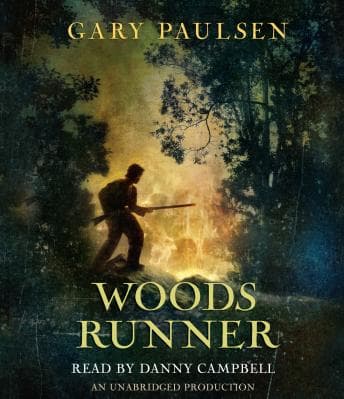
Here's the thing - this isn't really a horror novel for the first chunk. It's a grief novel. Abe, our narrator, lost his wife to ovarian cancer. His fishing buddy Dan lost his wife too. Two broken men finding each other through shared loss and early morning trips to the reservoir. Danny Campbell's gravelly voice fits Abe like a well-worn fishing vest - there's this weathered quality to his delivery that makes you feel like you're sitting on a porch listening to your uncle tell stories after a few beers.
But then - and I mean this literally happened somewhere around hour three while I was half-dead on the Caltrain - the book does this wild structural thing where it just... becomes a completely different story for like four hours. A character named Howard starts telling this massive historical tale about German immigrants, a drowned town, and something called Der Fisher. It's basically nested narrative inception, and your mileage will absolutely vary on whether this works for you.
The Howard Problem (Or Feature, Depending On Your Brain)
Look, I'm an engineer. I appreciate when someone shows their work. But Howard's story-within-a-story is a commitment. We're talking hours of backstory about early 1900s Catskills, a reservoir project that drowned entire towns, and increasingly weird folklore about what lives in the deep water. Some people call this "building atmosphere." Others call it "I fell asleep and had to rewind three times."
I landed somewhere in the middle. The lore is genuinely fascinating - Langan clearly did his homework on the actual history of the Ashokan Reservoir, and the way he weaves real tragedy (they really did flood whole communities) with cosmic horror mythology is clever. But Campbell's "old-timey" delivery, which works perfectly for Abe's sections, feels slightly off when he's voicing younger characters in the historical flashback. It's not bad, just... noticeable.
When It Finally Hits
And then the last few hours happen.
I won't spoil it, but when Abe and Dan finally reach Dutchman's Creek, when the fishing metaphors stop being metaphors and start being something else entirely - yeah. That's when I understood why this book won awards. The horror here isn't jump scares or gore (though there's some of that). It's about what grief makes you willing to do. What you'd sacrifice to get back what you lost. The Fisherman itself, Der Fisher, is genuinely unsettling in a way that stuck with me through my entire commute home.
Campbell absolutely nails these final sections. His calm, almost meditative delivery creates this horrible contrast with what's actually happening. Like listening to someone describe a car accident in the same tone they'd use for a weather report.
Who's Gonna Love This, Who Should Bail
Perfect for: Horror fans who don't need constant action. Readers who loved House of Leaves or Annihilation. Anyone who thinks grief and cosmic dread make good bedfellows.
Skip if: You need your horror front-loaded. If you're looking for something you can half-listen to during a busy workday, this ain't it. For something lighter that works better as background noise, Echo Burning delivers straightforward action without demanding your full brain. The nested narrative structure requires actual attention, and at 1.5x speed some of the atmospheric tension gets lost.
Also skip if narrator cadence is make-or-break for you. Campbell is polarizing - I've seen reviews calling him "perfect" and others saying his voice completely killed the vibe. Sample the first chapter before committing.
The ROI Calculation
Bottom Line: This is basically Moby Dick but for cosmic horror. You're gonna spend a lot of time on setup and historical context, but the payoff is legitimately excellent. The audiobook format works well for the campfire-story structure, even if Campbell's delivery occasionally feels mismatched to certain sections.
I finished this across four commutes and one 2AM insomnia session (the latter was a mistake - do not recommend horror at 2AM when you're already sleep-deprived from on-call). Worth the credit, but go in knowing it's a slow burn that requires your full attention. This is not a background listen. This is a "put your phone away and stare out the train window at the fog" listen.