
"A queen is wise. She has earned her serenity, not having had it bestowed on her but having passed the tests."
That line hit me somewhere around the forty-minute mark, mid-chop on a butternut squash that was not cooperating. I had to set down the knife. Not because of some grand spiritual awakening - I'm a psychologist, not a mystic - but because Williamson had just articulated something I've been circling in my own research on narrative identity for years. The stories women tell themselves about worthiness aren't just personal. They're archetypal. And Williamson knows it.
When Your Mother's Voice and a Spiritual Teacher's Voice Say the Same Thing
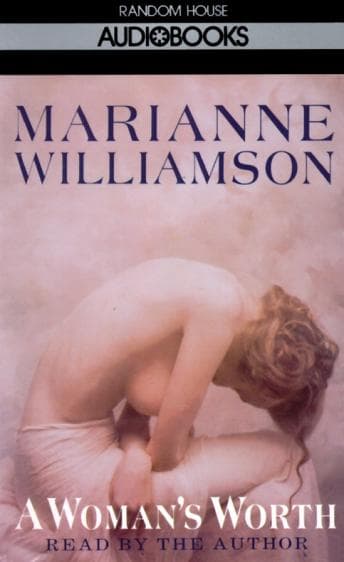
Here's what caught me off guard about A Woman's Worth: it's less a self-help book and more a series of essays that read like prayers. Williamson draws heavily on A Course in Miracles (her spiritual framework), and she isn't subtle about it. She talks about goddesses, about the divine feminine, about reclaiming a "queen" archetype that patriarchy has buried. If you're rolling your eyes right now, I get it. I almost did too.
But the research actually shows that archetypal narratives - the queen, the warrior, the mother - function as psychological scaffolding for identity construction. Carl Jung wasn't wrong about everything, even if his fan club can be insufferable. What Williamson does, whether she'd use this language or not, is offer women a counter-narrative to the one that says shrink yourself, be palatable, apologize for your ambition. The protagonist of this book - every woman listening - exhibits classic identity foreclosure patterns that Williamson is actively trying to disrupt.
What makes her approach compelling is the specificity of her personal candor. She talks about her own experiences with romantic relationships that diminished her, about motherhood as a spiritual practice rather than a career sacrifice, about aging not as loss but as accumulation of power. Dear Survivor operates in that same register of hard-won candor - another voice that refuses to tidy up the wreckage in order to deliver a cleaner message. These aren't abstract platitudes. They're drawn from a life lived messily, and she doesn't pretend otherwise.
The Preacher Problem (And Why It Almost Works Anyway)
Now. Let me be honest about the friction.
Williamson narrates her own work, and she has a particular cadence - a kind of sermonic rhythm that builds and swells. She's a lecturer by trade (since 1983, in fact), and you can hear it. Every sentence lands with intentionality. Every pause is placed. This is not someone reading a book; this is someone delivering a message. And at under three hours, it's a concentrated dose.
Psychologically, this doesn't track for every listener. If you need evidence-based frameworks, citations, data - you will be frustrated. Williamson operates in the register of spiritual assertion. She states things as truth. "Women are not small. Women are not ordinary. Women are goddesses." The repetition is deliberate, almost hypnotic. But I found myself asking: why does this conviction feel so persuasive in audio when it might read as thin on the page? The answer, I think, is her voice itself. There's a quality to it - warm but uncompromising, intimate but not soft - that makes you want to believe her even when your analytical brain is raising its hand with objections.
The weakness is that Williamson paints in broad strokes. She talks about "women" as a monolith in ways that sometimes erase the specificity of race, class, and culture. My mother, an Indian immigrant who raised three kids while running a household in suburban New Jersey on sheer force of will, would probably find some of this very American, very white, very... aspirational in a way that doesn't account for women who never had the luxury of forgetting their worth because survival demanded they remember it daily.
Who This Is (And Isn't) For
If you're someone who responds to spiritual language - if you've ever found meaning in Rumi or Khalil Gibran or even certain Bollywood monologues about a woman's destiny (don't judge me) - this will land. It's a book for a specific emotional moment: when you need someone to look you in the eye and say "you are allowed to take up space" and say it like they mean it.
If you want a psychology-backed analysis of gender and identity with proper methodology? Read something else. Williamson isn't doing science. She's doing prophecy. And those are different projects.
At 2 hours and 58 minutes, it's a single-sitting listen. I finished it while the squash roasted and a dal simmered, and I stood in my kitchen afterward feeling something I can only describe as... seen? Which is annoying, frankly, because I like to think I'm above being moved by spiritual self-help. (My therapist would have thoughts about that resistance.)
The Case Study Closes
This is a fascinating case study in how delivery transforms content. On paper, A Woman's Worth is a slight book - broad claims, limited intersectional analysis, heavy on spirituality. In audio, narrated by the woman who wrote it with the full force of her conviction, it becomes something else. Something closer to a ritual than a read. I wouldn't hand it to a skeptic. But I'd hand it to anyone who needs permission to stop apologizing. Funnily enough, 50th Law is the book I'd hand to the skeptic instead - a completely different philosophical register, zero spiritual scaffolding, but the same insistence that shrinking yourself is a form of self-betrayal. Three stars for rigor. Four stars for impact. I'm splitting the difference and leaning toward the heart.